What a Strut Actually Does
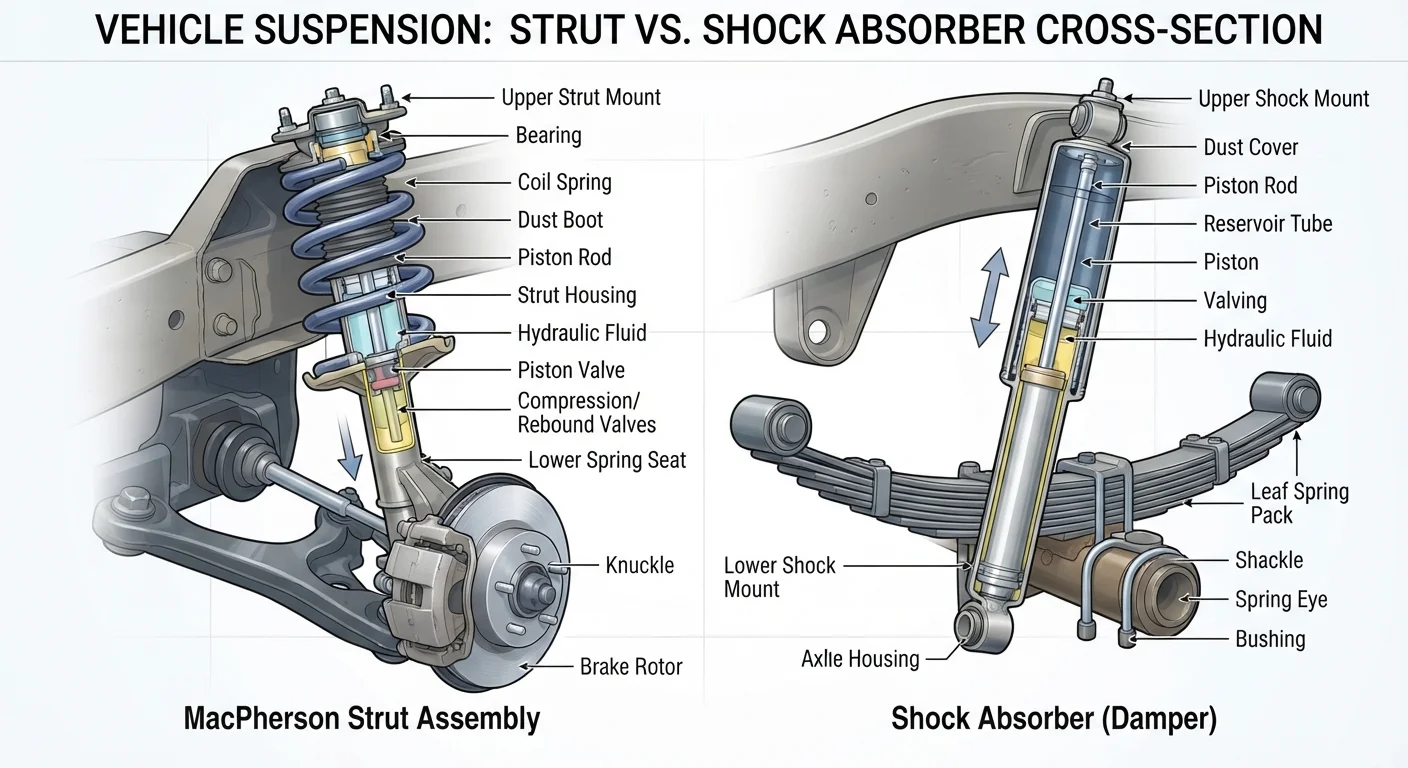
A strut - most commonly the MacPherson strut, the design found on the majority of modern front suspensions - combines three jobs into one assembly: it supports the vehicle's weight, serves as the steering pivot point, and dampens suspension oscillation. Because it replaces the upper control arm entirely, removing a strut changes the suspension geometry, which is why professional wheel alignment is required after any strut replacement.
Inside the strut housing sits a hydraulic damper (functionally similar to a shock absorber), but the outer tube is a hardened structural element that's bolted directly to the steering knuckle. This integration saves space and weight, making it ideal for front-wheel-drive platforms where packaging is tight. For a broader look at how struts fit alongside other components, see our guide to suspension components every enthusiast should know.
| Criterion | Strut | Shock Absorber |
|---|---|---|
| Structural role | Yes - supports vehicle weight | No - damping only |
| Steering pivot | Yes (MacPherson design) | No |
| Includes coil spring mount | Typically yes | No |
| Alignment needed after replacement | Yes - always | Usually not required |
| Spring compressor required | Yes | No |
| Common location | Front suspension (most cars) | Rear suspension, trucks, solid axles |
| Replacement complexity | Moderate to high | Low to moderate |
What a Shock Absorber Does - and What It Doesn't
A shock absorber (often simply called a "shock") is a dedicated hydraulic damper. It controls how quickly the suspension compresses and rebounds after a bump, preventing the coil spring from bouncing freely. Unlike a strut, a shock carries no structural load and is not a steering pivot - it simply bolts between the suspension arm and the vehicle body or frame.
This distinction matters in practice. Because shocks don't carry structural loads, they're easier to access and replace on vehicles that use them, often without a spring compressor. You'll find standalone shocks on solid rear axles common to trucks and on independent rear suspension systems in many passenger cars and SUVs. Understanding how damping interacts with spring rates and suspension geometry is also useful when evaluating handling - the article on suspension tuning and sedan character covers those trade-offs in depth.
50,000 mi
Typical damper inspection interval
Many vehicle manufacturers and suspension component suppliers cite 50,000 miles as a general inspection milestone, though actual service life depends heavily on road conditions and driving style.
~20%
Increase in stopping distance with worn shocks
Industry testing has indicated that significantly worn shock absorbers can increase stopping distance at highway speeds by approximately 20%, according to automotive safety research organizations.
How to Recognize Wear in Either Component
Struts and shocks fail gradually, so symptoms build slowly enough that many drivers adapt to them without realizing ride quality has degraded. Common signs of worn dampers - whether struts or shocks - include:
- Excessive body bounce after hitting a pothole or railroad crossing
- Nose dive under moderate braking
- Body roll during lane changes that feels disproportionate to speed
- Uneven or cupped tire wear, caused by inconsistent tire-to-road contact
- Fluid leaks visible on the outer damper tube
A simple field check is the "bounce test": push down firmly on each corner of the vehicle and release. If the body rebounds more than once or twice before settling, the damper at that corner warrants closer inspection. This is a rough indicator only - a qualified mechanic should perform a proper inspection before you commit to replacement parts.
When to Replace Both Sides at Once
Suspension dampers wear at similar rates on both sides of an axle. If one strut or shock fails, the opposite unit is often near the end of its service life as well. Replacing in pairs - both fronts or both rears together - helps maintain balanced handling and avoids a second service visit shortly afterward. This is a general best practice, not a universal rule; a mechanic can advise based on the actual condition of each unit.
Replacement Considerations: Complexity and Alignment
Replacing a strut is a more involved job than swapping a shock absorber. Because the coil spring is typically mounted on the strut itself, a spring compressor tool is required to safely disassemble the unit. Incorrect spring compression is a serious safety hazard; if you're not experienced with this procedure, it's one of the tasks best left to a shop with the proper equipment.
After any strut replacement, the vehicle must have its alignment checked and adjusted. The strut is part of the steering geometry, and even minor variation in mounting angle will affect toe and camber settings, accelerating tire wear and affecting handling predictability. Shock absorbers on separate suspension systems typically don't require an alignment check afterward, though it's good practice any time suspension components are disturbed. Most service intervals suggest inspecting dampers around the 50,000-mile mark, though driving conditions - particularly rough roads - can shorten that window considerably.