
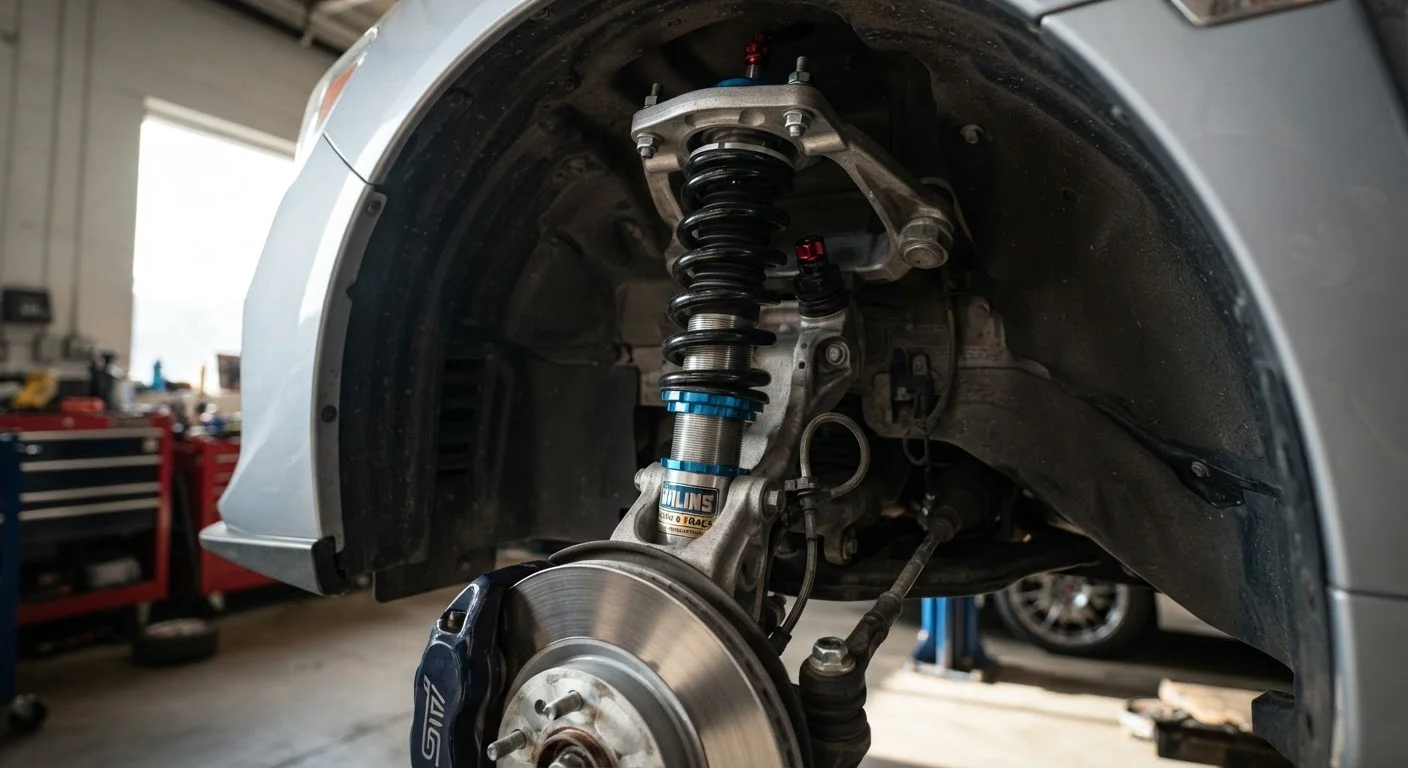
Why Suspension Setup Is the Engineer's Honest Statement
Every sedan ever built makes a promise. The marketing language centers on style, technology, and refinement - but the suspension calibration is where the engineering team tells the truth. Spring rates, damper valving, and geometry choices are constrained by physics, not copywriting. A manufacturer cannot simultaneously optimize for maximum ride comfort and maximum cornering precision on the same passive setup. Something always gives.
Understanding which direction a particular sedan's engineers chose - and why - tells you whether that car will actually suit your driving life. Interpreting a sedan spec sheet gets you partway there, but suspension character rarely appears as a clean number. It emerges from the interaction of multiple components working together.
Trim Level Suspensions Often Differ
On many sedan platforms, the base trim and the sport or performance trim carry different spring and damper calibrations even though the underlying chassis is identical. Always confirm which suspension specification is fitted to the specific trim level you're evaluating - the platform name alone doesn't tell you how the car rides.
The Three Suspension Philosophies and What Each Prioritizes
Soft tuning uses lower spring rates and more compliant damper valving. The result is a sedan that absorbs road imperfections fluidly - expansion joints, rough pavement, and urban potholes diminish rather than transmit. The cost is increased body roll in corners and a less immediate steering feel. Manufacturers targeting comfort-focused buyers, long-distance commuters, or rear-seat passenger experience typically tune in this direction.
Firm tuning raises spring rates and stiffens damper compression and rebound. Body motion is controlled more tightly, cornering feels composed, and the steering communicates road texture with more immediacy. The trade-off is a harsher ride on imperfect surfaces and increased noise transmission into the cabin. Sport-oriented trim levels almost always move the dial this way.
Adaptive dampers use electronically controlled valving - often adjustable across driving modes - to shift between these poles on demand. They don't eliminate the physics, but they do widen the sedan's usable range. Understanding how struts and shock absorbers differ clarifies why the damper is the key variable in this equation.
2-4×
Spring rate difference between comfort and sport tunes
Automotive engineering references indicate sport-tuned sedans commonly run spring rates two to four times stiffer than their comfort-oriented counterparts on shared platforms.
~15%
Body roll reduction from typical sport suspension upgrades
Independent suspension testing data suggests that moving from a comfort to a sport-tuned damper and spring package can reduce body roll by roughly 10-20% depending on the platform.
What Geometry Choices Add to the Picture
Spring and damper choices are only part of the story. Suspension geometry - the angles at which components operate - shapes how a sedan behaves when pushed toward its limits. Camber (the inward or outward lean of the tire relative to vertical), caster (the steering axis angle), and toe (the direction wheels point relative to center) are all dialed in during chassis development.
A sedan with aggressive negative camber improves cornering grip by keeping more tire contact patch on the road through corners, but it accelerates inner tire wear during straight-line driving. A longer caster angle increases straight-line stability and steering returnability - useful on highways, but it can make a sedan feel less nimble in tight urban environments. These geometry decisions, like spring rates, reflect intended use. Learning the names and roles of suspension components provides the vocabulary to interpret what you're reading in technical reviews.
Using Suspension Character to Align a Sedan to Your Driving Reality
The practical question isn't which suspension philosophy is objectively superior - it's which one matches your actual driving patterns. A firmly sprung sport sedan is a genuine pleasure on smooth highway miles and weekend back roads, but it compounds fatigue on a daily urban commute over rough pavement. Conversely, a soft-riding family sedan may feel vague and wallowing when driven enthusiastically.
Matching a sedan to your actual driving patterns covers this alignment in depth. The key discipline is being honest about where and how you drive - not where you imagine you might drive. Once you've mapped your primary use case to a suspension character, a test drive becomes far more revealing. A structured test drive approach explains how to extract that information in the limited time you have on a dealership drive.
Test More Than One Road Surface
On a test drive, deliberately seek out a rough section of road, a speed bump, and a sweeping on-ramp. Each surface type reveals a different aspect of suspension character. A 20-minute loop on smooth dealership roads tells you very little about how the suspension will behave in real-world conditions.
This article provides general educational information about vehicle suspension characteristics. It is not a substitute for advice from a qualified automotive technician regarding your specific vehicle.