Why Suspension Vocabulary Matters
Walk into any service bay without knowing the names of your suspension components and you're at a disadvantage. You'll struggle to describe a symptom, evaluate a repair estimate, or research a part before authorizing work. Building a working vocabulary doesn't require an engineering degree - it just takes a focused look at the system and what each piece contributes.
Suspension connects your wheels to the chassis, absorbs road irregularities, and keeps the tires in consistent contact with the pavement. Every component in that chain has a specific job, a typical service life, and a failure mode worth recognizing. For deeper context on part terminology across the vehicle, see our Enthusiast's Glossary of Vehicle Accessory Terms.
| System Function | Wheel-to-chassis connection, impact absorption, tire contact maintenance |
| Most Common Wear Items | Ball joints, tie rod ends, sway bar links, control arm bushings |
| Inspection Trigger | Any significant pothole or curb impact; clunking, pulling, or uneven tire wear |
| Alignment Check Needed After | Any suspension component replacement or ride-height change (Industry-standard alignment procedure) |
| DIY Difficulty Range | Low (sway bar links) to Requires Shop (strut replacement with spring compression) |
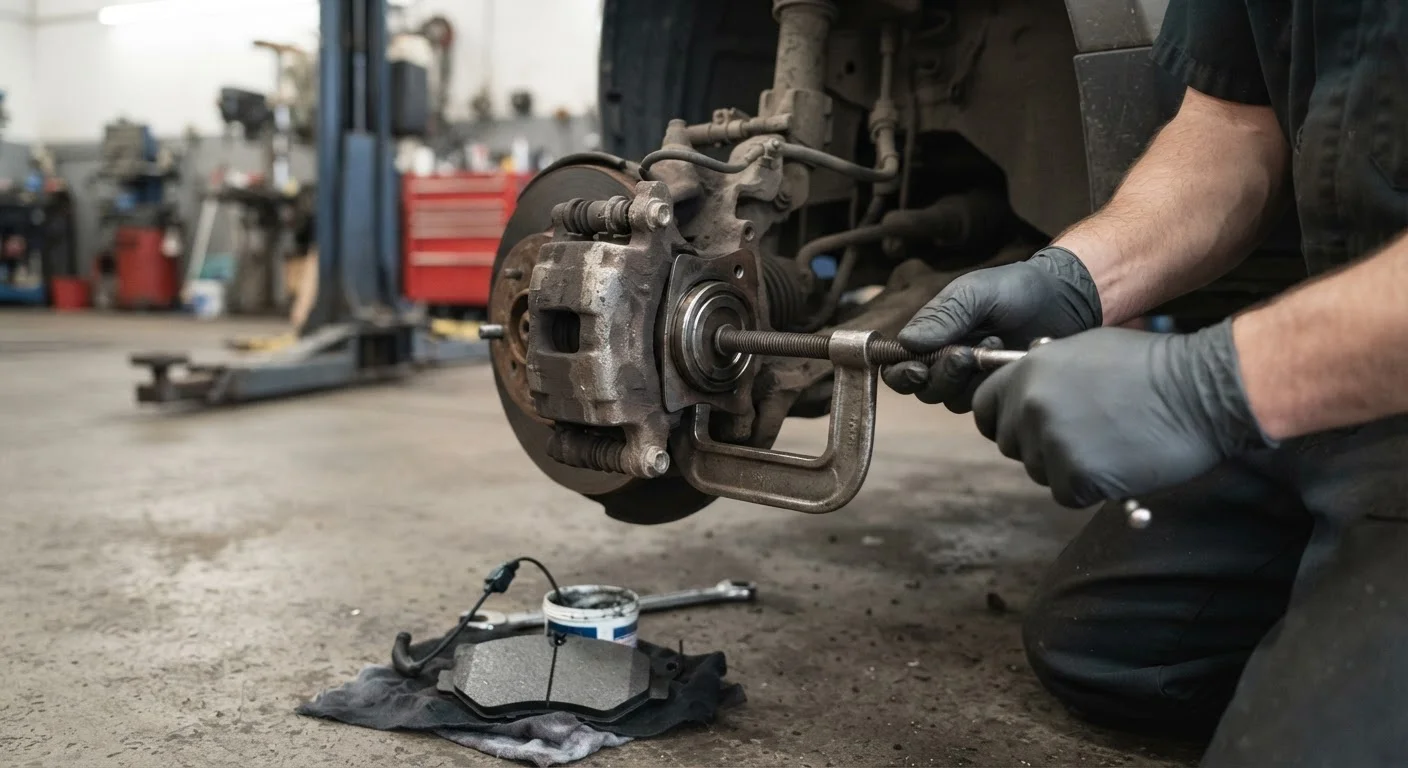
| Related System to Compare | Brake system - symptoms can overlap with suspension wear |
The Core Components, Defined
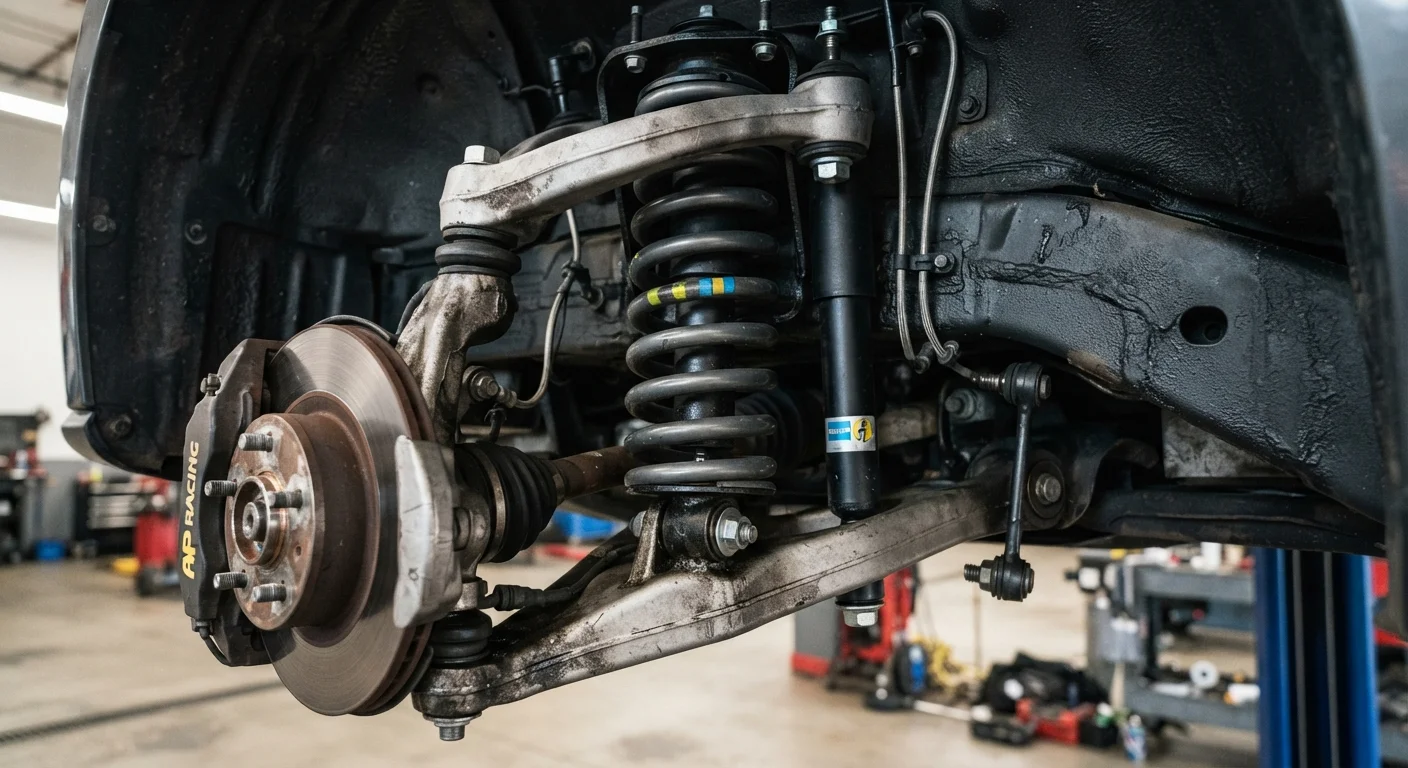
The following parts appear across most passenger car, truck, and SUV suspension designs. Some configurations omit or combine components, but this list covers what you're most likely to encounter.
Control Arm
A hinged link that connects the wheel hub/knuckle to the vehicle frame or subframe, allowing the wheel to move up and down while keeping it in the correct lateral position. Most vehicles use upper and/or lower control arms depending on the suspension design.
Ball Joint
A spherical pivot point housed in the control arm or steering knuckle that allows rotational movement in multiple directions. Ball joints allow steering input while accommodating suspension travel; worn joints introduce dangerous play in the steering and can fail catastrophically.
Strut (MacPherson Strut)
A combined structural and damping unit that serves as both the suspension's upper support and the shock absorber. MacPherson struts are common on front axles of front-wheel-drive vehicles and simplify the design by eliminating the upper control arm.
Shock Absorber
A hydraulic or gas-charged damping device that controls the speed at which the suspension compresses and rebounds. Without functioning shocks, springs would oscillate uncontrollably, degrading handling and tire contact.
Coil Spring
A helical steel spring that supports the vehicle's weight and absorbs large impacts. Coil springs work in conjunction with shock absorbers; they handle load, while the shock controls motion.
Sway Bar (Stabilizer Bar)
A torsion spring bar linking the left and right suspension on an axle to reduce body roll during cornering. Stiffer sway bars decrease roll but can affect ride comfort.
Sway Bar Link
A short link rod connecting the sway bar to the control arm or strut. End links are high-wear items and often the first sway bar component to develop play or noise.
Tie Rod (Inner and Outer)
Steering linkage components that transfer motion from the steering rack to the wheel hub. The outer tie rod connects to the steering knuckle and is adjustable for alignment; the inner tie rod connects to the rack itself.
Wheel Bearing Hub
The sealed bearing assembly that allows the wheel to rotate freely on the spindle or axle. Modern vehicles typically use sealed hub-bearing units that are replaced as a complete assembly rather than repacked.
CV Axle (Constant Velocity Axle)
A drive shaft used in front-wheel-drive and all-wheel-drive vehicles that delivers torque to the wheels while accommodating suspension travel and steering angles. Protected by rubber CV boots; a torn boot allows grease to escape and contaminants to enter, accelerating joint wear.
Bushing
A cylindrical rubber or polyurethane sleeve pressed into suspension pivot points to cushion movement and reduce noise. Bushings degrade with age and UV exposure, leading to clunks and imprecise handling.
Steering Knuckle
The upright or spindle assembly that holds the wheel hub and connects to the control arms, strut, and tie rod. It is the central hub of the corner assembly through which braking, steering, and suspension forces all pass.
Symptoms worth noting: clunking over bumps often points to worn control arm bushings or ball joints; a vehicle that pulls to one side after a pothole hit may indicate a bent tie rod; squealing from a corner under body roll frequently traces to a worn sway bar link or bushing. Suspension symptoms can overlap with brake and steering issues, so compare notes with our brake system basics guide before drawing conclusions.
Typical Service Intervals and When to Act
Suspension parts don't follow a strict mileage schedule the way oil or brake pads do - wear rate depends heavily on road conditions, load habits, and driving style. That said, some general expectations apply.
50,000-100,000 mi
Typical ball joint service life range
Actual lifespan varies significantly with road conditions and driving habits; inspect at each tire rotation.
~5 years
Average rubber bushing degradation threshold
UV exposure and road salt accelerate bushing cracking independent of mileage, particularly in northern climates.
1/8 inch
Maximum acceptable play in a ball joint
Many manufacturers specify zero measurable play; any perceptible looseness warrants professional evaluation.
Visual inspection during routine tire rotations is one of the most practical ways to catch early wear. Look for cracked or collapsed rubber bushings, torn CV axle boots, and any play in ball joints. A qualified technician can perform a proper suspension inspection, including checking alignment angles, which no visual check alone can confirm. Tasks like replacing a strut assembly or a pressed-in ball joint involve spring compression tools and precise torque specs - these are jobs where a shop visit is warranted for most home mechanics.
Routine maintenance practices that protect suspension longevity - proper tire inflation, wheel alignment after significant road impacts, and timely pothole-damage checks - are covered more broadly in the Routine Maintenance hub.
Putting the Knowledge to Work
Knowing these component names allows you to describe symptoms precisely, cross-reference repair estimates against parts pricing, and ask informed questions. When a shop quotes a "front end rebuild," you can ask which specific components are being replaced and why. When you hear a clunk, you can narrow the likely culprits before the car even goes on a lift.
If you're exploring aftermarket suspension upgrades - lowering springs, performance shocks, or upgraded sway bars - a solid understanding of OEM components is the right foundation. Our guide on first aftermarket accessories covers how to approach modifications thoughtfully. And for any suspension modification that changes ride height or geometry, a post-install wheel alignment is not optional - it directly affects tire wear and handling safety.
Alignment After Any Suspension Work
Replacing a tie rod, control arm, or strut changes the geometry of your corner assembly. Even if the new part is installed to spec, wheel alignment angles - toe, camber, and caster - must be measured and adjusted on an alignment rack afterward. Skipping this step accelerates tire wear and can compromise straight-line stability. Budget for an alignment whenever suspension components are replaced.