The Job Both Systems Do
Both timing belts and timing chains solve the same engineering problem: keeping the crankshaft and camshaft(s) precisely synchronized. The crankshaft drives the pistons; the camshaft opens and closes the intake and exhaust valves. If those two components fall out of sync - even slightly - the engine can misfire, lose power, or in the worst case, suffer catastrophic internal damage.
The difference is in how each system achieves that synchronization, how long it lasts, and what happens when it wears out.
| Criterion | Timing Belt | Timing Chain |
|---|---|---|
| Material | Reinforced rubber | Metal roller chain |
| Location | External, under cover | Internal, oil-bathed |
| Scheduled replacement | Yes - typically 60k-100k miles | No set interval |
| Failure risk | Snaps with age or contamination | Stretches or wears from poor lubrication |
| Engine damage on failure | Severe in interference engines | Severe if chain jumps or breaks |
| Key maintenance dependency | Replacement at interval | Consistent oil changes |
| Noise level | Quieter operation | Slightly louder at startup |
Timing Belts: Predictable Wear, Predictable Service
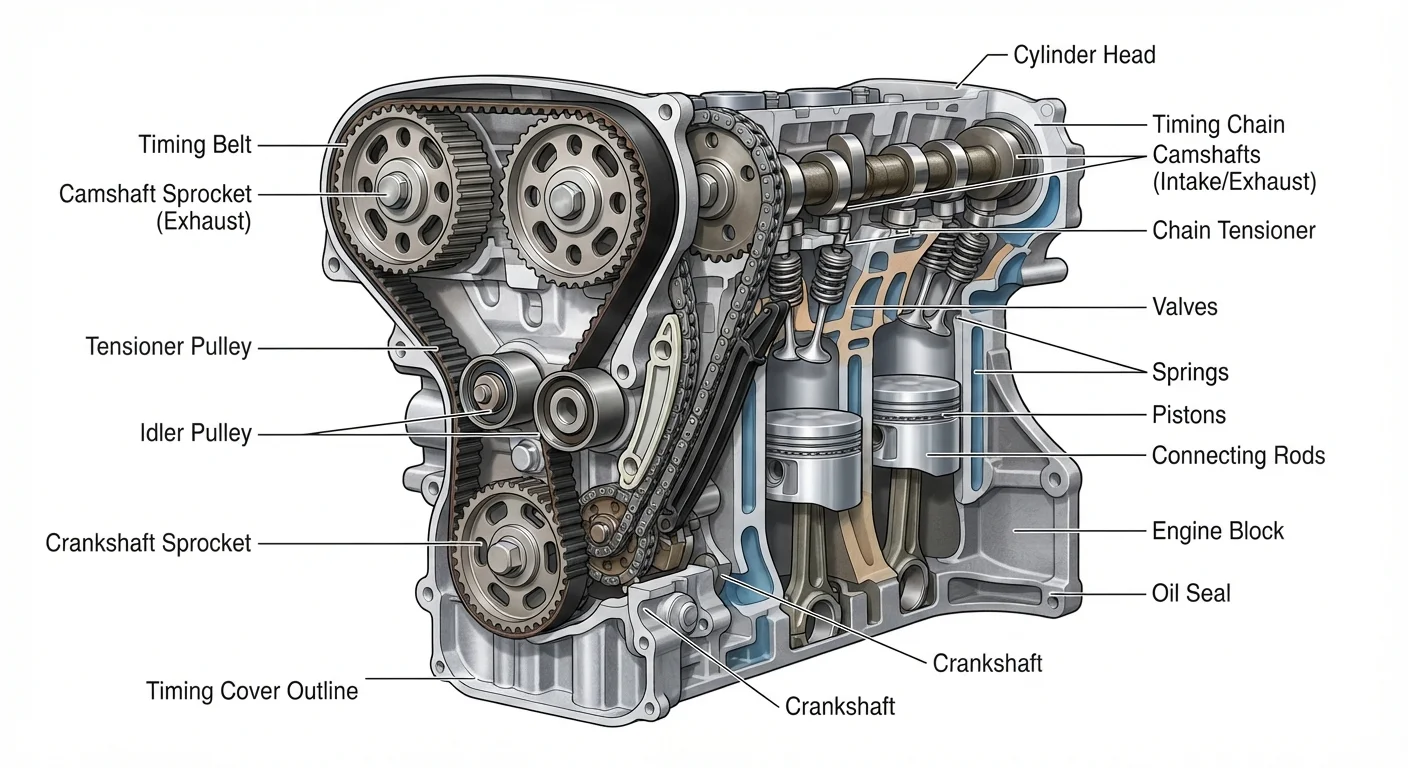
A timing belt is a toothed rubber belt - often reinforced with fiberglass or Kevlar cords - that runs externally alongside the engine, usually protected by a plastic cover. Rubber is quieter than metal and lighter, but it degrades over time regardless of mileage. Heat, oil contamination, and normal flexing all break down the material.
Most manufacturer service intervals for timing belts fall between 60,000 and 100,000 miles, though some specify time intervals (often 7-10 years) alongside mileage. Whichever comes first applies. For guidance on balancing mileage versus calendar-based intervals, see our maintenance interval explainer.
The critical risk with timing belts sits in interference engines - engines where the pistons and valves share the same space in the cylinder at different points in the cycle. If the belt snaps in an interference engine, the pistons can strike open valves, bending them and potentially destroying the engine. In a non-interference engine, a belt failure stops the engine but usually leaves the internals intact. Knowing which type you have is essential before skipping a belt service.
Timing Chains: Built to Last, Not Maintenance-Free
A timing chain is a metal roller chain - similar in principle to a bicycle chain - that runs inside the engine, bathed in the same oil that lubricates other internal components. Because metal doesn't degrade the way rubber does, timing chains are engineered to last the full service life of the engine without a scheduled replacement interval.
That said, "no scheduled interval" doesn't mean "no maintenance required." Timing chains rely entirely on clean, properly pressurized engine oil to stay lubricated. When oil changes are skipped or the oil level runs low, the chain, its guides, and its tensioner begin to wear prematurely. Common warning signs of a worn chain include a rattling noise from the front of the engine at startup, a check engine light related to cam timing, or rough idle caused by timing drift.
Startup Rattle: Don't Ignore It
A brief rattling noise from the front of the engine that disappears after a few seconds of running is a recognized early warning sign of timing chain or tensioner wear. It typically indicates the chain is slack before oil pressure builds. This symptom warrants prompt inspection by a qualified mechanic - catching it early can prevent a much more expensive repair.
Because timing chains sit inside the engine, replacing a worn chain is a labor-intensive job - often significantly more expensive than a routine belt replacement. Prevention through consistent oil maintenance is the practical strategy here.
What This Means for Your Maintenance Plan
If your engine uses a timing belt, the most important step is confirming the manufacturer's replacement interval and checking whether the previous owner followed it. This is especially important when buying a used vehicle. A belt that's overdue by tens of thousands of miles is a liability, not a minor concern. When the belt is replaced, it's also standard practice to replace the water pump, idler pulleys, and tensioner at the same time - since the labor to access them is already sunk.
If your engine uses a timing chain, your primary defense is oil discipline. Follow the manufacturer's oil change interval, use the correct viscosity and specification, and address any unusual engine noises promptly. Catching a stretched chain early - before it jumps a tooth or breaks - is far less costly than the alternative.
Timing components are one of several critical maintenance items that often get overlooked until a problem surfaces. Our overview of commonly missed replacement intervals covers other systems worth auditing on a regular schedule.
This article provides general educational information about engine components and maintenance. Always consult your vehicle's owner's manual and a qualified mechanic for guidance specific to your engine and driving conditions.