The Parts That Fall Through the Cracks
Most owners stay reasonably on top of oil changes, tire rotations, and brake pads - the services that shops promote and dashboard lights announce. But a parallel set of components quietly degrades on its own schedule, without warning lights and without anyone reminding you at the service counter. Missing these intervals rarely causes immediate drama, which is exactly why they get missed year after year.
The routine maintenance category is wide, and it's easy for less-visible parts to get crowded out. Understanding what these components do and when they typically need attention puts you in a much stronger position to keep your vehicle reliable. For a broader view of how these habits affect your wallet over time, see our piece on keeping long-term ownership costs under control.
Cabin Air Filter
The cabin air filter cleans the air coming through your HVAC system before it reaches the passenger compartment. Over time it collects dust, pollen, and debris, eventually restricting airflow and allowing contaminants to pass through more freely. Many owners don't know this filter exists at all.
Typical replacement interval is every 15,000-25,000 miles, though driving in dusty or high-pollen environments shortens that window considerably. Replacement is usually a straightforward task - the filter is often located behind the glove box or under the dashboard - making it one of the more accessible DIY jobs. For a full comparison of cabin and engine air filters, see Air Filters: Cabin vs. Engine.
Many owners don't realize a cabin air filter exists until airflow noticeably drops.
PCV Valve
The PCV valve manages pressure in the engine crankcase by routing combustion blow-by gases back into the intake system rather than venting them to atmosphere. A stuck-open or stuck-closed valve can cause oil leaks, rough idle, increased oil consumption, or even sludge buildup inside the engine.
Despite its importance, the PCV valve rarely appears on service reminder stickers. Many manufacturers suggest inspection every 20,000-30,000 miles with replacement as needed, though intervals vary significantly by engine design. It's a small, inexpensive part that's typically straightforward to access - but one whose failure tends to go unnoticed until secondary problems appear.
A failed PCV valve can silently cause oil leaks and engine sludge before anyone notices.
Wheel Bearings
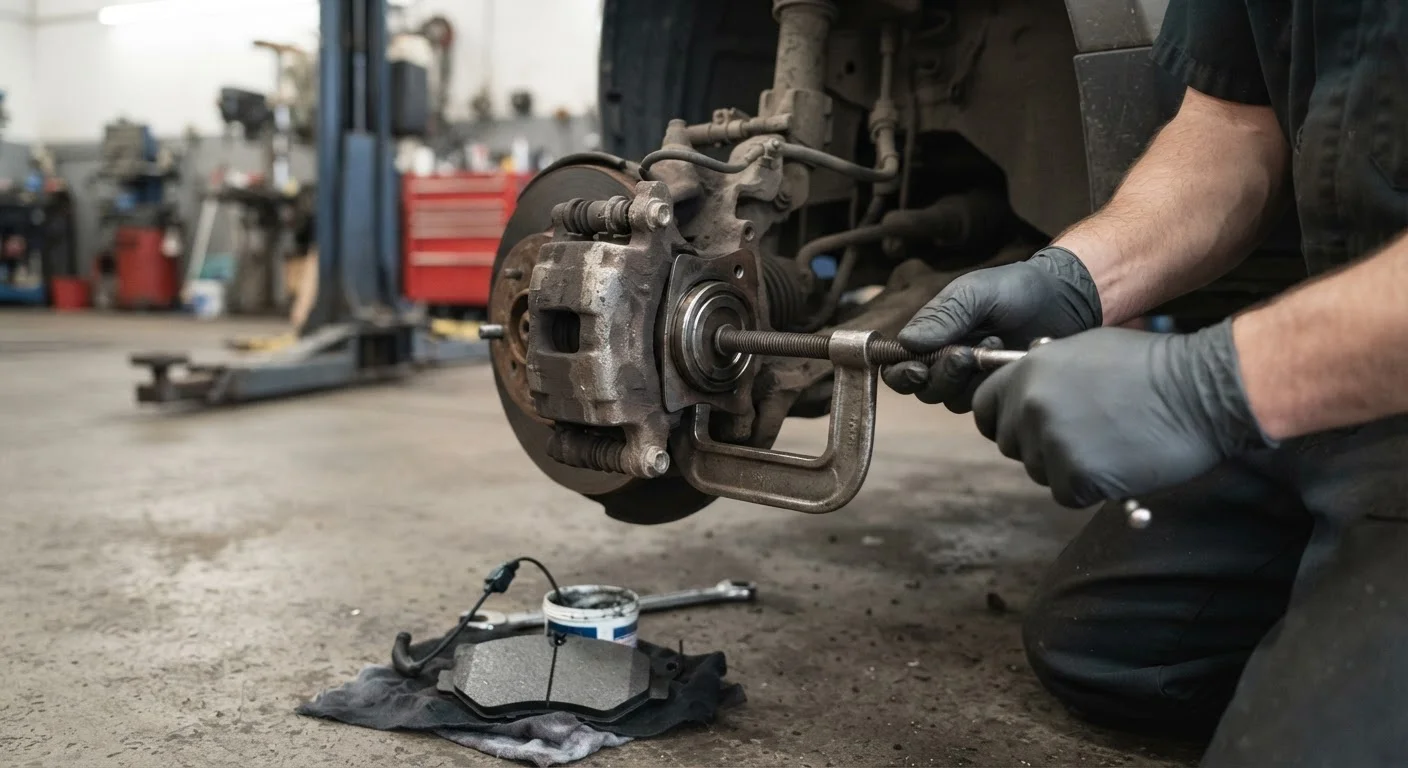
Wheel bearings allow wheels to rotate smoothly with minimal friction. They don't have a fixed replacement interval the way fluids do - they're typically rated for 85,000-100,000 miles under normal conditions, but road impacts, water intrusion, and driving style can shorten their lifespan substantially.
The tell-tale symptom is a humming or grinding noise that changes pitch with vehicle speed or shifts when cornering. Because worn wheel bearings affect steering feel and, in severe cases, can cause a wheel to seize, this is a repair that warrants prompt professional attention rather than a DIY approach for most owners.
A humming noise that changes with speed or cornering is a classic early warning of bearing wear.
Serpentine Belt
The serpentine belt drives the alternator, power steering pump, air conditioning compressor, and other accessories from the engine's crankshaft. Unlike the timing belt - which controls valve timing internally - the serpentine belt is externally visible and easier to inspect. Yet it's still commonly overlooked until it fails or begins squealing.
Most manufacturers recommend inspection around 60,000 miles and replacement by 90,000-100,000 miles, or earlier if cracks, fraying, or glazing are visible. A snapped serpentine belt strands the vehicle immediately since the alternator and often the power steering stop functioning. For context on how it differs from the timing belt, see our explainer on timing belt vs. timing chain.
Cracks or glazing on the serpentine belt surface are warning signs worth acting on promptly.
Coolant (Antifreeze)
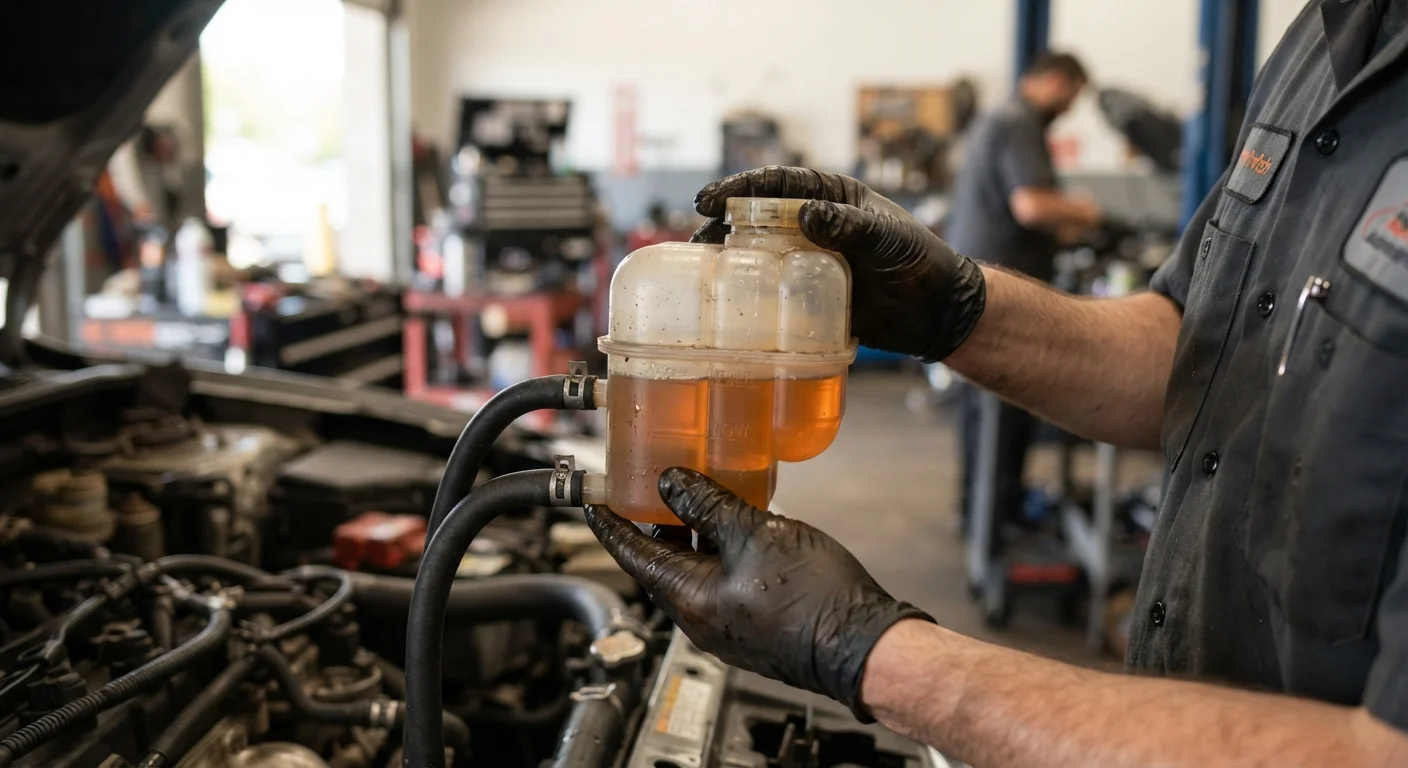
Engine coolant doesn't just prevent freezing - it also contains corrosion inhibitors that protect the radiator, water pump, heater core, and other cooling system components. Over time those inhibitors deplete, and degraded coolant becomes mildly acidic, accelerating corrosion from the inside out.
Intervals vary by coolant type: conventional green coolant may need flushing every 2 years or 30,000 miles, while extended-life formulations are often rated for 5 years or 150,000 miles. Checking the label on your existing coolant and cross-referencing with the owner's manual is the most reliable way to know where you stand. A coolant test strip can give a rough read on inhibitor condition between scheduled services.
Depleted coolant inhibitors corrode the system quietly long before any temperature warning appears.
Differential and Transfer Case Fluid
On vehicles with rear-wheel, four-wheel, or all-wheel drive, the differential and transfer case contain gear oil that lubricates the internal gears and bearings managing power distribution. This fluid breaks down and collects metal particles over time, reducing its protective qualities.
Replacement intervals commonly fall in the 30,000-60,000 mile range depending on vehicle type and use, with more frequent changes recommended for towing, off-roading, or water crossings. Front-wheel-drive vehicles have transaxle fluid to monitor instead. Because these systems operate under high load, running degraded fluid can lead to expensive gear or bearing damage - the kind of failure that often exceeds the cost of the fluid service many times over.
Differential fluid is rarely promoted at service counters, yet its neglect is expensive to remedy.
Making These Intervals Part of Your Routine
None of the parts above require exotic tools or specialized knowledge to track. The simplest step is pulling your owner's manual and cross-referencing each item against your current mileage and vehicle age. If the manual isn't available, manufacturer-published maintenance guides are often accessible online through automaker websites.
Build a Simple Maintenance Log
A basic spreadsheet - or even a notes app - tracking each service by date and mileage makes it far easier to spot when a less-publicized interval is coming due. Note the part, the date replaced, the mileage, and the next target mileage. Reviewing it once a season takes minutes and prevents the kind of long gaps that allow overlooked parts to fail quietly.
It also helps to think in two dimensions when scheduling service. Some of these parts age by mileage; others deteriorate by time regardless of how much you drive. Our article on mileage vs. time maintenance intervals explains how to navigate both. And if you want a structured prompt to check everything seasonally, the seasonal vehicle maintenance checklist is a practical starting point.
A few of the replacements below - cabin air filters, for example - are accessible enough for confident DIYers. Others, like wheel bearings, involve suspension disassembly and should be handled by a qualified mechanic unless you have the right equipment and experience. When in doubt, err on the side of a professional inspection. The cost of a shop visit is almost always less than the cost of a component failure that cascades into something larger.