
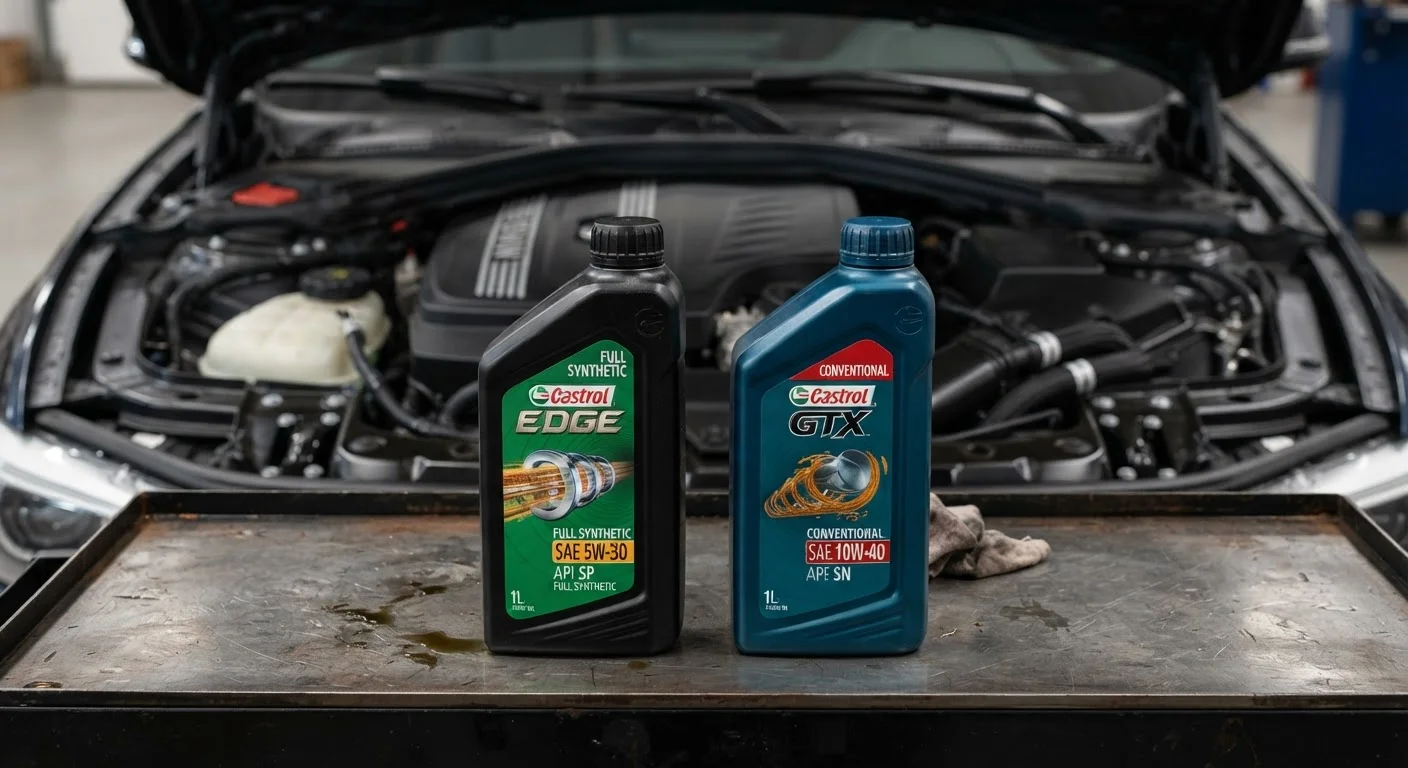
What Sets Them Apart at a Molecular Level
Motor oil serves one fundamental job: reducing friction between metal components moving at high speed inside your engine. Both synthetic and conventional oils accomplish this, but they start from very different foundations.
Conventional motor oil is refined directly from crude petroleum. The refining process removes many impurities, but some inconsistency in molecular structure remains. Those irregularities mean conventional oil can break down faster under sustained high heat or cold-start stress.
Synthetic motor oil is either fully synthesized from chemical compounds or heavily processed from a base petroleum stock to create a much more uniform molecular structure. That uniformity translates into measurable performance differences: more consistent viscosity across temperature ranges, slower oxidation, and a lower pour point in sub-freezing conditions.
A middle category - synthetic blend - mixes both base stocks to offer a performance step up from conventional at a moderate price increase. For many everyday drivers, blends represent a practical compromise.
For a deeper explanation of viscosity grades and what labels like 5W-30 actually mean, see our guide to engine oil viscosity and grades.
| Criterion | Synthetic Motor Oil | Conventional Motor Oil |
|---|---|---|
| Base stock | Chemically engineered or highly refined | Refined crude petroleum |
| Cold-start performance | Flows faster at low temperatures | Thicker at cold start, slower to circulate |
| High-heat stability | Resists breakdown longer under heat | Degrades faster at sustained high temps |
| Typical drain interval | 7,500-10,000+ miles (per OEM spec) | 3,000-5,000 miles |
| Cost per quart | Higher (roughly 2-4x conventional) | Lower upfront cost |
| Turbocharged engine suitability | Strongly recommended | Generally not recommended |
| Availability | Widely available | Universally available |
Performance, Cost, and Change Intervals
The performance gap between synthetic and conventional oil is most apparent at the extremes. During a cold start in freezing temperatures, a thinner-flowing synthetic reaches engine bearings faster, reducing the dry-friction window when most engine wear occurs. At the high end, synthetic resists thermal breakdown longer, which matters especially for turbocharged engines where oil circulates through extremely hot components.
3,000-5,000 mi
Typical conventional oil change interval
Industry-standard guidance for conventional oil under normal driving conditions, though always defer to your owner's manual.
7,500-10,000+ mi
Common synthetic oil change interval
Many vehicle manufacturers approve extended drain intervals for full synthetic oil; check OEM specifications for your specific engine.
2-4×
Approximate synthetic price premium per quart
Synthetic oil typically costs two to four times more per quart than conventional, though extended intervals can offset some of that difference over time.
On cost, synthetic oil typically runs two to four times the price per quart of conventional. However, drain intervals factor heavily into the real-world cost comparison. Conventional oil is commonly changed every 3,000-5,000 miles under normal conditions, while many full synthetic formulations support intervals of 7,500-10,000 miles or longer, depending on the manufacturer's specifications. Over a year of driving, the cost difference often narrows considerably.
Always follow the oil change interval listed in your owner's manual rather than a generic rule of thumb - modern engines with oil life monitoring systems adjust recommendations based on actual driving conditions, not just mileage.
Understanding these trade-offs mirrors the broader principle of weighing upfront cost against long-term maintenance costs - a dynamic also worth considering when looking at OEM versus aftermarket replacement parts.
Which Oil Does Your Engine Actually Need?
The most important factor in choosing between synthetic and conventional oil is not marketing language - it is your vehicle manufacturer's specification. Some modern engines, particularly those with tighter tolerances or variable valve timing systems, are engineered specifically for full synthetic. Running conventional in those applications can accelerate wear or void warranty coverage.
Older engines - particularly those manufactured before the mid-1990s - were designed around conventional oil tolerances. In rare cases involving worn seals, switching abruptly to full synthetic can expose pre-existing leaks, though this concern is less pronounced with modern synthetic formulations than it once was. If you're unsure, a qualified mechanic can assess your engine's condition before you make a change.
Turbocharged and direct-injection engines are a clear case for synthetic: the oil must lubricate the turbocharger bearing, which continues spinning at high speeds even after the engine shuts off, relying on residual oil film. The thermal demands are simply higher than conventional oil handles well over the long term.
For context on how powertrain complexity affects maintenance decisions, our comparison of diesel vs. gasoline engines in heavy-duty trucks covers similar trade-off thinking for engine selection.
When to Consult a Mechanic
If your vehicle is high-mileage, has known seal wear, or you're unsure which oil type it was previously run on, get a professional assessment before switching oil types. A mechanic can inspect for existing leaks and confirm the appropriate oil specification for your engine's condition. This is especially relevant for classic or older vehicles where documentation may be incomplete.
This article provides general educational information about motor oil types and is not a substitute for the specifications in your vehicle's owner's manual or advice from a qualified mechanic.