What the Labels Actually Mean
Walk into any parts counter or browse an online catalog and you'll encounter three acronyms repeatedly: OEM, OES, and aftermarket. These terms describe the origin and supply chain of a replacement part - and understanding the difference can save you money, protect your warranty, and prevent a misfit part from causing more problems than it solves.
OEM (Original Equipment Manufacturer) parts are produced by the same supplier that made the component installed on your vehicle at the factory. They're packaged and sold through the automaker's official dealership network, carrying the automaker's branding. Because they go through the OEM channel, they command a higher price - you're partly paying for the badge and the distribution chain.
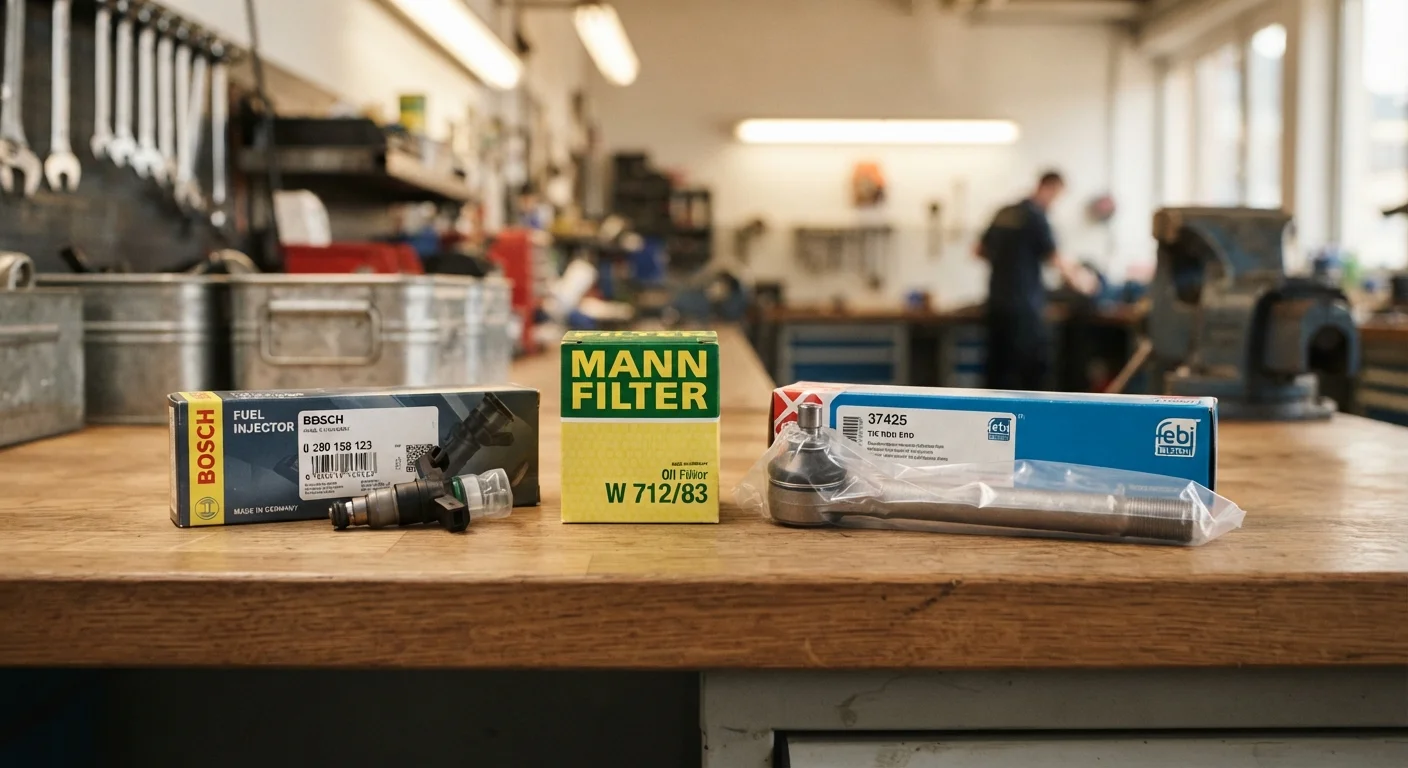
OES (Original Equipment Supplier) parts are frequently made by that same manufacturer, but sold outside the dealership network - often in unbranded or supplier-branded packaging. A well-known example: a brake component supplier might produce pads for a major automaker and sell the identical part through independent distributors under its own name at a noticeably lower price point.
Aftermarket parts are produced by companies that had no involvement in the original vehicle build. Quality across this category ranges from parts that exceed OEM specifications to low-cost options that fall short of them. This variability is the defining characteristic of the aftermarket - and why blanket generalizations about it are unreliable.
For a broader look at how these terms apply when accessorizing a vehicle, the enthusiast's glossary of vehicle accessory terms covers related jargon in depth.
Comparing the Three Options
Each parts category involves real trade-offs across cost, fitment confidence, availability, and application. The table below summarizes the key differences to consider before making a purchase decision.
| OEM | OES | Aftermarket | |
|---|---|---|---|
| Manufacturer origin | Factory-authorized supplier | Often same supplier, different channel | Independent third-party manufacturer |
| Fitment confidence | Exact OEM spec guaranteed | Typically equivalent to OEM | Varies; confirm specifications carefully |
| Price relative to OEM | Highest (baseline) | Typically 20-40% lower | Wide range; can be lower or higher |
| Availability | Dealership network only | Broad independent distribution | Widest availability; many suppliers |
| Best application | Warranty repairs, late-model vehicles | Cost-conscious OEM-quality repairs | Performance builds, modified vehicles |
| Quality consistency | Consistent by definition | Generally consistent | Highly variable across manufacturers |
Fitment is worth emphasizing: OEM and OES parts are engineered to the exact tolerances of your vehicle's original components. Aftermarket parts vary - some are manufactured to tight OEM-equivalent specifications, while others use nominal dimensions that may require minor adjustment or could affect long-term function. Always confirm part numbers and vehicle compatibility when substituting.
When Each Type Makes the Most Sense
Choosing between OEM, OES, and aftermarket isn't about one category being universally superior - it's about matching the part to the context.
Safety-Critical and Warranty-Sensitive Repairs
For components directly tied to vehicle safety - brakes, steering, suspension geometry, airbag modules - or when a vehicle is still under a manufacturer's powertrain or bumper-to-bumper warranty, OEM or well-documented OES parts carry the least risk. Using certain aftermarket parts during an active warranty period may give a dealer grounds to deny a warranty claim if that part is implicated in a failure, though federal regulations (the Magnusson-Moss Warranty Act) set limits on blanket warranty restrictions. Consult your warranty documentation if this is a concern.
Routine Maintenance on Older Vehicles
For a vehicle well outside its warranty period, OES parts frequently deliver equivalent performance to OEM at a meaningfully lower cost. Filters, belts, sensors, and lighting components are common categories where OES sourcing makes straightforward financial sense. This connects directly to understanding ownership costs over a vehicle's life.
Performance and Modified Builds
Enthusiasts modifying a vehicle for track use, towing capacity, or off-road duty often find that aftermarket parts are the only path to components exceeding OEM performance levels. Upgraded brake rotors, suspension components, and intake systems are areas where reputable aftermarket manufacturers invest heavily in engineering. Your first set of aftermarket accessories is a useful starting point for those new to this space.
Classic and Collector Vehicles
Originality considerations come into sharp focus for collector vehicles, where parts provenance can influence value significantly. Factory originality vs. restored to spec explores how part sourcing decisions can affect long-term collector appeal and valuation.
Check the Part Number First
Before purchasing any replacement part, cross-reference the OEM part number from your vehicle's service documentation or the removed component itself. Both OES and quality aftermarket suppliers typically list the OEM part numbers their product is designed to replace. A matching reference gives you a baseline for specification comparison and confirms intended fitment before money changes hands.
Evaluating Aftermarket Quality
Because aftermarket parts span such a wide quality range, a few practical checks help filter out lower-quality options before purchase:
- Certifications and standards: Look for parts that meet or reference SAE, CAPA (for collision parts), or DOT specifications where applicable. These aren't guarantees, but they indicate the manufacturer engaged with recognized testing standards.
- Manufacturer documentation: Reputable aftermarket suppliers publish engineering specifications, material grades, and testing data. Parts with no available documentation warrant extra scrutiny.
- Application-specific fitment data: A part listed for hundreds of unrelated vehicle applications is a flag. Precision-engineered components typically have more targeted fitment listings.
- Return policies: Even well-researched aftermarket parts occasionally don't fit as expected. Confirm return or exchange terms before purchasing.
The same critical evaluation applies when considering accessories and modifications - a theme explored further in what counts as an add-on vs. a modification.