Why Tyre Maintenance Matters
Tyres are the only contact point between a vehicle and the road, making their condition directly tied to handling, braking distance, and fuel economy. Yet tyre care is among the most commonly neglected areas of routine vehicle upkeep. A tyre that is underinflated by just 6 PSI can increase stopping distance measurably and accelerate wear on its outer edges - often without any visible symptom until the damage is done.
Beyond safety, tyre longevity is a real ownership cost. The true cost of tyres over a vehicle's life often surprises owners who budget only for the initial set. Consistent preventive care - pressure checks, rotations, alignment - can meaningfully extend the service interval between replacements. This guide covers each maintenance task in enough depth to help you build a reliable routine.
Tyre Pressure: The Foundation of Everything
Correct tyre pressure is the single most impactful variable in tyre performance and longevity. The recommended pressure for your vehicle is found on the door jamb sticker or in the owner's manual - not on the tyre sidewall, which shows the maximum allowable pressure. These two numbers are frequently confused.
Check pressure when the tyres are cold - ideally after the vehicle has sat for at least three hours or been driven less than one mile - because heat from driving temporarily raises pressure by 4-6 PSI and produces a misleading reading. Use a quality gauge (digital or dial-type) and record the reading against the OEM specification.
Build Pressure Checks Into Your Routine
Set a recurring reminder to check tyre pressure on the first day of each month. Pair the task with a quick visual scan for nails or sidewall damage. This two-minute habit catches the majority of tyre issues before they worsen.
Pressure drops roughly 1 PSI for every 10°F decrease in ambient temperature. In regions with significant seasonal swings, monthly checks are insufficient in autumn and spring - check every two to three weeks during transitional months.
Keep a small digital tyre gauge in your glovebox and make pressure checks a habit tied to fuel fill-ups - every third or fourth visit to the pump is a practical cadence for most drivers.
Associating the task with an existing routine dramatically improves follow-through compared to calendar reminders, which are easy to dismiss.
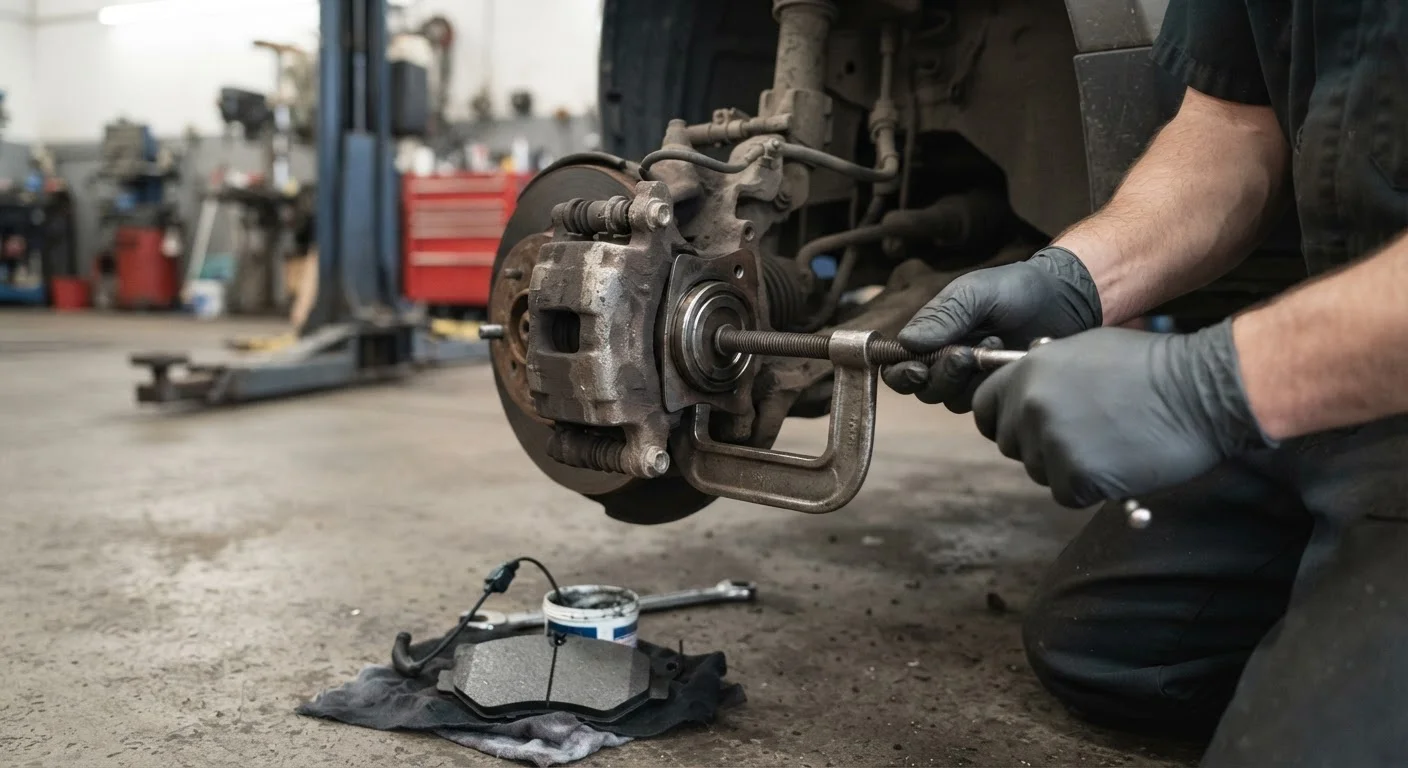
When rotating, use the opportunity to inspect brake components visible through the wheel spokes - rotors, caliper hardware, and pad thickness can often be eyeballed without removing the wheel.
Stacking inspection tasks saves time and ensures that brake wear, which correlates with tyre wear patterns, doesn't go unnoticed between dedicated service appointments.
Reading and Measuring Tread Depth
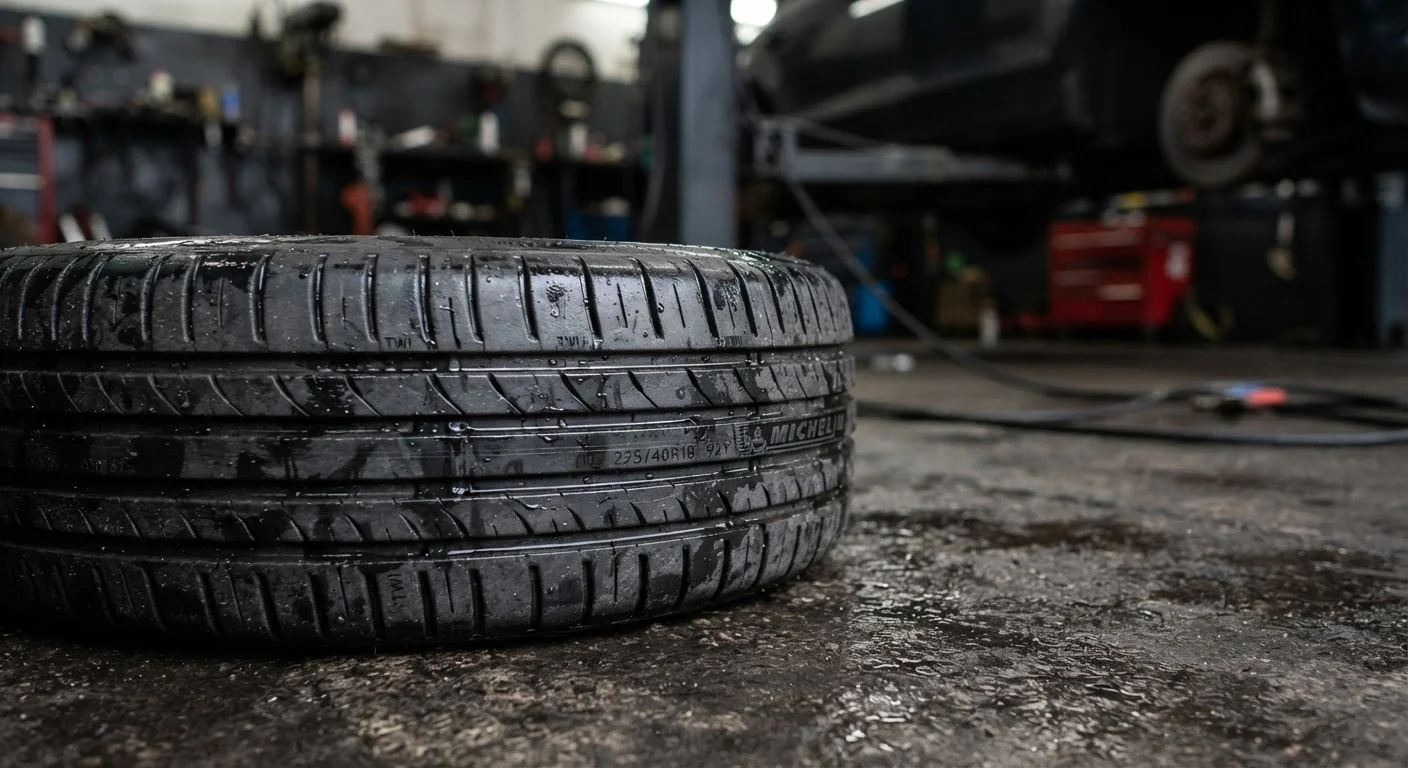
Tread depth determines a tyre's ability to channel water away from the contact patch. New passenger tyres typically start at 10/32 to 11/32 inch of tread depth. U.S. law requires replacement at 2/32 inch (approximately 1.6 mm), but most safety organizations recommend replacement at 4/32 inch (about 3.2 mm) for wet-weather driving, where hydroplaning risk increases significantly as tread wears.
To measure tread depth, use an inexpensive tread-depth gauge available at any auto parts counter. As a quick field check, insert a quarter - Lincoln's head pointing down - into a tread groove. If the top of Lincoln's head is visible, you are below 4/32 inch and should plan for replacement soon. The penny test (below 2/32 inch) is the legal minimum, not a safety target.
Uneven wear patterns tell a diagnostic story: wear concentrated on both outer edges indicates chronic underinflation; wear concentrated in the center suggests overinflation; feathering or cupping often points to alignment or suspension issues. For a deeper look at how tyre components degrade, see our Parts Explained hub.
25%
Vehicles with at least one significantly underinflated tyre
U.S. Department of Transportation data has consistently found roughly one in four light vehicles on U.S. roads operating with at least one tyre underinflated by 25% or more.
4/32"
Tread depth threshold for wet-weather safety
Independent testing by tyre safety organizations shows meaningful increases in wet braking distance as tread depth falls below 4/32 inch, well above the legal 2/32 inch minimum.
10%
Potential fuel economy loss from underinflation
The U.S. Department of Energy estimates that tyres underinflated by 1 PSI across all four wheels can reduce fuel economy by about 0.2%, with larger deficits compounding across all four tyres.
Rotation and Balancing
Tyre rotation redistributes wear that accumulates unevenly based on a vehicle's drivetrain layout and weight distribution. Front tyres on a front-wheel-drive vehicle carry the added burden of steering and acceleration forces, causing them to wear faster than the rear pair. Rotating at the interval specified in your owner's manual - commonly every 5,000 to 8,000 miles - keeps wear even across all four tyres, maximizing the usable life of the full set.
The rotation pattern matters. Common patterns include front-to-rear (straight swap), cross-rotation (X-pattern), and forward cross, depending on whether the tyres are directional, staggered, or non-directional. Directional tyres (identifiable by a triangle or arrow on the sidewall indicating the intended rolling direction) can only be rotated front-to-back on the same side unless dismounted and remounted on opposing wheels.
Balancing addresses weight distribution around the tyre-and-wheel assembly. An out-of-balance wheel creates vibration typically felt through the steering wheel at highway speeds and accelerates wear in localized spots. Balancing is generally recommended whenever a tyre is dismounted, after a significant impact, or if vibration appears. It is distinct from rotation and the two services are often performed together as a matter of convenience.
Wheel Alignment Explained
Alignment refers to the precise angles at which tyres contact the road - measured as camber (vertical tilt), toe (lateral angle), and caster (steering axis tilt). These angles are set to OEM specifications during manufacturing and can shift gradually through normal driving or abruptly after hitting a pothole or curb.
Misalignment is often undetectable to casual visual inspection, but its effects accumulate quickly: a toe angle just 0.17 degrees out of specification causes the equivalent of dragging a tyre sideways for every mile driven. Symptoms include vehicle pull to one side, uneven tread wear, or a steering wheel that sits off-center when driving straight.
Don't Skip Alignment After a Major Impact
Hitting a deep pothole or a curb at speed can knock alignment angles out of specification in a single event. If you notice any pull, vibration, or off-center steering wheel immediately after an impact, schedule an alignment check before accumulating additional mileage on misaligned wheels.
Alignment should be checked annually or after any significant impact. If you notice pull or uneven wear, DIY repair guides can help you assess suspension components, but alignment itself requires a dedicated alignment rack and is not a task suited to home repair.
For cyclists maintaining bikes with tubeless setups, bead seating and tyre pressure follow different principles - the tubeless tyre setup guide covers those specifics in detail.
Visual Inspections and When to Replace
A monthly walkaround inspection takes less than five minutes and can identify issues before they become hazards. Look for: sidewall cracks or dry rot (common on older or UV-exposed tyres), bulges or blisters that indicate internal structural damage, embedded nails or screws, and any unusual wear pattern that has developed since the last inspection.
Sidewall Bulge: Treat It as an Emergency
A bulge in the tyre sidewall means the internal structural cords have separated or failed. This condition cannot be repaired - the tyre must be replaced immediately. Continuing to drive on a bulging tyre risks a sudden blowout, which can cause loss of vehicle control, particularly at highway speeds.
Tyres have a service life measured in both miles and years. Most manufacturers and safety bodies recommend replacing passenger tyres after six to ten years regardless of tread depth, because rubber degrades with age, heat, and UV exposure even when a tyre appears visually sound. Check the DOT code on the sidewall: the last four digits indicate the week and year of manufacture (e.g., 2319 = 23rd week of 2019).
Age Matters Even When Tread Looks Fine
A tyre with half its original tread depth but manufactured seven or more years ago may be less safe than a well-worn tyre of recent manufacture. UV exposure, ozone, and heat cycling degrade the rubber compound internally. Always cross-reference the DOT date code when evaluating used or stored tyres.
A tyre with a sidewall bulge should be treated as a safety emergency - it indicates the internal carcass has failed and a blowout can occur without further warning. Do not drive on a bulging tyre; replace it or use a spare and have the vehicle inspected by a qualified mechanic before returning to normal use.
This article is for general informational and educational purposes only. Always consult your vehicle's owner's manual and a qualified automotive professional before performing or scheduling maintenance on your vehicle.