Why the Owner's Manual Outranks Generic Advice
Automotive forums, quick-lube stickers, and well-meaning neighbors all offer maintenance advice - but none of them were engineered alongside your specific engine, transmission, and cooling system. Your owner's manual was. It encodes the decisions made by the people who designed and validated your vehicle, covering everything from the viscosity grade your oil pump was sized for to the torque rating your lug nuts are designed to hold.
Generic intervals - like the old "change your oil every 3,000 miles" rule - emerged from conservative industry practices and older engine technology. Modern synthetic oils and tighter manufacturing tolerances have extended many intervals significantly. Your manual reflects those advances for your exact engine. Following it prevents both over-maintenance (unnecessary expense) and under-maintenance (premature wear).
Keep a Physical or Digital Copy Accessible
Store a PDF of your manual on your phone or in cloud storage so it's accessible roadside or at a parts counter. The glove box copy is useful at home, but having it digitally means you can look up a warning light or fluid spec anywhere. Most manufacturers offer free PDF downloads on their support pages.
For owners of RVs and campers, this principle applies to multiple manuals simultaneously. See our coverage of what new RV owners overlook in year one for guidance specific to those systems.
How to Navigate the Maintenance Schedule Section
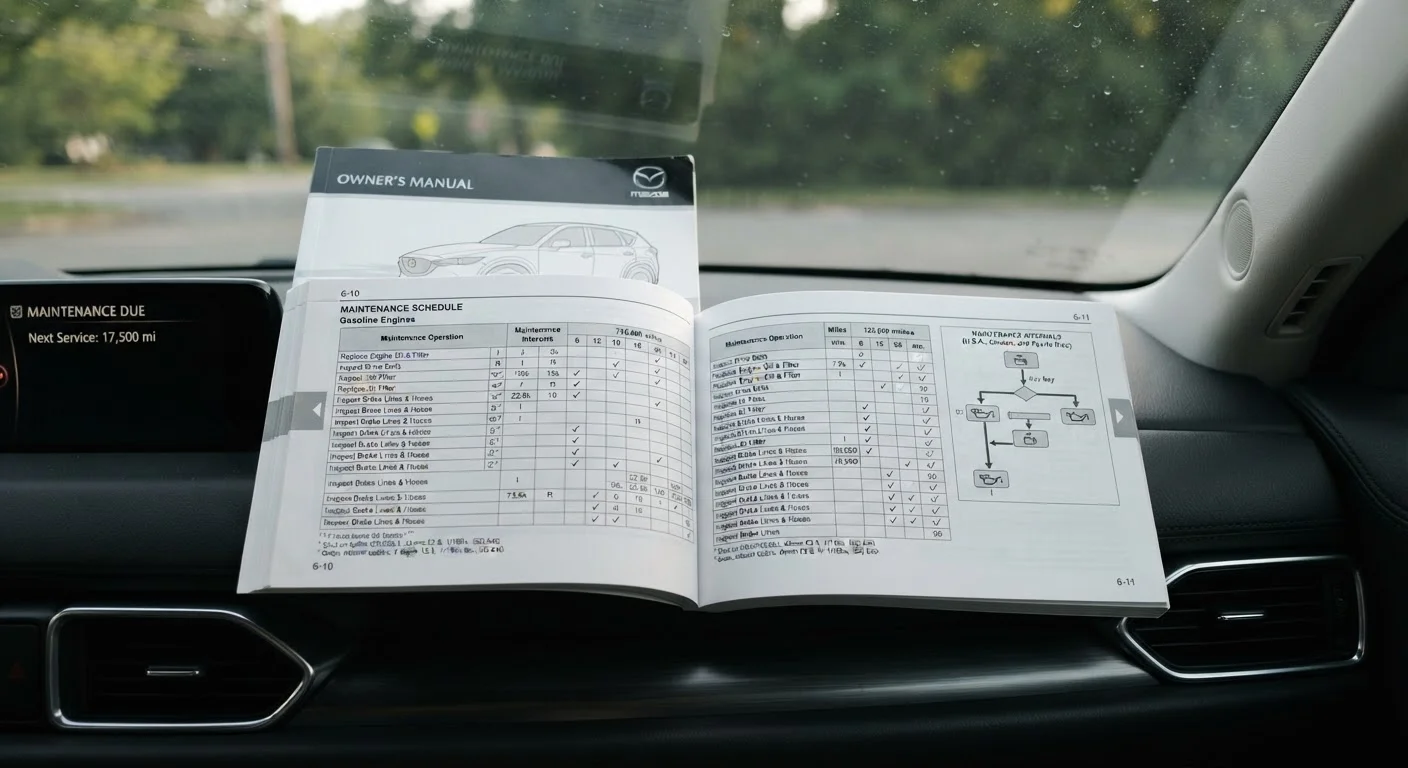
The maintenance schedule is typically found in its own tabbed or indexed section, often titled "Scheduled Maintenance" or "Maintenance Requirements." It is organized by service interval - either mileage, elapsed time, or both - and lists every inspection and replacement the manufacturer requires.
Two key details to locate immediately:
- Normal vs. severe driving definitions: The manual will define what constitutes each category. Many drivers who think they follow a normal pattern actually qualify as severe - short daily commutes in cold climates, for example, are commonly classified as severe because the engine never fully reaches operating temperature.
- Which interval triggers service first: Most schedules use the phrase "whichever comes first" when listing mileage and time side by side. A vehicle driven only 4,000 miles in 12 months may still need an oil change because time-based oxidation of the oil has occurred. Our dedicated article on mileage vs. time maintenance intervals breaks this down further.
2x
Typical oil change interval extension with modern synthetics
Industry testing has shown full-synthetic oils routinely support intervals of 7,500-10,000+ miles compared to the 3,000-mile conventional guideline, though the exact interval depends on manufacturer specification.
~40%
Drivers who qualify as 'severe' without knowing it
Automotive service industry estimates suggest a significant share of drivers whose habits - short trips, cold starts, urban stop-and-go - meet manufacturer definitions of severe driving conditions.
Up to 8
Distinct fluid specifications a single vehicle may require
A typical modern vehicle may have separate specifications for engine oil, transmission fluid, coolant, brake fluid, differential fluid, power steering fluid, and windshield washer fluid - each defined in the owner's manual.
Fluid Specifications: More Than Just a Recommendation
The fluids section of your manual lists specific standards - not just general categories. Engine oil entries will reference a viscosity grade (e.g., 5W-30) alongside an industry standard such as an API service category or an ILSAC designation. Transmission fluid entries may call for a proprietary specification that only certain formulations meet.
Using a fluid that does not meet the listed specification can affect shift quality, seal compatibility, and in some cases void drivetrain warranty coverage. This is especially relevant for automatic transmission fluid, which is highly application-specific. When in doubt, the part number or specification code in your manual is the authoritative reference - not a label on a store shelf that says "compatible with most vehicles."
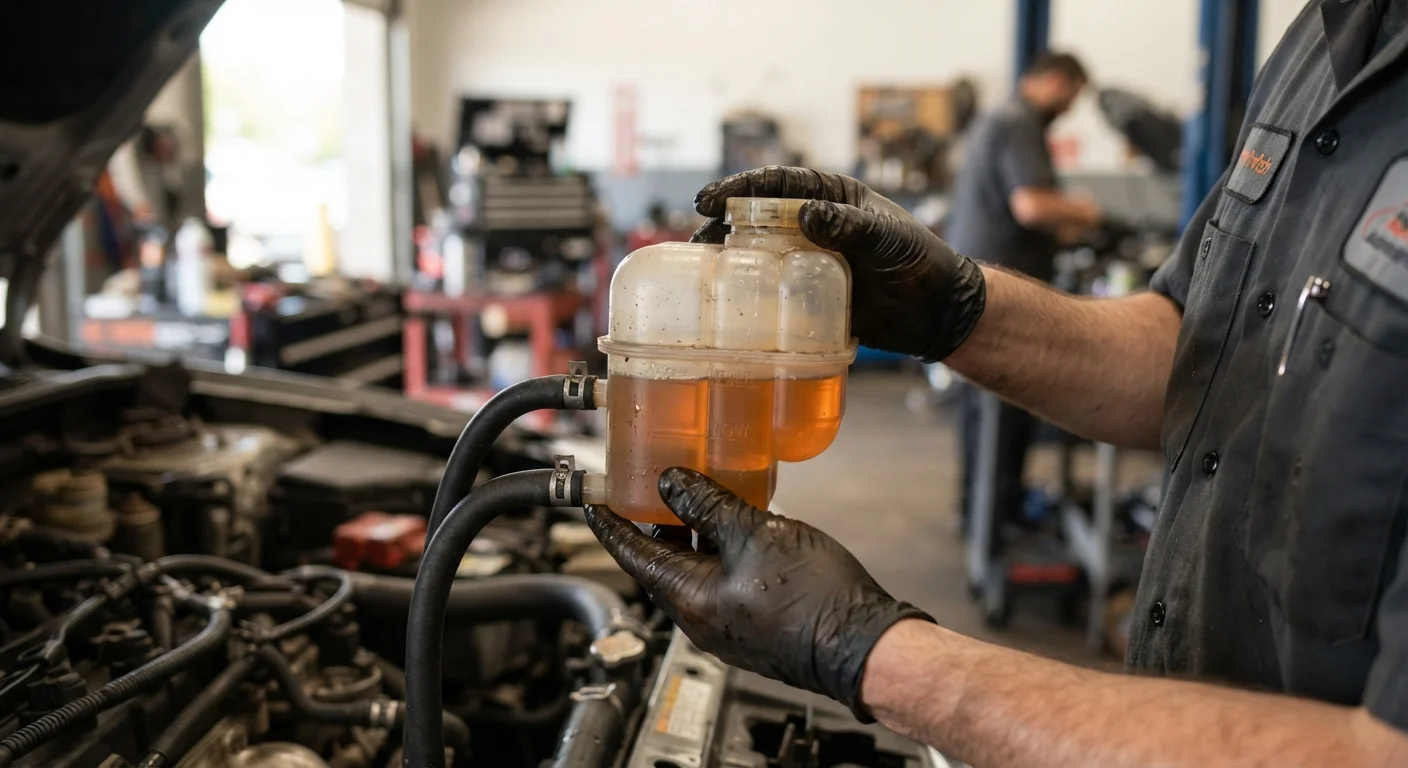
The same principle applies to coolant type (OAT, HOAT, or conventional), brake fluid DOT rating, and power steering fluid where applicable. Mixing incompatible coolant types, for instance, can cause gel formation and restricted flow through the cooling system.
Proprietary Fluid Specifications Vary by Manufacturer
Some manufacturers use proprietary fluid designations - such as specific ATF or coolant codes - that don't map directly to universal industry categories. When the manual lists a manufacturer-specific code, verify any aftermarket fluid meets that exact standard rather than relying on broad compatibility claims. Your dealership's parts counter can clarify which aftermarket products are certified to the required specification.
Reading Warning Lights the Way the Manual Intends
Dashboard warning lights are defined in your owner's manual with an important detail often overlooked: urgency level. Some lights indicate a condition that requires immediate safe stoppage (a red oil pressure warning, for example). Others indicate a service reminder that can be addressed at your next scheduled appointment. The manual distinguishes between these categories - the color coding (red, yellow/amber, green) follows an industry-wide convention, but the specific trigger conditions are vehicle-dependent.
Before assuming a warning light is an emergency or dismissing it as minor, locate its definition in your manual's warning light index. This prevents both unnecessary roadside stops and the kind of deferred attention that turns a manageable issue into expensive damage.
Once you're comfortable reading and acting on your manual's guidance, the next step is building the skills to handle basic maintenance tasks yourself. Our complete DIY vehicle maintenance guide walks through workspace setup, tool selection, and how to sequence jobs safely. You can also explore the full DIY Repairs hub for task-specific guides, and the Parts Explained hub for component-level breakdowns that complement what your manual describes.