The Core Difference: How You Travel and Live
The fundamental split between a motorhome and a fifth wheel comes down to one question: do you want your home and your vehicle to be the same thing, or two separate things?
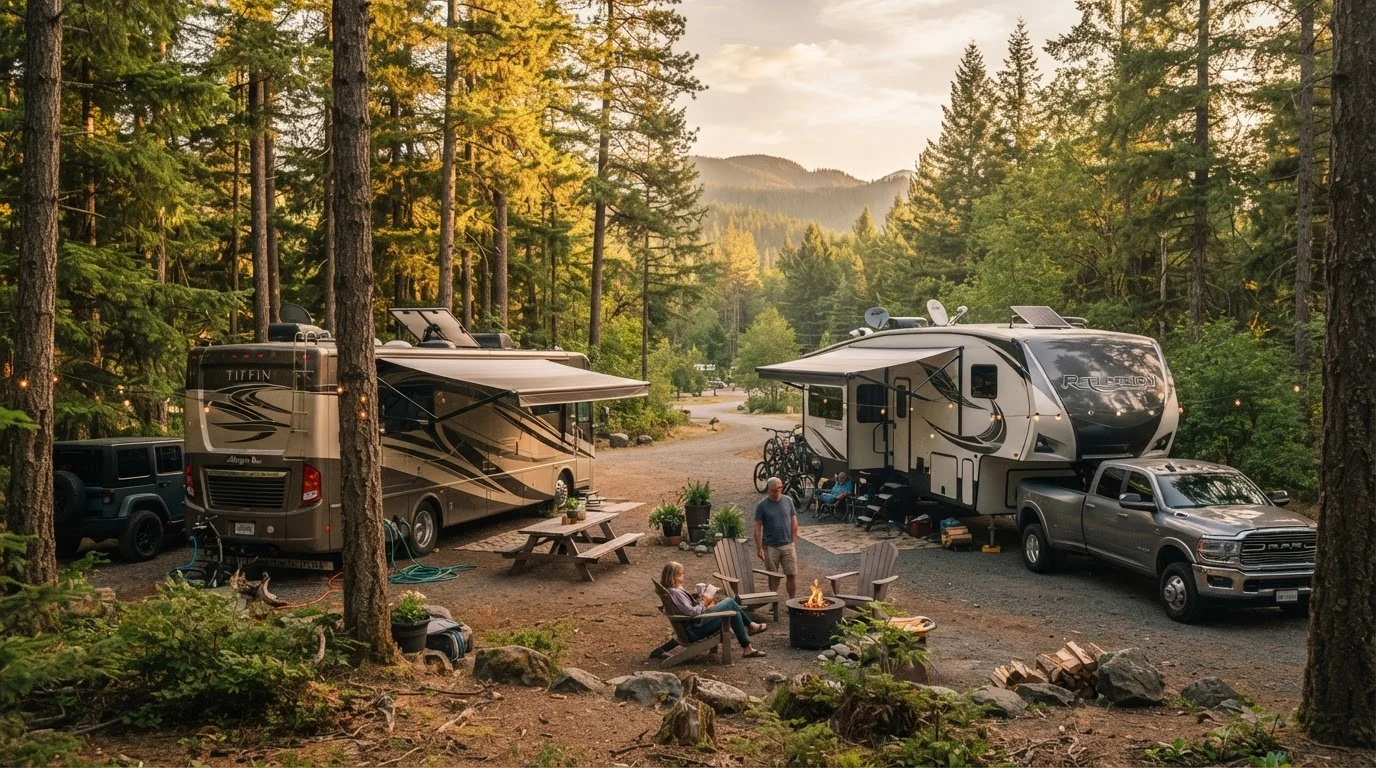
A motorhome - whether Class A, B, or C - is a single unit. The engine, cab, and living area are integrated. You sit down, turn the key, and drive your home. A fifth wheel is a towable trailer that hitches into the bed of a pickup truck via a specialized fifth-wheel hitch, which sits over the rear axle for stability. You drive the truck separately, then couple and decouple at each stop.
For a deeper look at how this self-propelled versus tow-behind distinction plays out across RV formats, see our motorhome vs. towable comparison. The implications for full-time living go well beyond travel day logistics - they affect your daily routine, budget, and the kind of campgrounds and campsites you can realistically use.
| Criterion | Motorhome | Fifth Wheel |
|---|---|---|
| Travel setup | Drive and go - no hitching required | Must hitch/unhitch at each stop |
| Daily vehicle | Toad car needed (extra cost) | Tow truck doubles as daily driver |
| Living space | Good; limited by chassis length | Generally larger; raised bedroom possible |
| Campsite flexibility | Some length restrictions apply | Similar restrictions; truck parks separately |
| Mechanical complexity | Single unit; engine + home combined | Two vehicles to maintain |
| Entry cost (general) | Higher if no existing vehicle | Lower if truck already owned |
| Breakdown impact | Home and transport affected together | Truck and trailer fail independently |
Living Space and Interior Design
Fifth wheels have a structural advantage here. The gooseneck-style front section that connects to the hitch creates a raised area - typically used as a master bedroom, bunk room, or loft - that motorhomes simply cannot replicate. Many full-timers in fifth wheels describe the layout as feeling closer to a small apartment than an RV.
Motorhomes have improved dramatically in interior design over the past decade, and Class A coaches in particular can offer generous slide-outs, full residential appliances, and king-size beds. But pound-for-pound, fifth wheels at a similar price point tend to deliver more usable square footage and ceiling height in the living area.
400+ sq ft
Common fifth wheel living area
Many full-size fifth wheels offer 380-450 square feet of interior space, often exceeding Class A motorhomes at similar price points.
2-3 hrs
Typical full campsite setup time
First-time fifth wheel owners often report setup times of two to three hours; experienced owners typically complete the process in under an hour.
15-20%
Estimated annual RV depreciation (first years)
Both motorhomes and towables typically depreciate rapidly in early years; exact rates vary by make, class, condition, and market conditions.
For full-timers, those extra feet matter. Storage for seasonal gear, a dedicated workspace, and room for a pet all become easier to manage in a larger footprint. That said, motorhome manufacturers have made real strides in smart storage design - don't dismiss them without doing an in-person walkthrough.
The Tow Vehicle Factor
Fifth wheels require a capable half-ton or three-quarter-ton pickup truck - and matching truck to trailer correctly is non-negotiable for safe operation. Gross vehicle weight rating (GVWR), payload capacity, and pin weight all factor into whether a specific truck can legally and safely pull a given fifth wheel. Sizing a truck to a fifth wheel involves more variables than most buyers initially expect, including bed length and hitch placement.
That truck, however, becomes your daily driver once the trailer is parked. Running into town, hauling supplies, or exploring rough terrain all become straightforward without needing to move your home. Motorhome owners who want the same flexibility typically tow a small car - called a toad or dinghy - behind the coach, which adds its own cost, complexity, and length concerns in campgrounds.
See our fifth wheel vs. travel trailer comparison for more on how hitching systems differ within the towable category itself.
Maintenance, Reliability, and Total Cost
Motorhomes carry the full mechanical burden in one unit. Engine, transmission, generator, and living systems are all your responsibility - and when something major fails, you may be living in a coach that can't move. Repair costs for large diesel pushers in particular can be substantial, and not every RV service center is equipped to handle chassis-level work.
Fifth wheel owners separate their mechanical risk. A truck breakdown doesn't trap you in your home - you're still in your trailer. Conversely, if the trailer needs repairs, your truck remains functional. The trade-off is that you're maintaining two vehicles rather than one.
Service Center Access Matters More Than Many Expect
Not all RV service centers handle motorhome chassis repairs - particularly on diesel pusher coaches. Before purchasing a motorhome for full-time use, research service availability along your intended travel routes. Fifth wheel owners have more flexibility since most truck dealerships can handle drivetrain service separately from trailer repairs.
Understanding the full lifestyle picture - from maintenance routines to campground selection - is essential before committing. Full-time RV living involves daily realities that go well beyond the initial purchase decision. And if you're still weighing whether the lifestyle suits you at all, the trade-offs worth knowing before you downsize offers an honest assessment.