Why Fifth-Wheel Math Is Different
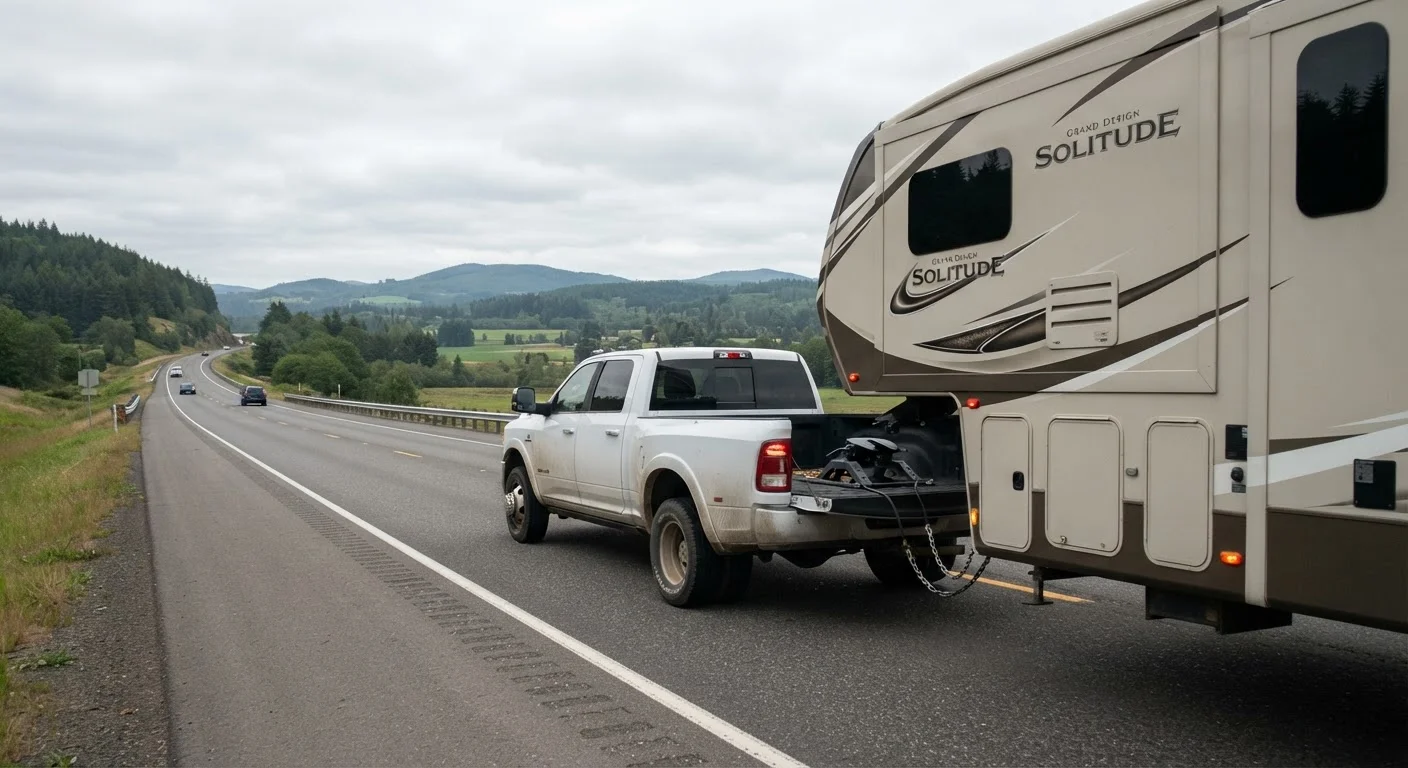
A fifth-wheel trailer transfers a significant share of its weight - typically 15-25% of its gross trailer weight - directly down onto the truck bed through the kingpin and hitch. That downward load, called pin weight, is counted against the truck's payload rating (the maximum weight the truck can carry in and on the vehicle itself), not against a separate towing budget. This is the single most misunderstood aspect of sizing a tow rig.
Many buyers focus on advertised tow ratings and stop there. But a truck's payload rating is determined by its Gross Vehicle Weight Rating (GVWR) minus its curb weight - and that number is fixed at the factory. Every pound of passengers, fuel, gear, and pin weight eats into it. Exceed it and you're operating outside the vehicle's engineered limits, which affects braking, suspension geometry, and tire load ratings simultaneously.
Understanding how bed length, cab style, and hitch placement interact is equally important. See our guide to truck bed configurations for a detailed breakdown of how these dimensions interact before you finalize a truck-trailer combination.
Payload and Pin Weight
Tow Rating and GVWR Alignment
Bed Length and Hitch Geometry
Drivetrain and Axle Ratio
Suspension, Tires, and Brakes
Tools You'll Need Before You Start
Working through this checklist requires a few specific data sources. The numbers that matter most live in documents you may not have consulted yet.
Driver's Door Jamb Sticker
Provides the truck's actual payload rating, tire placard, and GVWR - the authoritative source for capacity numbers.
Trailer Manufacturer's Spec Sheet
Lists the trailer's GVWR, pin weight, and base weight - essential inputs for payload and tow rating calculations.
Truck Owner's Manual (Towing Section)
Documents maximum fifth-wheel tow rating, GCWR, axle ratio options, and integrated trailer brake controller compatibility.
Portable Tongue/Pin Weight Scale
Measures actual pin weight under loaded conditions so you can verify real numbers match spec sheet estimates.
Fifth-Wheel Hitch Documentation
Confirms the hitch's rated pin weight capacity and specifies correct mounting position relative to the rear axle.
Common Pitfalls and What to Do Next
Even buyers who do their homework can underestimate how quickly payload headroom disappears. A crew cab configuration, fifth-wheel hitch hardware, a toolbox, two passengers, and a full fuel tank can together consume 1,200-1,500 lb of payload before the kingpin load is even added. If that pin weight is 2,000 lb on a trailer with a 10,000 lb GTW, you need at least 3,200-3,500 lb of payload - a figure that only a select subset of heavy-duty truck configurations actually deliver on a given build.
Payload Stickers Vary Significantly by Build
Two trucks of the same model year and trim can have meaningfully different payload ratings depending on cab style, bed length, engine, and factory options. Always read the sticker on the specific truck you plan to purchase or use - never rely on a generic spec from an advertisement or another owner's build. Using the wrong number can lead to an overloaded truck that handles unpredictably, especially during emergency braking.
Aftermarket Accessories Reduce Payload
Bed liners, toolboxes, fifth-wheel hitches, running boards, and roof racks all add curb weight, which directly reduces the payload headroom available for pin weight and passengers. Weigh or obtain accurate weights for every accessory you plan to install and subtract them from the payload budget before finalizing a trailer match.
Once you've confirmed your numbers are compatible, the next logical step is evaluating the ancillary towing equipment - brake controllers, extended mirrors, and weight-sensing systems. Our practical towing setup walkthrough covers those accessories in sequence. And if you're still deciding between trailer types, comparing fifth wheels and travel trailers lays out the hitch, stability, and living-space trade-offs side by side.
For those considering full-time RV living, the RV Living & Setup hub explores how a fifth-wheel fits into daily life versus motorhome alternatives - including the motorhome vs. fifth wheel comparison for full-timers.
This article is for general informational and educational purposes only. Always verify specifications against the manufacturer's documentation for your specific truck and trailer configuration, and consult a qualified mechanic or certified RV technician before making towing decisions.