Why Slide-Out Seals Fail in the First Place
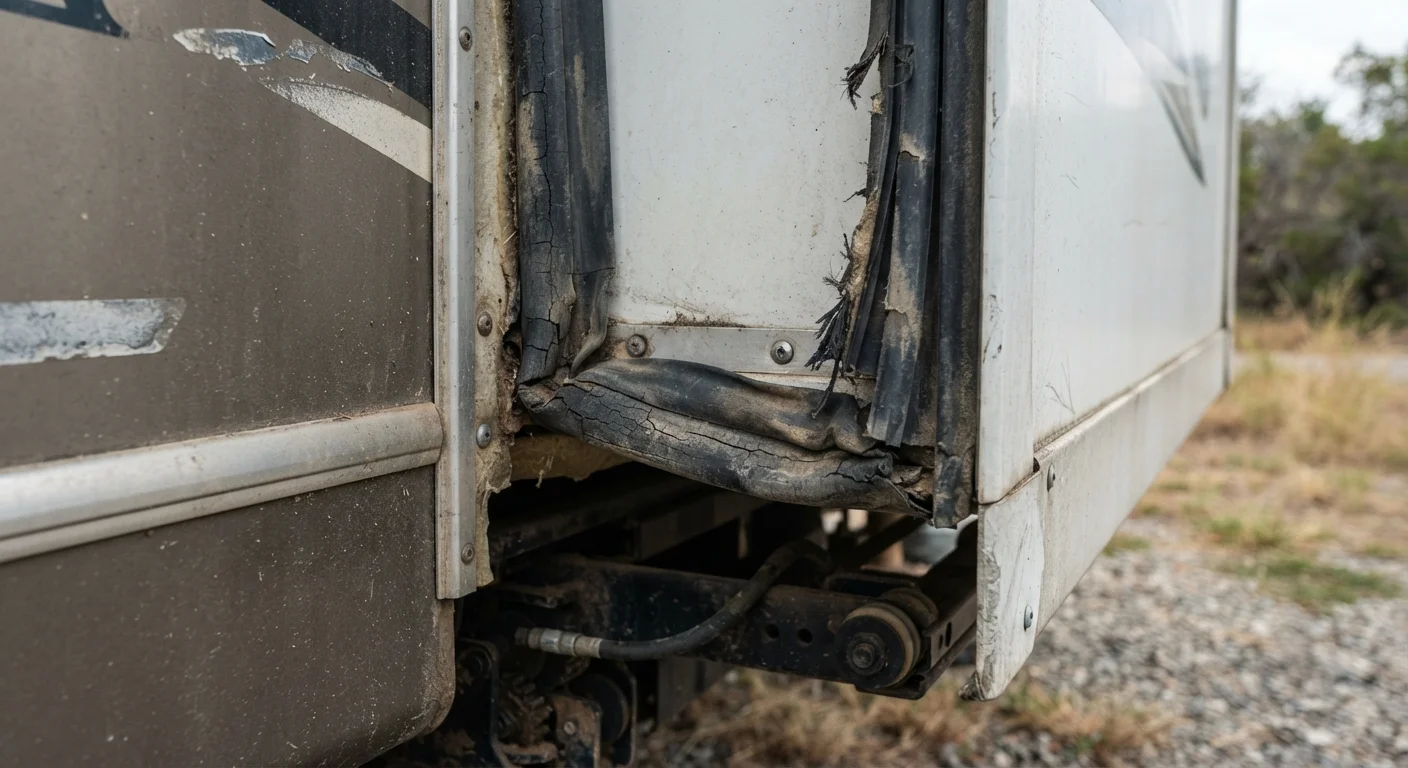
Slide-out rooms dramatically expand living space, but they introduce a vulnerable seam between the room's edge and the main RV body. The rubber wiper seals and bulb seals that bridge this gap are exposed to UV radiation, temperature swings, road debris, and compression stress every single trip. Over time, even high-quality seals lose their elasticity, flatten, crack, or pull away from the surface they're meant to protect.
Water intrusion along a failed slide-out seal doesn't always announce itself immediately. Moisture can track along the subfloor, saturate wall cavities, and begin promoting mold or rot well before you notice a drip or a soft spot underfoot. That delayed feedback loop is exactly why proactive seal inspection matters - by the time damage is obvious, the repair bill is already growing. For a broader look at how water works its way into an RV, see our article on sealing and caulking maintenance.
Getting the Diagnosis Right Before You Act
Effective slide-out seal maintenance starts with knowing what you're looking at. RVs use several seal types - wiper seals (blade-style rubber that sweeps the slide room's surface), bulb seals (hollow tubes that compress to create a barrier), and sometimes brush seals in combination. Each type wears differently and fails for different reasons, so a generic fix rarely works.
~85%
RV water damage traced to seals and seams
Industry repair data consistently indicates that the large majority of RV water intrusion claims originate at seal and seam failures rather than roof punctures or plumbing leaks.
2×/year
Minimum recommended seal inspection frequency
Most RV technicians recommend inspecting all exterior seals and slide-out gaskets at least twice annually, with additional checks after any significant weather event or extended trip.
Before applying any product or making adjustments, run the slide in and out while watching the full perimeter of contact. Look for daylight visible along the seal edge when the room is fully extended, feel for air movement around the perimeter from inside, and check for any staining, soft flooring material, or discoloration near the slide corners - all of which suggest water has already been entering. If you see evidence of existing water damage, consult our guidance on when to hire a certified technician before proceeding independently.
Don't Operate a Damaged Slide in Wet Conditions
If you've identified a seal that has separated, cracked, or is no longer making full contact, avoid extending the slide room during rain or when parked on uneven ground that could stress the mechanism further. Operating a slide with a compromised seal in wet conditions can push water directly into the wall cavity or subfloor. Temporarily parking with the slide retracted - and addressing the seal before your next trip - is far less costly than structural remediation.
Protecting Your Seals Through the Seasons
Seal longevity is directly tied to how consistently you maintain them. At minimum, inspect all slide-out seals twice a year - ideally in spring before your first trip and in fall before winter storage. If you use your RV year-round, add a quick visual check at every stop where weather conditions change significantly.
Lubrication is a critical step most owners either skip or perform incorrectly. Rubber conditioner products formulated specifically for RV seals keep the material supple and slow UV degradation; petroleum-based products can swell or break down rubber over time and should be avoided. Apply conditioner to clean seals using a soft cloth, working around the entire perimeter of each slide room. Pair this habit with your roof inspection routine - our article on RV roof care covers how a single annual walk-around can prevent cascading water damage. Before cold-weather storage, confirm all seals are clean, conditioned, and fully seated - part of the broader process outlined in winterising your RV.
This article is for general informational and educational purposes only. Maintenance tasks involving structural components of your RV carry real risk if performed incorrectly. When in doubt, consult a qualified RV service technician before proceeding.