Why the Line Between DIY and Professional Matters
RVs are rolling homes - hybrids of automotive engineering, residential plumbing, 12V and 120V electrical systems, and propane appliances all packed into a single vehicle. That complexity means the consequences of a repair gone wrong can range from a minor inconvenience to a genuine safety hazard. Setting the right boundary between what you handle yourself and what you escalate to a professional isn't about confidence; it's about honest risk assessment.
The good news is that a large portion of RV maintenance genuinely is owner-accessible. The challenge is that the tasks which look deceptively simple - a gas line fitting, a roof delamination patch, a slideout motor swap - are often the ones where inexperience creates secondary damage. For a grounded look at how this dynamic plays out across vehicle types, see which repairs most DIYers attempt too early and what to do instead.
| Criterion | DIY RV Repair | Certified RV Technician |
|---|---|---|
| Upfront cost | Lower (parts + tools only) | Higher (labor rates added) |
| Appropriate skill level | Basic to intermediate mechanical aptitude | Formal training and certification |
| Warranty impact | May void coverage on affected systems | Generally preserves warranty coverage |
| Safety assurance | Owner-dependent; variable | Backed by industry standards |
| Suitable repair types | Sealant, filters, 12V, cosmetic fixes | LP gas, 120V, structural, slideouts |
| Turnaround speed | Immediate when parts available | Subject to shop scheduling |
| Liability if something goes wrong | Owner assumes full responsibility | Technician and shop carry liability |
What DIY Handles Well - and Where It Breaks Down
Owners with basic mechanical aptitude and proper tools can confidently manage a defined tier of RV upkeep. This includes seam and vent sealant maintenance - one of the highest-leverage tasks for preventing water damage. Sealing and caulking an RV is a task most owners defer too long, yet it requires no special certification and pays dividends in structural protection. Similarly, regular roof inspections are something every owner should understand, even if deeper repairs get handed off.
Other owner-appropriate tasks include: flushing and sanitizing the fresh water system, replacing interior lighting with LED equivalents, lubricating slide-out rails and entry steps, swapping propane regulator covers (not the regulator itself), and changing generator air and oil filters per manufacturer intervals.
DIY breaks down when tasks cross into licensed trade territory or require specialized diagnostics. An improperly seated LP fitting can leak at a rate undetectable without a manometer. A wiring error on a 30A or 50A shore power connection can cause a fire or shock. These aren't scenarios where trial and error is acceptable. Understanding the real costs and limits of home repair is essential context before taking on any unfamiliar job.
~70%
RV water damage traced to sealant failure
Industry estimates from RV repair professionals consistently attribute the majority of RV water intrusion claims to failed or missing exterior sealant - a task within DIY reach.
30A / 50A
Shore power amperage at risk in DIY wiring errors
Most North American campground hookups operate at 30 or 50 amps - voltages that present serious shock and fire risk when connections are improperly made or inspected.
When a Certified Technician Is the Right Call
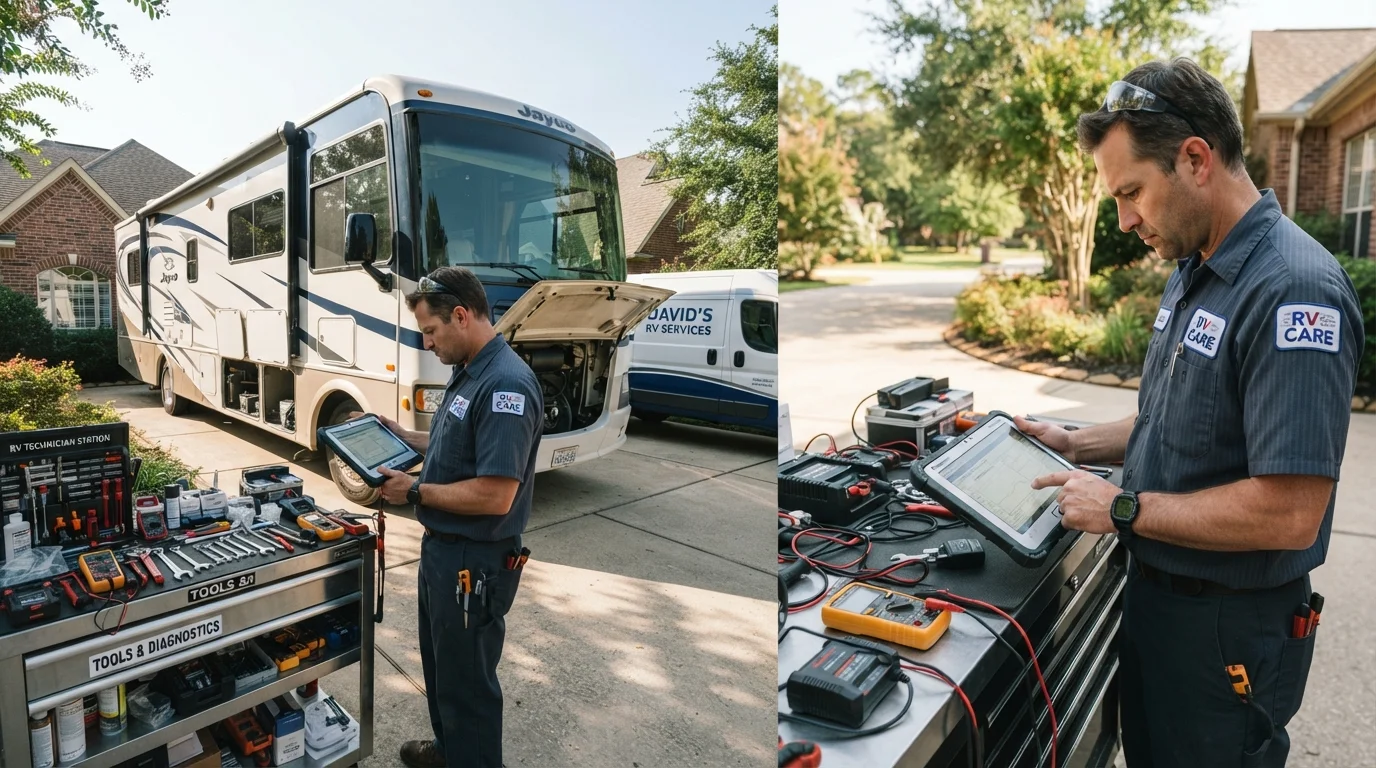
The Recreation Vehicle Industry Association (RVIA) maintains a certification program - the RVTAA (RV Technician Apprentice Assessment) and full RVIA certification - that verifies a technician's competency across RV systems. Choosing a certified technician matters most in four categories:
- LP gas systems: Any work involving gas line integrity, appliance connections, regulator replacement, or leak diagnosis requires both the right equipment and regulatory awareness. Mistakes here carry fire and carbon monoxide risk.
- High-voltage electrical: Shore power inlets, inverter/charger installations, and generator transfer switches operate at voltages that can be lethal. This work should be performed by someone with verifiable electrical training.
- Structural and roof delamination: Water infiltration that has reached the substrate requires careful assessment of how far damage has spread before any repair begins. Cosmetic patching over delaminated substrate accelerates deterioration.
- Slideout system failures: When a slideout won't seal or retract properly, understanding the root cause matters before attempting a fix. Motor, rack, or seal failures each require a different repair approach.
Warranty considerations add another layer. Most manufacturer warranties specify that covered systems must be serviced by a qualified technician. DIY work on those systems - even competent work - can sever your warranty coverage entirely.
Building a Sustainable Approach to RV Maintenance
The most capable RV owners typically operate with a tiered strategy: they handle predictable, low-risk maintenance on a regular schedule, document everything they do, and establish a relationship with a trusted certified technician for annual system inspections and anything outside their skill set.
Documentation matters more than most owners realize. Keeping a maintenance log - noting what was done, when, with what materials - creates a traceable record that supports warranty claims, resale conversations, and continuity when a technician takes over a job you started.
For owners who want to expand their DIY competence responsibly, a structured guide covering tools, technique, and job sequencing provides a sound foundation. The goal isn't to do everything yourself - it's to understand your rig well enough to make confident, informed decisions about what gets escalated and when.
Explore more DIY repair guides across vehicle types, or review the RV living and setup hub for broader guidance on keeping your rig road-ready year-round.
RVIA Technician Certification: What It Means
The Recreation Vehicle Industry Association (RVIA) operates a voluntary certification program for RV service technicians, covering systems including LP gas, electrical, plumbing, and appliances. Certification requires passing competency assessments and adherence to a code of ethics. When selecting a technician for complex repairs, asking about RVIA certification is a straightforward way to verify baseline competency. Certification status does not guarantee the quality of any individual repair, but it establishes that a technician has met industry-recognized training standards.
This article is for general informational purposes only. RV repair tasks involving gas, high-voltage electrical systems, or structural components carry real safety risks. Always consult a qualified, certified technician before undertaking repairs beyond your verified skill level, and refer to your specific RV's owner manual and applicable local regulations.