Why EV and Hybrid Depreciation Behaves Differently
Conventional depreciation wisdom - drive it off the lot, lose 10-20% immediately - applies broadly to combustion vehicles. For EVs and hybrids, the picture is more complicated. The used-vehicle market for electrified powertrains is still maturing, which means resale values can shift sharply in response to policy changes, new model releases, or charging infrastructure developments.
EVs carry a depreciation variable that combustion vehicles don't: battery degradation. A used EV's value is closely tied to how much range it can still deliver. Buyers in the used market scrutinize battery state-of-health reports and remaining warranty coverage carefully. Battery degradation data shows that most modern EV packs lose capacity gradually rather than abruptly, but uncertainty around this still depresses buyer confidence - and prices.
Hybrids, by contrast, use smaller battery packs that experience less stress and are typically covered under longer powertrain warranties. This translates to a more predictable resale curve, particularly for models in high-demand categories like compact SUVs and midsize sedans.
Warranty Coverage as a Resale Signal
Federal law requires EV manufacturers to warranty the battery pack for at least 8 years or 100,000 miles, whichever comes first. How much of that coverage transfers to a subsequent owner is a key pricing variable in the used EV market. Buyers should verify transferability directly with the manufacturer before finalizing any used EV purchase.
The Federal Incentive Effect on Used EV Values
Federal tax credits for new EV purchases have a secondary market consequence that's easy to overlook. When a new EV qualifies for a significant credit, its effective transaction price drops - which anchors used-vehicle pricing expectations lower. When credits are restructured or expanded to cover used EVs directly, it can either support or disrupt existing resale prices depending on eligibility thresholds and income caps.
This policy sensitivity creates resale volatility that buyers of combustion vehicles rarely encounter. A model that was strong on residual value one year can lose its pricing floor the next if a successor qualifies for credits it didn't. For anyone evaluating total cost of ownership across EVs and hybrids, factoring in incentive landscape changes is as important as estimating fuel savings.
~50%
Average 3-year depreciation for some early EV models
Industry analyses from automotive valuation firms have noted select first-generation EVs losing around half their value within three years, compared to roughly 35-40% for comparable combustion models.
~15-25%
Typical 3-year depreciation for popular hybrid models
Hybrid vehicles in high-demand segments have historically depreciated at rates closer to conventional vehicles, supported by strong consumer familiarity and proven reliability records.
$4,000
Used EV federal tax credit cap (where eligible)
The Inflation Reduction Act introduced a used clean vehicle credit of up to $4,000, which can influence used EV transaction prices and demand dynamics in the secondary market.
Technology Obsolescence: A Risk Unique to EVs
Combustion engines evolve slowly. An eight-year-old ICE vehicle doesn't feel technologically stranded in the way an early-generation EV might. Rapid improvements in range, faster charging standards, and over-the-air software capabilities mean that older EV hardware can feel obsolete well before it's mechanically worn out. This accelerates perceived depreciation even when the vehicle still functions reliably.
Charging infrastructure compatibility is a concrete example. A vehicle built around a legacy charging standard may command a lower resale price as the market consolidates around newer connectors. Similarly, vehicles with significantly lower rated range than current-generation equivalents face steeper discounting in the used market - buyers compare against what's available new.
Evaluating these factors before committing to a purchase - new or used - can materially affect the financial outcome of ownership. See also our overview of how vehicle depreciation works for the foundational mechanics.
“Residual value in the EV market is being set by a moving target. Buyers and lessors are pricing not just the car's condition but the risk that a better, cheaper version arrives next year.”
— Ivan Drury, Director of Insights, Edmunds
What Resale Patterns Mean for Buyers
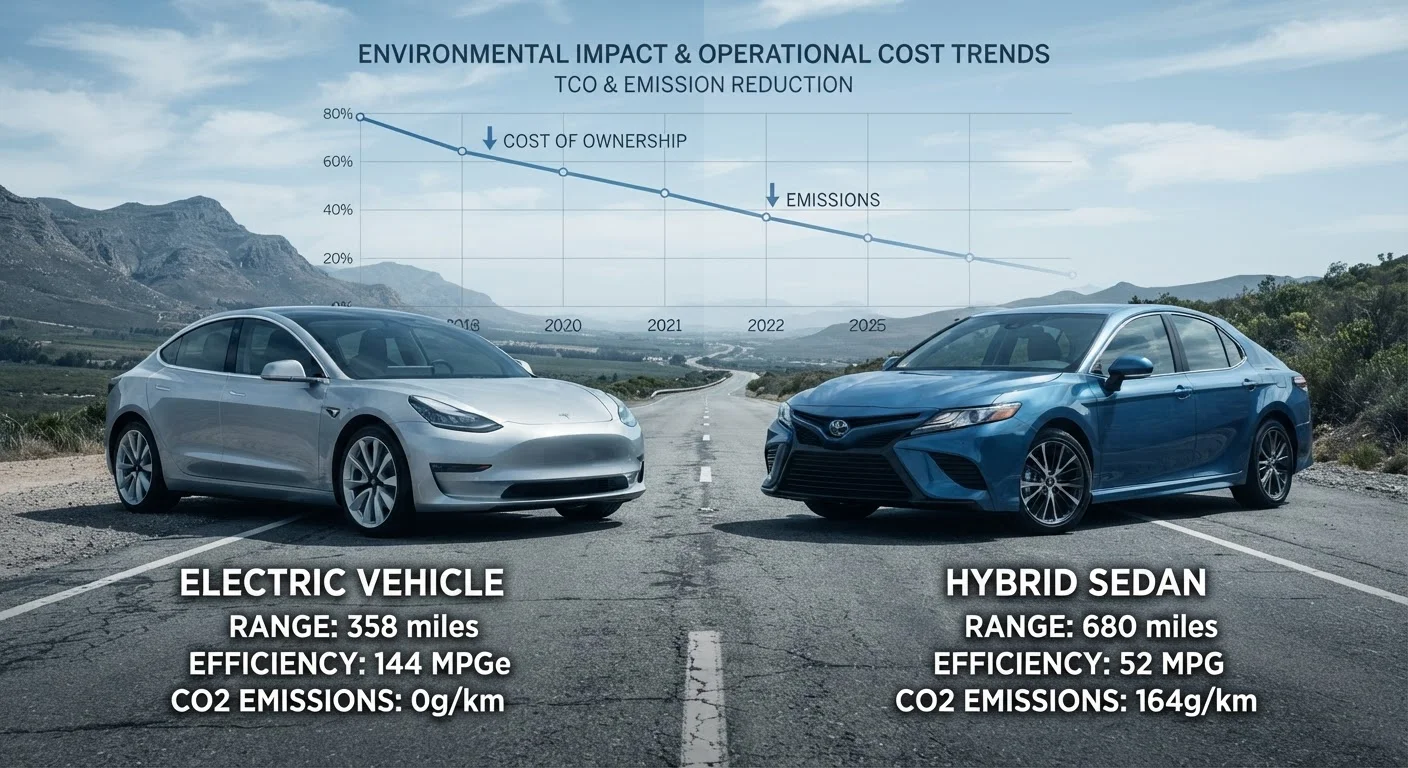
For buyers weighing an EV or hybrid purchase, depreciation patterns carry practical implications on both sides of the transaction. Purchasing a used EV that has already absorbed its steepest early depreciation can offer meaningful value - assuming battery health checks out and warranty coverage remains. The range, efficiency, and cost framework is a useful structure for that evaluation.
For new-vehicle buyers, residual value projections affect leasing terms directly - lower residuals mean higher monthly payments on the same vehicle. Understanding where a model sits in the depreciation curve is therefore not just a resale concern; it's a financing variable from day one.
Hybrids occupying practical, high-demand segments have tended to hold value more predictably, making them a lower-risk choice for buyers who prioritize residual stability. EVs in premium or niche segments have shown the widest depreciation variance - high highs and low lows depending on brand cachet, charging ecosystem, and technology generation. Ownership cost planning should account for this variance explicitly rather than assuming average depreciation rates apply uniformly.
This article provides general financial and vehicle ownership information for educational purposes only. It does not constitute personalized financial advice. Readers should consult a qualified financial adviser or automotive professional before making purchase or financing decisions.
Request a Battery Health Report Before Buying Used
When evaluating a used EV, ask the seller for a battery state-of-health report, which many manufacturers can generate via their service network. This document provides a more accurate picture of remaining range and long-term reliability than odometer readings alone. A qualified mechanic with EV experience can also run diagnostics independently.