Why a Structured Framework Matters
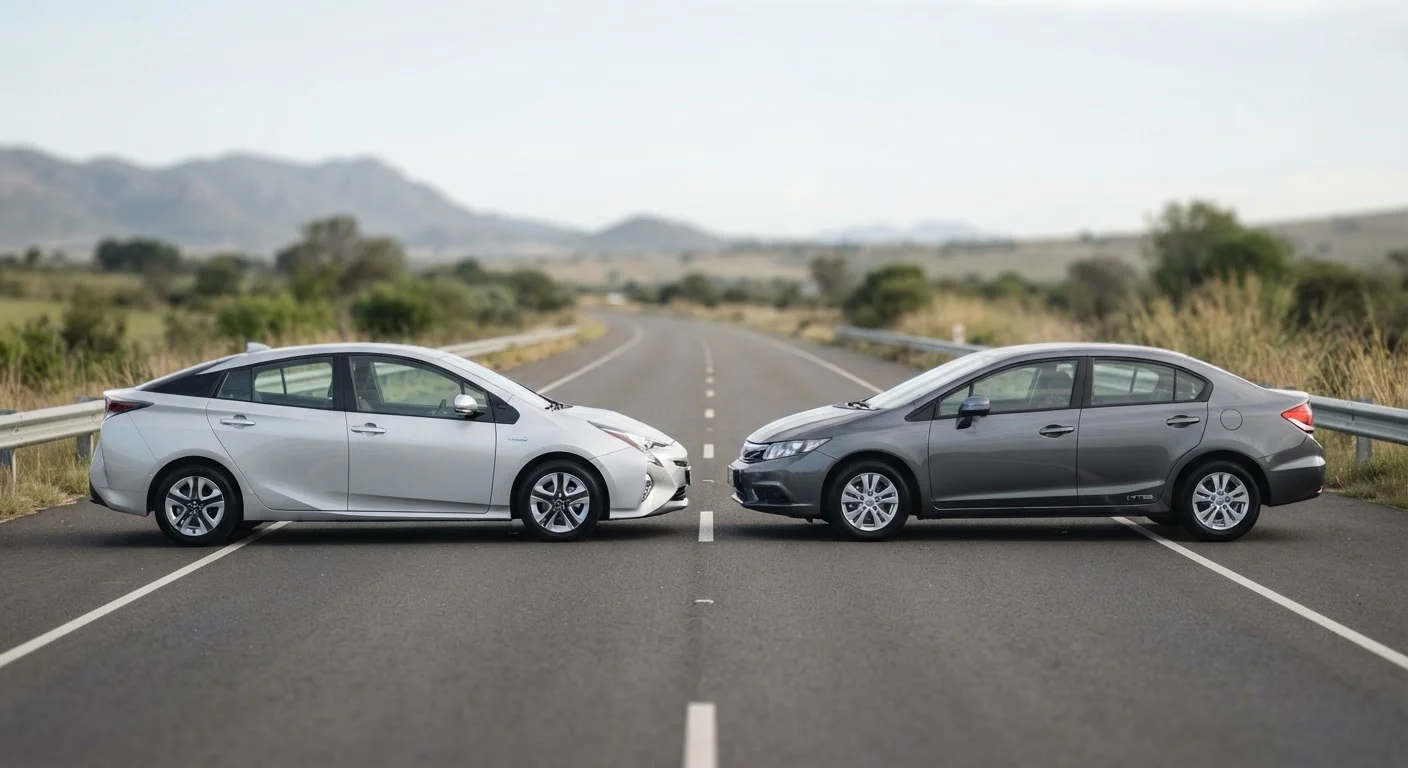
Comparing an BEV, a plug-in hybrid (PHEV), and a conventional hybrid without a shared framework is like judging fuel economy by horsepower - the numbers exist, but they measure different things. Before diving into specific figures, it helps to agree on what you're actually measuring and why each metric earns its place in the analysis.
Start with the glossary. If terms like mild hybrid, full hybrid, PHEV, and BEV are still fuzzy, the plain-language powertrain glossary establishes the baseline definitions every comparison in this article assumes. Once powertrain categories are clear, three evaluation pillars hold up every meaningful comparison: range, efficiency, and total cost of ownership.
Use EPA Figures as Floors, Not Ceilings
Treat official range and efficiency ratings as a starting benchmark, not a guarantee. Factor in your climate, typical trip length, and access to charging infrastructure to arrive at a more realistic picture of real-world performance. Third-party real-world testing data from organizations like the AAA and independent automotive media often provides useful cross-references.
Decoding Range: What the Numbers Actually Mean
The EPA range estimate is the industry's standard yardstick for BEVs, but it comes with a caveat: real-world range routinely runs 10-20% below the rated figure, depending on ambient temperature, highway speed, HVAC load, and cargo weight. Cold climates and sustained highway driving are the two biggest range killers for battery-electric models.
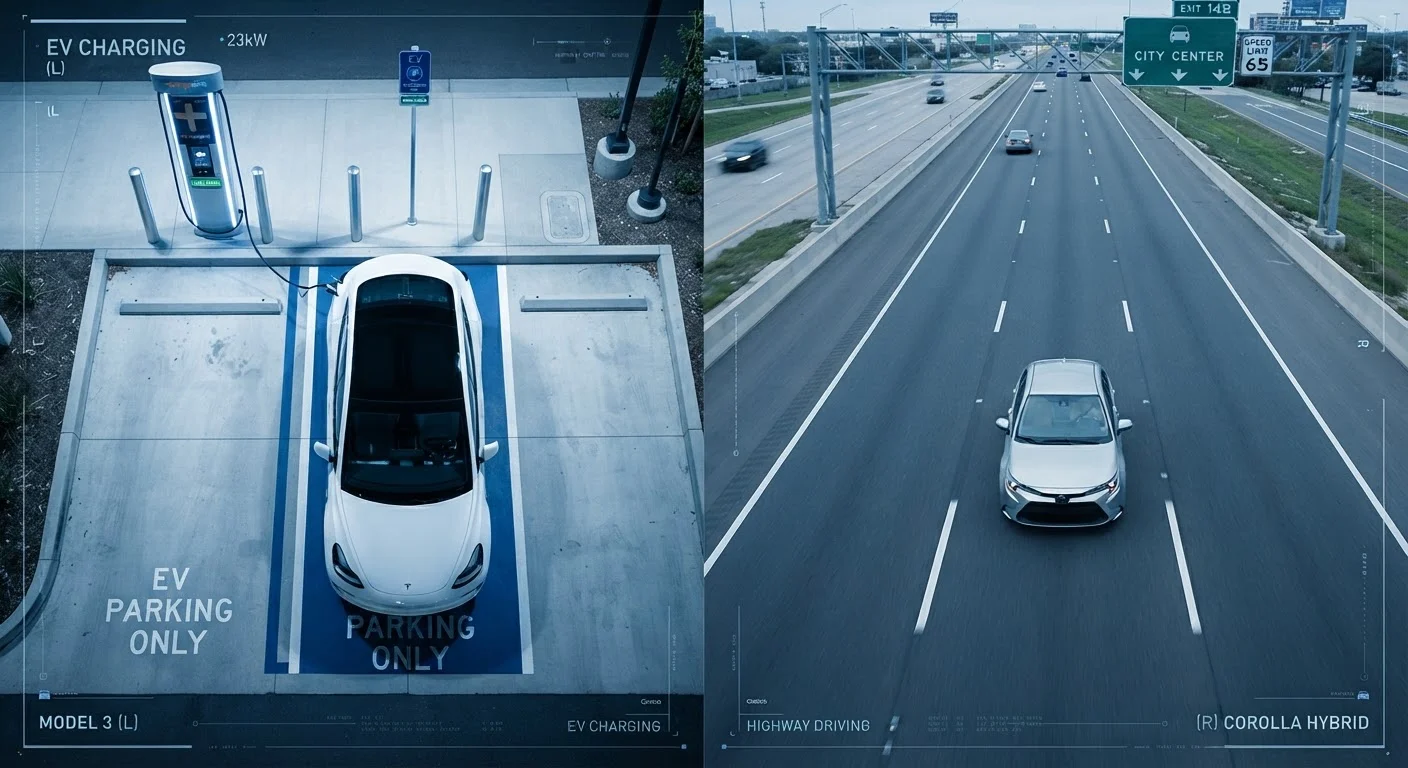
For PHEVs, the EPA publishes two separate range figures - electric-only (EV) range and total range including the combustion engine. The electric-only range is typically 20-50 miles for most current PHEVs, which covers average US daily commutes but leaves long-distance trips dependent on gasoline. Conventional hybrids, by contrast, list only total range, since their electric assist never operates independently.
10-20%
Typical real-world range shortfall vs. EPA rating
Based on aggregated owner-reported data from independent EV tracking organizations; varies significantly by temperature and driving speed.
33.7 kWh
Energy equivalent of one gallon of gasoline
The EPA uses this conversion factor to calculate MPGe ratings, enabling comparisons between electric and combustion powertrain efficiency.
~16¢/kWh
US average residential electricity rate
According to the U.S. Energy Information Administration; rates vary considerably by state and utility provider.
Range anxiety is more nuanced than headline mileage suggests. Charging infrastructure density along your typical routes matters as much as pack capacity. The guide to EV charging levels breaks down how Level 1, Level 2, and DC fast charging interact with real-world range planning.
Efficiency Metrics Side by Side
The EPA's MPGe metric converts electrical energy consumption into a gasoline-equivalent figure, enabling direct efficiency comparisons across powertrain types. One gallon of gasoline contains approximately 33.7 kWh of energy - so an EV consuming 25 kWh per 100 miles scores roughly 135 MPGe.
For conventional hybrids, standard MPG ratings apply. The efficiency gap between a mid-size hybrid sedan (mid-40s MPG combined) and a comparable non-hybrid (mid-30s MPG) is meaningful over a 15,000-mile annual driving cycle, but the gap between either of those and a BEV rated above 100 MPGe is substantially larger.
When comparing efficiency figures, always cross-reference the EPA's city and highway split rather than relying solely on the combined MPGe number - BEVs and hybrids often show a reversed city/highway pattern compared to combustion vehicles.
Regenerative braking recovers significant energy in stop-and-go driving, meaning urban efficiency can exceed highway efficiency for electrified powertrains - the opposite of what combustion-engine drivers are accustomed to.
Build a 15% range buffer into any BEV road-trip plan and pre-condition the battery to operating temperature before departure, especially in sub-40°F conditions.
Cold-weather battery performance degradation is well-documented; proactive thermal management via scheduled pre-conditioning (while still plugged in) preserves usable range without draining the pack.
One often-overlooked efficiency variable is regenerative braking recapture. City driving patterns - with frequent deceleration - recover more energy than highway cruising, which is why hybrid and EV efficiency ratings often favor city figures over highway, reversing the pattern of combustion-only vehicles. For urban commuters, this effect compounds over time.
Total Cost of Ownership: Acquisition to Exit
Sticker price is the least informative cost metric for electrified vehicles. A disciplined TCO analysis stacks acquisition cost, available tax credits (subject to income limits and vehicle eligibility under current federal rules), fuel or electricity costs, insurance, scheduled maintenance, and projected resale value into a single comparable figure.
Electricity Rates Determine EV Fuel-Cost Savings
The economic case for BEV ownership is highly sensitive to your local electricity rate and when you charge. Off-peak time-of-use rates can reduce per-mile energy costs significantly, while high-rate daytime charging narrows the gap with gasoline. Run the calculation with your actual utility rate - not national averages - before projecting savings.
Fuel cost calculations require a local electricity rate. The US average hovers around 16 cents per kWh, but rates vary significantly by state and utility. At that average, charging a 75 kWh battery costs roughly $12 - equivalent to covering 250-300 miles. Gasoline at $3.50/gallon in a 30 MPG vehicle costs around $43 for the same distance.
Maintenance costs favor electrified powertrains: BEVs eliminate oil changes, transmission fluid, and many brake services (regenerative braking reduces pad wear). Hybrids occupy a middle position - they still require combustion engine servicing but less frequently than non-hybrid equivalents.
Depreciation is the wildcard. Resale value trends in EVs and hybrids shows that some BEV models have experienced sharper first-year depreciation than comparable ICE vehicles, partly driven by rapid model-year updates and falling new-vehicle prices. Financing structures interact with depreciation - for background on rates and loan terms, see the auto financing rates and terms hub.
Matching the Framework to Your Driving Profile
The three pillars - range, efficiency, and TCO - don't carry equal weight for every driver. A city commuter averaging under 40 miles daily who has access to home charging extracts maximum value from a PHEV or BEV. A long-haul driver without reliable DC fast charging access may find a conventional hybrid delivers better practical utility at lower total cost despite lower efficiency ratings.
The city commuter vs. long-distance driver powertrain guide maps these use-case patterns in detail. Similarly, if you're evaluating electrified trucks or SUVs, the trucks and SUVs comparison hub layers in towing and payload considerations that significantly affect real-world EV range estimates.
Home charging access is a foundational variable. Setting up a Level 2 charger involves electrical panel capacity, installation costs, and permit considerations covered in the home charging infrastructure guide.
Key Questions Before You Decide
Applying this framework to any specific purchase decision distills into a set of diagnostic questions worth running through before committing:
- Does your daily mileage fall within the EV-only range of a PHEV? If yes, you may drive primarily electric with a gasoline safety net.
- What is your local electricity rate, and do you have - or can you install - home charging? Without home charging, BEV economics change materially.
- How long do you plan to own the vehicle? Longer ownership periods favor lower operating costs; shorter holds make depreciation more consequential.
- Is towing or heavy payload part of your use case? Both reduce EV range substantially - often by 30-50% depending on load and grade.
For a broader pre-purchase checklist covering warranty terms, charging infrastructure, and model-year timing, the EV and hybrid buying factors guide extends this framework into the full evaluation process. For a direct powertrain comparison, EV vs. hybrid: which powertrain fits your driving life offers a focused side-by-side view.
Tax Credit Eligibility Changes Frequently
Federal EV tax credits under current US legislation include income caps, vehicle price limits, and battery sourcing requirements that have changed multiple times in recent years. Do not assume a vehicle qualifies for any specific credit amount until you have verified current eligibility criteria with a tax professional or the IRS directly.
This article provides general educational information about evaluating electrified vehicles. It does not constitute personalised financial, tax, or purchasing advice. Tax credit eligibility and incentive structures change; consult a qualified tax professional or financial adviser for guidance specific to your situation.