
How Each Rate Structure Works
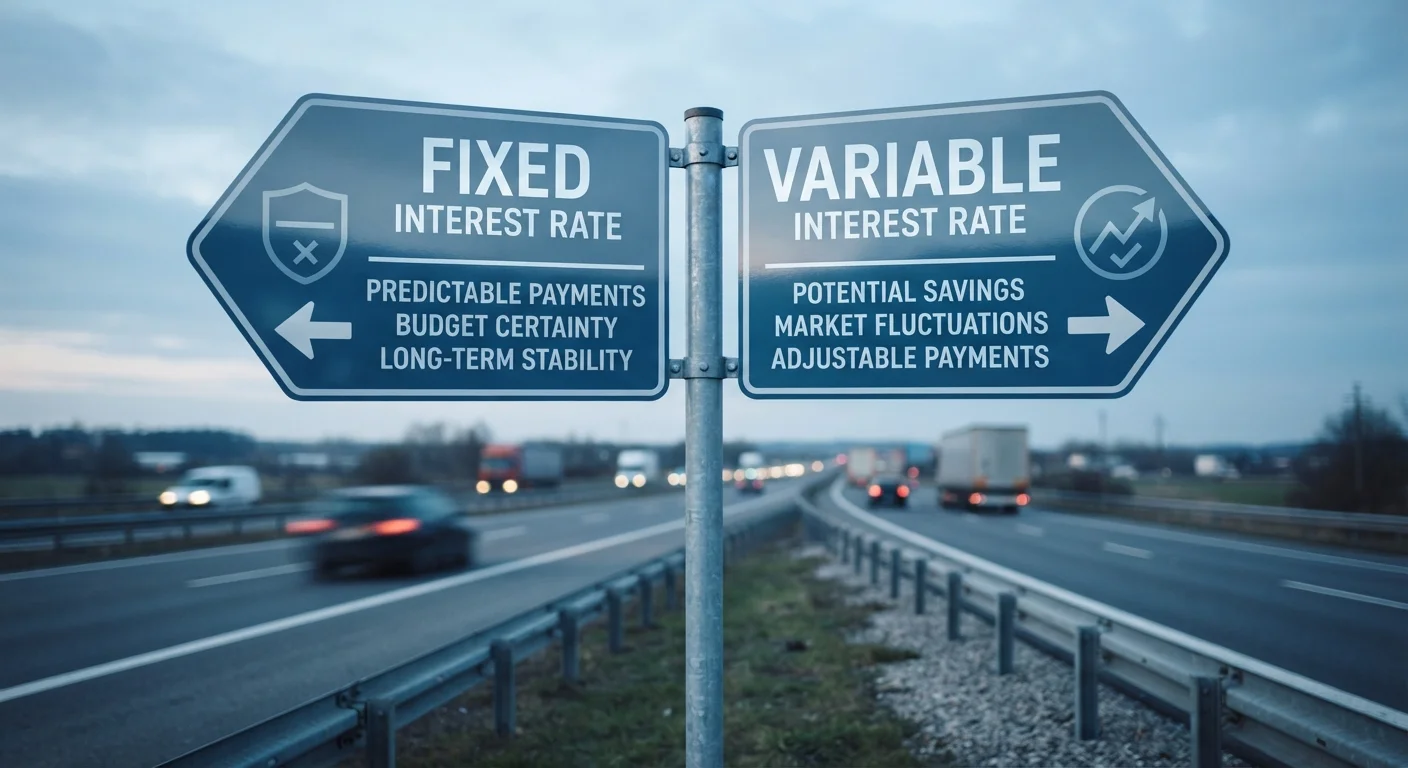
A fixed-rate auto loan sets your annual percentage rate at the time of origination. That rate - and the resulting monthly payment - does not change regardless of what happens to broader interest rate markets. Every payment applies the same interest factor to the declining principal balance, producing a fully amortizing loan with a predictable payoff date.
A variable-rate auto loan (sometimes called an adjustable-rate loan) ties your rate to a benchmark index - historically the Prime Rate or LIBOR, and increasingly the Secured Overnight Financing Rate (SOFR) following LIBOR's phase-out. Lenders add a fixed margin on top of that index. When the benchmark moves, so does your effective rate and, consequently, your payment. Adjustment intervals vary by loan agreement.
Understanding how principal, rate, and term interact is foundational here. For a deeper look at loan math, see how auto loans are structured. It is also worth distinguishing your stated interest rate from the APR figure lenders are required to disclose - APR captures fees that the raw rate does not.
| Criterion | Fixed-Rate Auto Loan | Variable-Rate Auto Loan |
|---|---|---|
| Rate stability | Locked for full term | Adjusts with benchmark index |
| Payment predictability | Identical each month | Can rise or fall over time |
| Benchmark exposure | None after origination | Ongoing throughout loan term |
| Prevalence in US auto market | Dominant structure | Relatively uncommon |
| Ideal rate environment | Stable or rising rates | Declining rates |
| Risk profile | Low payment risk | Moderate to higher payment risk |
| Best loan term fit | Any term, especially 48-72 months | Shorter payoff horizons |
Rate Risk and Real-World Context for US Auto Buyers
Variable-rate auto loans are significantly less common in US retail auto lending than in mortgage or personal loan markets. Most franchised dealerships and captive finance arms offer fixed-rate installment contracts almost exclusively. Where variable structures do appear, it tends to be in credit union products or certain bank-direct loans with short initial fixed periods.
72 months
Common maximum auto loan term in US retail lending
Industry data from sources including Experian and the Federal Reserve consistently show loan terms extending to 72 and even 84 months, amplifying the importance of rate structure choice.
5%+
Federal Reserve benchmark rate increase across 2022-2023
The Federal Reserve raised the federal funds rate by more than 500 basis points between March 2022 and mid-2023, illustrating how sharply benchmark rates can move within a single loan term.
This matters because the theoretical appeal of a variable rate - the possibility of a lower starting rate that adjusts downward - must be weighed against the practical reality that most US auto loan terms run 48 to 72 months. Over that window, benchmark rates can shift substantially, as the 2022-2023 Federal Reserve rate cycle demonstrated. A borrower who locked a fixed rate before benchmark increases avoided the payment creep a variable-rate holder would have experienced.
Your credit tier shapes which starting rates you can realistically access under either structure. Credit score tiers translate directly into rate bands, and a stronger profile narrows the spread between fixed and variable offers - reducing the incentive to accept rate-change risk for a marginally lower initial rate.
LIBOR Phase-Out Affects Variable-Rate Loan Language
The London Interbank Offered Rate (LIBOR) was formally discontinued for most USD settings after June 2023. Variable-rate loan agreements issued after this transition should reference SOFR or another approved alternative benchmark. If you are reviewing an older variable-rate loan or refinancing one, confirm which index currently governs your rate adjustments.
Once you have a rate offer in hand, structure alone does not tell you whether it is a good deal. Benchmarking it against current market conditions is essential - learn how to evaluate whether a rate offer is genuinely competitive before signing.
This article provides general financial education only and does not constitute personalized financial or lending advice. Consult a qualified financial professional regarding your specific borrowing situation.