Why Provenance Is More Than a Paperwork Exercise
In collector car markets, provenance - the documented history of a vehicle's origins, ownership, and condition over time - functions as independent verification of every claim a seller or owner makes. Without it, even a genuinely original car competes on appearance alone against well-executed clones and tribute builds. With it, a vehicle carries a story that can be examined, challenged, and ultimately confirmed.
The practical consequences are tangible. Auction houses routinely assign higher estimate ranges to cars with coherent documentation files. Specialist appraisers weight provenance heavily when establishing values for agreed-value insurance policies. And within marque communities, a car known to carry its original build sheet and an unbroken title chain occupies a different tier entirely from an otherwise identical example of uncertain history.
Provenance also matters for the historical record. Classic vehicles are artifacts of American industrial and cultural history. Preserving their documentation contributes to a body of knowledge that marque historians, museum curators, and future collectors depend on. As explored in our full overview of classic car ownership, stewardship of that history is one of the responsibilities that comes with the privilege of owning these vehicles.
Leverage Marque Clubs Early
Many single-marque clubs maintain factory order records, dealer allocation logs, and owner registries stretching back decades. Reaching out to a relevant club before you begin your own research can save significant time and uncover documents you didn't know existed. See our article on how collector registries and clubs preserve rare automotive history for a fuller picture of what these organizations hold.
What to Gather, How to Verify, and How to Preserve It
Building a provenance file is a methodical process. The steps below guide you from initial inventory through long-term preservation. Before starting, confirm you have the prerequisites listed above and the tools identified in the equipment section.
What you will need
Flatbed Document Scanner
Creates high-resolution digital copies of fragile paper documents without physical stress on folds or brittle edges.
Acid-Free Archival Sleeves and Folders
Protects paper documents from acidic degradation, humidity, and UV light during long-term storage.
Cloud or External-Drive Backup
Ensures digital copies survive local hardware failure, fire, or flood.
Marque Club Membership or Registry Access
Provides access to factory order data, build records, and previous owner correspondence that cannot be found elsewhere.
State DMV Title History Request Form
Enables formal requests for historical title and registration records from the issuing state authority.
Gather and Catalog Every Existing Document
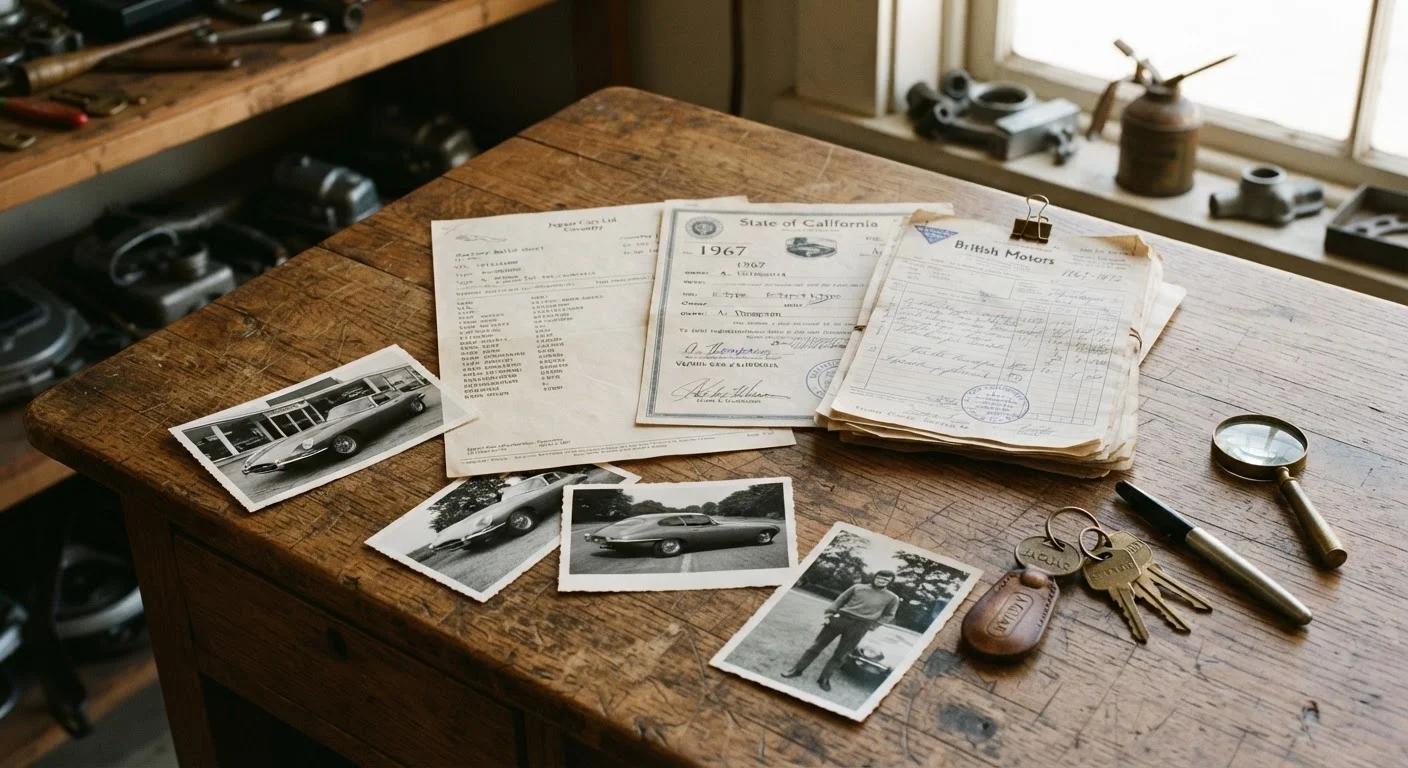
Begin by assembling every piece of paper associated with the vehicle: titles (current and any prior), registration certificates, dealer invoices, window stickers, insurance cards, service receipts, correspondence, and photographs. Even items that seem minor - a handwritten note, a parts receipt from 1974 - can corroborate ownership timelines or restoration decisions.
Create a simple inventory spreadsheet listing each document by type, approximate date, and current physical condition. Note whether you have an original or a copy, and flag any items that are fragile, faded, or water-damaged for priority conservation.
Decode the VIN and Locate the Factory Build Sheet
The VIN is the anchor point of all provenance research. Use the full 17-digit VIN (post-1981) or the marque-specific partial VIN (pre-1981) to decode the vehicle's original factory specifications: engine, transmission, exterior color, interior trim, and option packages. Authoritative decode resources exist for most major American makes through marque clubs and published factory service documentation.
The factory build sheet - sometimes called a broadcast sheet - was a production order placed under seats, behind dashboards, or inside trunk liners during assembly. If yours is missing, contact the relevant marque club or a decoder service that holds factory production records. Understanding what the car left the factory with is the foundation against which all subsequent changes are measured. For a detailed look at how these documents influence perceived value, see how provenance documents shape a classic vehicle's story and its price.
Research and Document the Ownership Chain
A complete chain of ownership - from original retail purchaser to present - is among the strongest provenance signals in collector markets. Request a title history from the issuing state's DMV; many states retain records going back several decades, though availability varies. Some states require a notarized request or proof of current ownership.
Cross-reference title data against any physical titles in your possession. Where gaps exist, seller correspondence, estate documentation, or marque club registry records can sometimes bridge them. Even a partial chain is significantly more credible than no chain at all.
Compile Period Photographs and Independent Corroboration
Period photographs serve a distinct evidentiary function: they establish the car's appearance, configuration, and condition at a specific point in time independent of any owner's claim. Look for dated prints, photo-lab timestamps, or images published in period magazines, club newsletters, or regional show programs that feature the vehicle.
Compare photographic evidence against the decoded build sheet to identify when factory features were present, when modifications occurred, and whether any current components are documented as original. This cross-referencing step is what separates a credible provenance file from a collection of assertions. For context on how unverified claims are scrutinized, see why provenance claims on specialty vehicles fail under scrutiny.
Digitize, Organize, and Store the Complete File
Scan every document at a minimum of 600 dpi in color, even items that appear black and white - faded ink and watermarks often require color scanning to capture fully. Name files consistently: [Year]-[Make]-[Model]-[DocumentType]-[OriginalDate]. Maintain at least two geographically separate digital backups (e.g., an external drive stored off-site and a cloud service).
For physical storage, place originals in individual acid-free polyester sleeves inside an archival-grade binder or box. Store in a climate-controlled environment - ideally 60-70°F with relative humidity below 50%. Keep physical and digital inventories synchronized so that any future owner can navigate the file without your guidance.
Register With the Relevant Marque Club or Owner Registry
Submitting your vehicle's documentation to a recognized marque club or independent owner registry creates a third-party record that survives changes in ownership. Many clubs issue a certificate of registry that itself becomes a provenance document. Some maintain searchable databases accessible to future buyers, appraisers, and historians.
Registration also connects you to a community of owners who may hold overlapping records - photographs, service records, or correspondence from earlier owners. For guidance on how production numbers and option codes affect value, cross-referencing your findings with registry data is especially useful for rare factory configurations.
Originals Cannot Be Recreated
Factory documents - build sheets, broadcast sheets, original titles - exist in limited copies or as single originals. Once lost to moisture, pests, or fire, they cannot be reproduced with equivalent evidentiary weight. Prioritize physical preservation above all other steps in this process.
Avoid Altering or 'Completing' Documents
Adding information to an original document - even to correct an apparent error - destroys its integrity as evidence and may constitute fraud in a commercial context. Always annotate a separate reference copy and leave primary documents untouched.
Once your file is complete, consider how it will accompany the car through future transfers of ownership. A well-organized binder with a cover index, supplemented by a digital backup on a USB drive kept with the title, gives any subsequent owner - or appraiser - immediate access to the full record. For the next step in building long-term documentation habits, see our guide on building a personal maintenance log. And if you are preparing documentation for a formal appraisal or auction consignment, the standards involved are covered in depth in what appraisers actually need from a documentation file.
This article provides general educational information about classic vehicle documentation practices. It is not legal, financial, or appraisal advice. For decisions affecting insurance coverage, taxation, or estate matters, consult a qualified professional with relevant expertise.