Why Documentation Matters Beyond the Driveway
When it comes time to sell or trade a vehicle, buyers and dealers are essentially buying your history of ownership as much as the vehicle itself. A maintenance log transforms an abstract claim - "it was well maintained" - into verifiable evidence. Prospective buyers can see the oil change cadence, the brake job at 45,000 miles, and the timing belt replaced on schedule rather than taking your word for it.
This credibility effect extends well beyond everyday used-car sales. If you own a classic or collector vehicle, documentation carries even more weight. See how records shape value in our guide on provenance documents and classic vehicle pricing.
Routine record-keeping also feeds directly into smarter ownership decisions. Tracking when each service was performed helps you anticipate upcoming needs before they become urgent - and that kind of proactive approach is central to keeping long-term ownership costs under control.
~77%
Used-car buyers who consider service history important
Industry surveys consistently show the large majority of private used-vehicle buyers place significant weight on documented maintenance history when evaluating a purchase.
3-5 years
Typical span of receipts most owners can reconstruct
Most vehicle owners retain shop invoices and receipts for only a few years, underscoring the advantage of maintaining a continuous log from the start of ownership.
What to Record in Every Entry
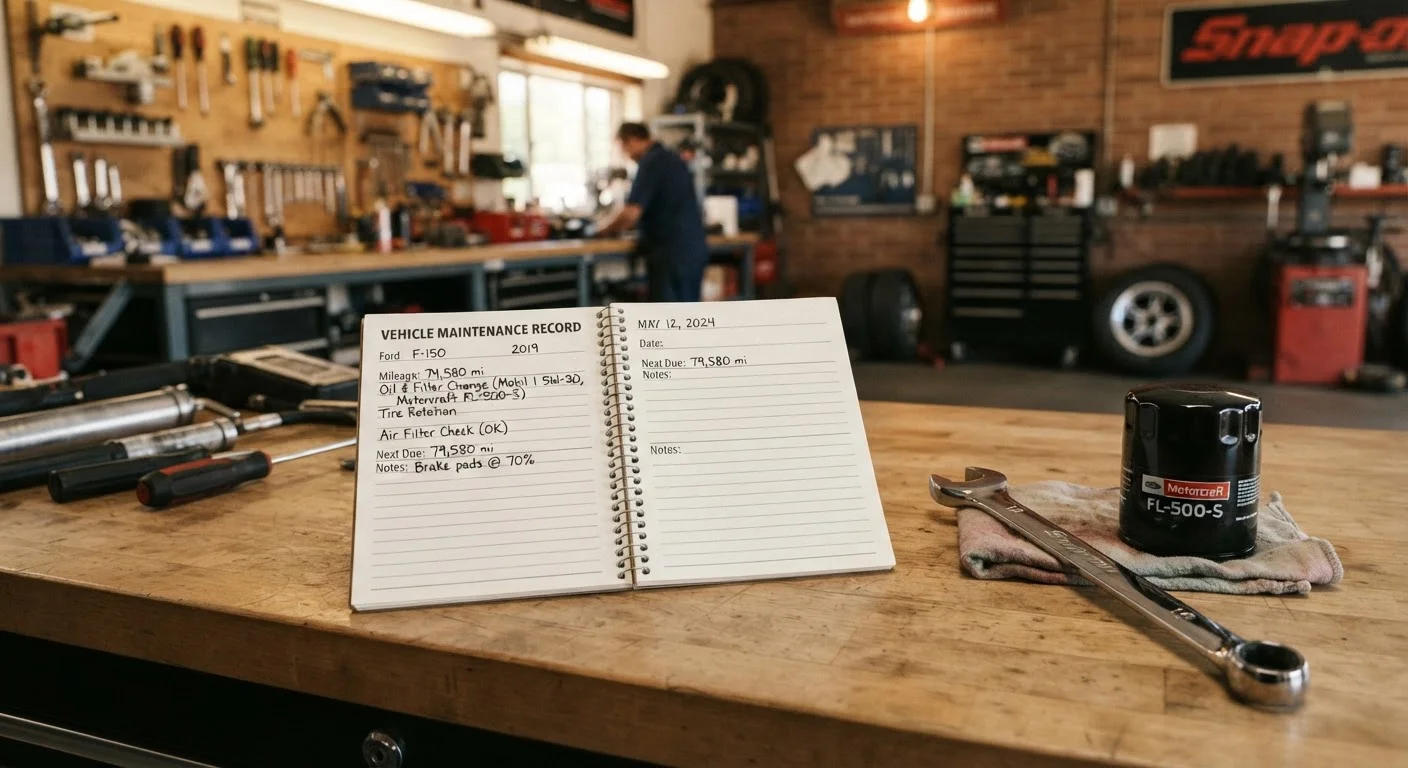
The value of a maintenance log depends entirely on the consistency and detail of each entry. A good log entry includes six core data points:
- Date - the calendar date the service was performed.
- Odometer reading - mileage at the time of service, not just when you remembered to write it down.
- Service or repair performed - a plain-language description (e.g., "engine oil and filter change", "replaced front brake pads and rotors").
- Parts used - part numbers or at minimum the specification (e.g., "5W-30 full synthetic, 5 quarts; OEM-spec air filter").
- Performed by - whether you did the work yourself or a shop, and if a shop, their name and invoice number.
- Next service due - the mileage or date when this item should be revisited, if applicable.
Keeping shop invoices stapled or scanned alongside your log entries closes the loop. A buyer can cross-reference your written log against actual receipts, which significantly raises confidence in the record's accuracy.
A Photo Is Worth a Log Entry
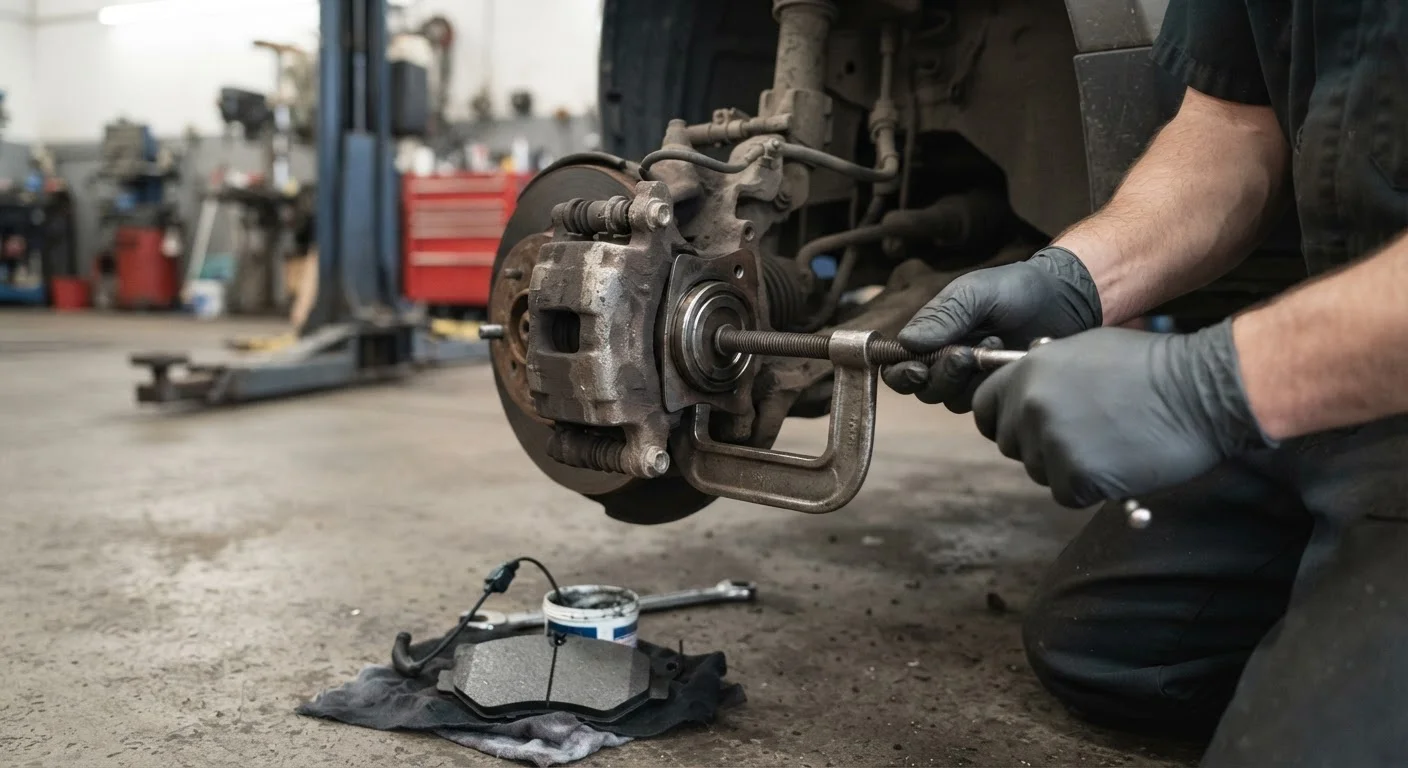
Photographing a component before and after a repair - such as a worn brake pad next to its replacement - adds visual evidence that complements your written record. Store these images with your log or link to them in a digital folder. Visual documentation is especially persuasive for major repairs like suspension work or engine components.
Choosing a Format That You'll Actually Use
The best maintenance log format is whichever one you'll consistently maintain. Common options each have trade-offs:
- Dedicated paper logbook - kept in the glove box, always with the vehicle. Easy to share physically at point of sale, but can be damaged or lost.
- Spreadsheet - flexible, searchable, and easy to back up digitally. Works well if you're already comfortable with basic spreadsheet tools.
- Vehicle-specific apps - some drivers use maintenance tracking apps that allow photo uploads of receipts. Useful, but make sure you can export your data if you switch platforms.
- Scanned document folder - a cloud folder where you photograph every shop invoice and add a brief filename note. Low friction but less structured.
For DIY work, pair your log with the guides in our DIY Repairs hub so you can record accurate part specifications as you go. For a seasonal structure to build your entries around, the seasonal vehicle maintenance checklist provides a practical framework.
Turning Your Log Into a Resale Asset
When preparing to sell, your maintenance log should be organized, legible, and complete. Gaps are inevitable - most people didn't start logging from day one - but a coherent record from the point you began is still valuable. Walk a prospective buyer through the log rather than just handing it over; explaining each entry builds trust and shows you understand your vehicle.
For vehicles with specific component histories - such as a rebuilt transmission or a replaced timing chain - having the associated invoice and the log entry together is particularly persuasive. These are the details that let a buyer negotiate from confidence rather than anxiety, often supporting a stronger asking price. For a deeper look at how repair history feeds into ongoing value, see our article on keeping a repair log over a vehicle's lifetime.
Log every service within 24 hours of completion, not days later.
Memory fades quickly - mileage readings, part numbers, and procedural details are most accurate when recorded immediately. Delayed entries often contain rounding errors or omissions that undermine the log's credibility.
Keep original shop invoices physically or digitally attached to your log.
Invoices provide third-party verification that your log entries are accurate. A buyer reviewing a log entry backed by a dated shop invoice is far more likely to trust it than an entry with no supporting document.
Record part specifications, not just part names.
Noting "oil filter" tells future owners very little. Recording the OEM part number or a cross-reference number confirms that the correct specification was used, which matters for warranty-adjacent work and for buyers who want to continue using the same parts.
Note any symptoms that prompted an unscheduled repair.
A log that only records routine service misses half the vehicle's story. Documenting the symptom alongside the fix helps future owners (and mechanics) understand whether an issue was resolved or is part of a pattern.
Flag items inspected but not yet replaced, with target mileage.
An honest log includes upcoming needs, not just completed work. Disclosing that brake pads are at 40% life or that belts are due within 10,000 miles signals honesty and gives a buyer a realistic picture of near-term costs.
This article is for general informational and educational purposes only. It does not constitute financial, legal, or professional mechanical advice. Consult a qualified mechanic for guidance specific to your vehicle's condition and repair needs.