Why Unwritten Rules Matter More Than Printed Ones
Every sanctioned classic car show publishes a rulebook - class definitions, judging criteria, arrival windows. What no rulebook captures is the layered social code that experienced collectors absorb over years of participation. Violate a printed rule and a steward corrects you; violate an unwritten one and the memory lingers in the community far longer.
These informal conventions exist because the hobby is fundamentally relational. As detailed in The Full Spectrum of Classic Car Ownership, show culture is inseparable from the broader experience of stewardship - and how you conduct yourself on the field shapes how other collectors see you for seasons to come.
Approaching and Admiring Another Owner's Vehicle
Admiration is the lifeblood of a show, but it comes with obligations. The moment you stop in front of someone else's car, you enter their space. A few conventions govern that interaction gracefully.
The 'Hands Behind Your Back' Standard
Some experienced collectors adopt a simple habit when admiring a vehicle: clasping their hands behind their back as they approach. It's a visible, good-faith signal to the owner that you have no intention of touching anything uninvited. It also physically prevents the reflexive reach that curiosity can trigger. It takes no effort and communicates volumes.
When an owner is present, address them before the car. A simple acknowledgment - even just eye contact and a nod - signals that you see the person, not merely a trophy. Most owners are happy to talk at length about their build once that social contract is established.
For collectors newer to the hobby, Getting Started in Classic Car Collecting offers broader context on how community norms develop and why they matter from day one.
Navigating Judging Without Burning Bridges
Judged events concentrate social tension. Scores are posted, trophies go to some tables and not others, and strong opinions about scoring decisions circulate almost immediately. How you handle that moment - whether you win or don't - defines your standing.
“The show field is where a collector's relationship with the broader community becomes visible. How you behave when you don't win says considerably more about your character than how you behave when you do.”
— Classic & Specialty Vehicles Editorial Team, Automotive historians and collector car analysts
Disagreeing with a judge's assessment is entirely reasonable in private conversation among peers, but publicly challenging a result in front of the exhibitor being judged, or loudly disputing scores near the judging table, erodes the event's atmosphere and reflects poorly on the person doing it. Direct, respectful feedback submitted through official channels after the event is always the more credible path.
Understanding what judges actually evaluate - originality, finish quality, mechanical correctness - makes the process less opaque. The Restoration & Value hub covers how condition grading and documentation affect perceived quality, knowledge that translates directly to show preparation.
Exhibitor Responsibilities to the Event and Each Other
Showing a vehicle carries obligations beyond polishing the chrome. Arriving during the designated setup window - not at the last minute - allows organizers to finalize the field layout and respects the time of adjacent exhibitors. Leaving before the published show end, unless an emergency demands it, disrupts the visual integrity of the display and signals a casual attitude toward an event that others have invested in heavily.
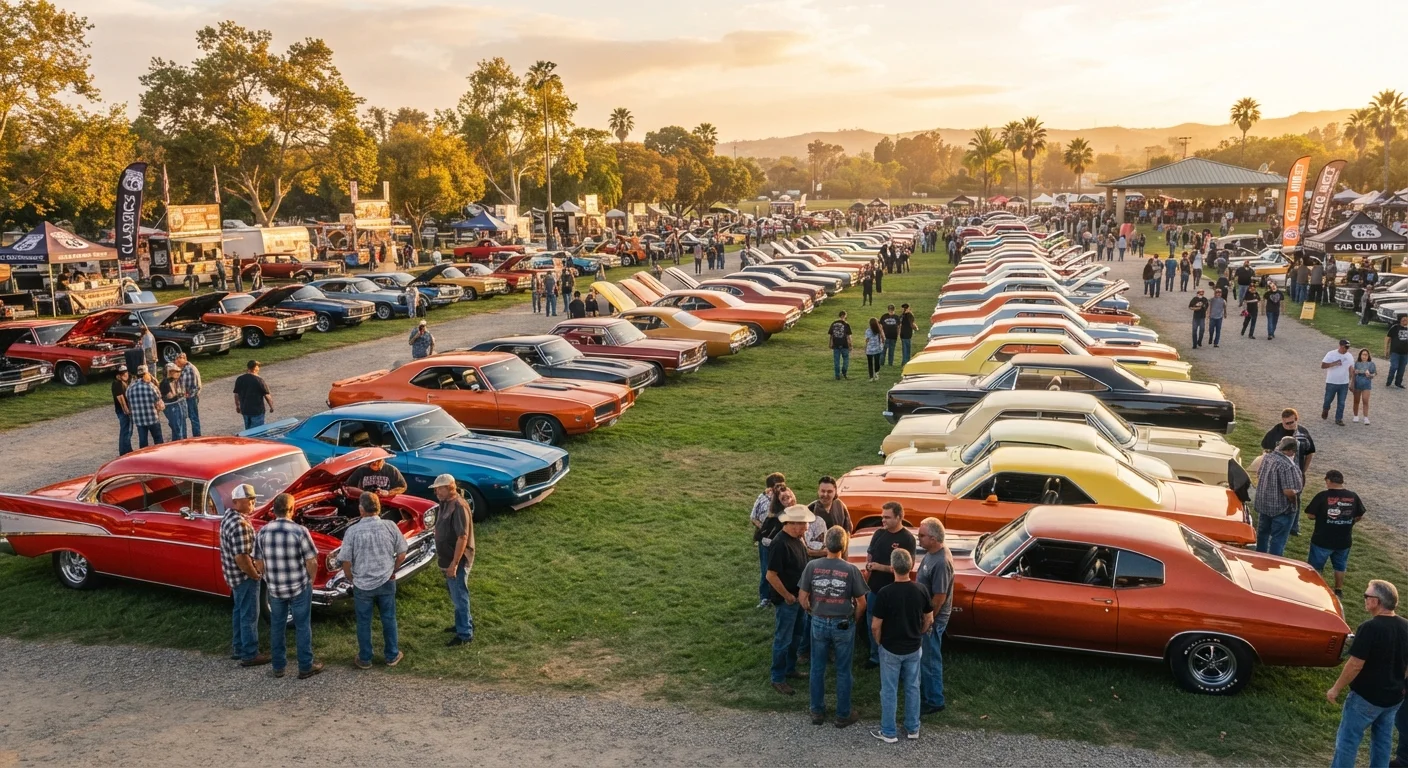
Beyond logistics, genuine camaraderie shows in small acts: helping a neighbor's hood stay propped in a crosswind, offering a microfiber cloth when someone spots a smudge before judging, or simply staying engaged with visitors rather than retreating to a lawn chair behind the vehicle. The regional club scene article explores how these small gestures compound into the social fabric that keeps clubs and events thriving across generations.
Concours vs. Open Show Etiquette Differs
Formal concours d'elegance events operate under stricter protocols than casual all-makes meets - white-glove judging, restricted access to the display field, and specific rules about when owners may be present with their vehicles. If you're entering a concours-style event for the first time, contact the organizers in advance to understand the specific conduct expectations. What's relaxed and acceptable at a Saturday cruise-in may be a violation of concours field rules.