Why Amphibious Design Is Fundamentally a Compromise
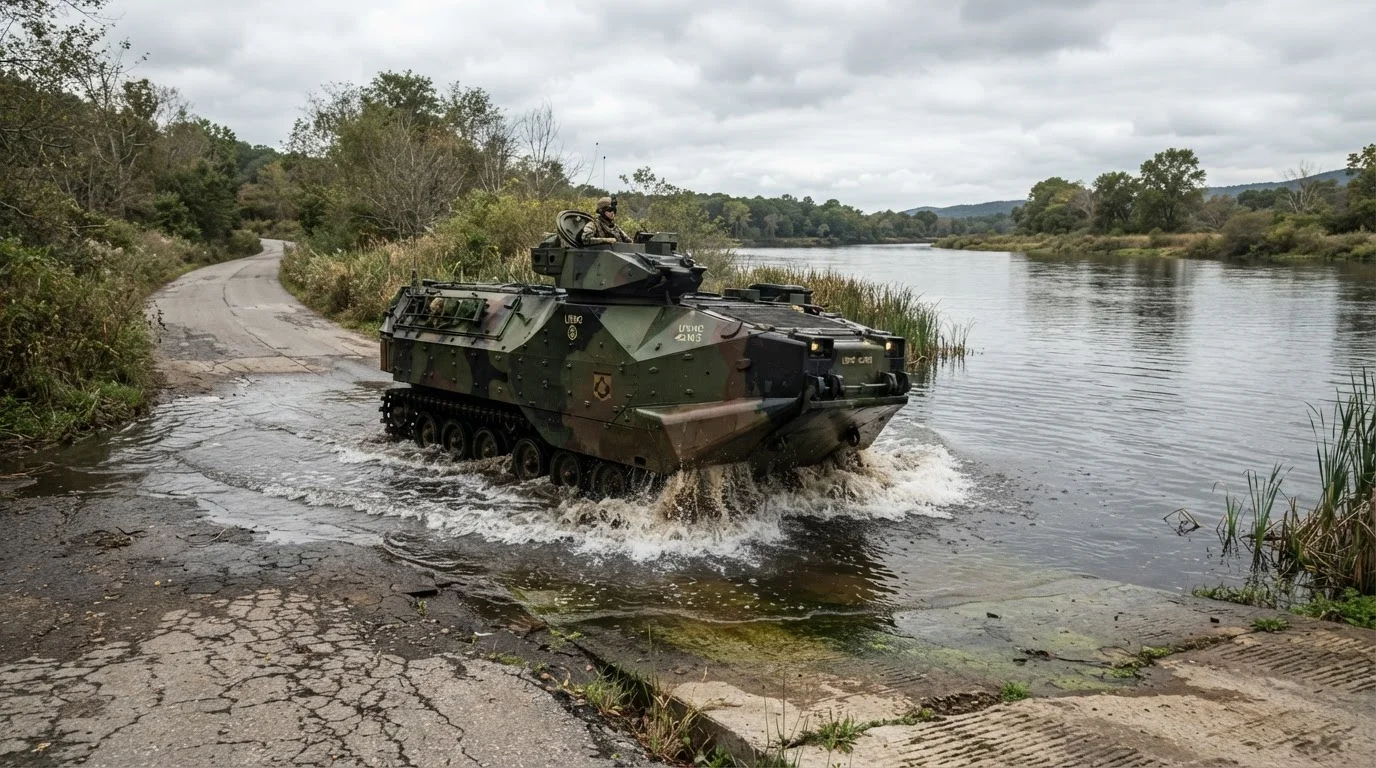
A vehicle optimized for road use is built around aerodynamic efficiency, high ground contact, and rigid structure. A vessel optimized for water is shaped around buoyancy, hull hydrodynamics, and minimal drag at the waterline. Satisfying both simultaneously means neither goal is fully achieved - a reality that has defined amphibious engineering since World War II.
The most instructive example remains the DUKW (commonly called the "Duck"), the six-wheel-drive amphibious transport used extensively by Allied forces from 1942 onward. Its designers at GMC and Sparkman & Stephens deliberately accepted a top road speed of around 50 mph and a water speed of roughly 5.5 mph - modest figures in both domains - because genuine dual-capability demanded it. That philosophy has not fundamentally changed in the decades since.
For collectors evaluating amphibious vehicles, understanding the source of these compromises is essential to appraising condition, performance claims, and restoration scope. See our analysis of purpose-built off-road engineering for a useful contrast - specialists built for a single terrain face none of these conflicts.
The Core Engineering Trade-Offs
Three structural tensions define virtually every amphibious design decision:
Hull Shape vs. Road Geometry
A buoyant hull requires volume and a smooth underbody to displace water efficiently. Road vehicles need low centers of gravity and tight underbody packaging. The result is that amphibious vehicles typically appear tall and boxy relative to their wheelbase - a shape that increases aerodynamic drag on road and limits handling agility.
Weight vs. Buoyancy
Every kilogram added for structural rigidity, drivetrain redundancy, or sealing systems reduces available payload before the vehicle loses positive buoyancy. Engineers must calculate displacement margins carefully, which is why many military amphibians carry strict load ratings that civilian operators sometimes disregard - with predictable consequences.
Sealing vs. Serviceability
Watertight integrity demands sealed electrical systems, gasketed drivetrain components, and protected wheel bearings. Each seal is a maintenance point. Corrosion from repeated freshwater and especially saltwater exposure accelerates wear on components not designed for immersion. Ground clearance and suspension architecture - already stressed in off-road use - face additional degradation from submersion cycles.
Genuine cross-terrain capability no standard vehicle offers
An amphibious vehicle can legally and mechanically transition from paved road to navigable water without trailers or portage, enabling access to locations entirely off-limits to conventional vehicles.
Strong collector and historical significance
Military amphibians like the DUKW and Schwimmwagen carry documented wartime provenance that drives sustained enthusiast interest and supports auction valuations for well-preserved examples.
Mechanical complexity rewards knowledgeable restorers
The layered engineering of hull, drivetrain, and sealing systems offers restoration depth that simpler vehicles cannot match, appealing to collectors who value technical engagement.
Civilian models offer rare novelty with road legality
Vehicles like the Amphicar 770 were designed to meet road regulations while remaining water-capable, making them legally operable in most jurisdictions without marine licensing requirements.
Self-recovery capability in flooded or marshy terrain
In expedition or utility contexts, the ability to float across water obstacles rather than detour around them can represent a significant tactical or logistical advantage.
Disadvantages Collectors and Operators Should Weigh
Inferior road performance compared to conventional vehicles
Hull volume, weight, and drag-compromised geometry reduce top speed, fuel efficiency, and handling precision relative to purpose-built road vehicles of equivalent size.
Water speeds are slow by marine standards
Most wheel-driven amphibians achieve 5-6 mph on water; even propeller-equipped civilian models rarely exceed 7 mph, making them unsuitable for any application requiring practical water transit speed.
Maintenance complexity and cost are significantly elevated
Dual-system upkeep - automotive drivetrain plus hull sealing, bilge systems, and marine propulsion - multiplies service intervals and specialized parts requirements compared to single-medium vehicles.
Corrosion exposure shortens component service life
Repeated freshwater immersion - and especially saltwater exposure - accelerates corrosion in wheel bearings, electrical connectors, and structural members, demanding vigilant post-use rinsing and inspection protocols.
Limited payload capacity due to buoyancy constraints
Strict displacement margins mean amphibious vehicles often carry lower payload ratings than comparably sized land vehicles, restricting practical utility for cargo or passenger applications.
Parts availability for historic models is extremely limited
Specialized hull components, propeller shafts, and water-sealed drivetrain parts for vintage amphibians are largely sourced through specialist suppliers or fabricated to order, raising restoration costs substantially.
~3,800
Amphicar 770 units produced (1961-1968)
Production figures documented by the International Amphicar Owners Club reflect the model's limited commercial run and explain its relative rarity at auction today.
21,147
DUKWs manufactured during World War II
GMC production records indicate over 21,000 DUKWs were built between 1942 and 1945, with a small fraction surviving in operable condition for collectors and museums.
5.5 mph
Typical DUKW water speed
Original GMC specification sheets list the DUKW's water propulsion speed at approximately 5.5 mph - illustrative of the performance ceiling inherent to wheel-form amphibious hulls.
The maintenance burden deserves particular attention. Unlike a standard truck or purpose-built off-road machine, an amphibious vehicle's drivetrain, electrical harness, and hull must all be inspected and serviced on separate schedules. Deferred maintenance on any single system can render the vehicle unsafe in water - a risk that has no equivalent on conventional land vehicles.
For enthusiasts considering overlanding or multi-terrain adventures, it is worth comparing the flexibility of amphibious platforms against more conventional setups. Our overview of overlanding versus RV camping trade-offs illustrates how purpose-matched equipment almost always outperforms a generalist compromise in real-world use.
Collector Market Perspective
Historic amphibious vehicles occupy a distinctive niche in the collector market. The DUKW, the VW Schwimmwagen (Type 166), and the Amphicar 770 - the only amphibious passenger car produced in meaningful volume for civilian sale - each command strong prices at specialist auctions when documented and mechanically sound examples appear. Their rarity, mechanical complexity, and wartime or postwar heritage make them conversation pieces that few other vehicles can match.
Marine Survey Is Not Optional
Prospective buyers of any amphibious vehicle should retain a qualified marine surveyor in addition to a skilled automotive mechanic before completing a purchase. Hull integrity, bilge pump function, and transom sealing are not assessable through a standard vehicle inspection. Many amphibious vehicles are presented as water-capable when their sealing systems have long since failed - a condition that creates genuine safety risk and significant unplanned restoration expense.
The Amphicar 770, produced in West Germany between 1961 and 1968 with roughly 3,800 units built, is particularly instructive. Its dual propellers and road-legal specification made it genuinely usable on both surfaces, yet it never excelled at either. Contemporary road tests noted leisurely water speeds and modest highway performance - but that was precisely the point. It represented a sincere engineering attempt to serve two masters, and surviving examples today reflect that ambition in mechanical form.
When evaluating any amphibious vehicle, hull integrity inspection by a qualified marine surveyor - in addition to standard mechanical assessment - is strongly advisable before purchase. The combination of automotive and marine systems means expertise from both disciplines is relevant to an accurate condition assessment.