Why Rulebooks Built the World's Most Extreme Street Cars
The logic of a homologation special is almost paradoxical: a manufacturer builds a demanding, often uncomfortable, frequently impractical automobile for one reason only - to satisfy a regulator. Racing sanctioning bodies have long required that competition vehicles share a meaningful connection to cars ordinary buyers could theoretically purchase. That requirement, intended to keep motorsport relevant to production vehicles, had an unintended consequence: it forced engineers to transplant race technology directly into road cars, producing a category of vehicle unlike anything else in automotive history.
The governing framework differs by era and series, but the principle is consistent. A manufacturer seeking to enter a modified version of a car in a particular class must first demonstrate that a qualifying number of road-legal examples have been produced and offered for sale. Counting those units, verifying configurations, and scrutinizing specification sheets became a cottage industry within motorsport administration. The cars that emerged from this process were rarely comfortable or refined. They were purposeful.
Homologation Rules Vary Widely by Era and Series
There is no single universal homologation standard. Requirements differ across sanctioning bodies, time periods, and competition classes. FIA Group B, Group A, Group N, SCCA Trans-Am, DTM, BTCC, and Super Touring each applied distinct thresholds and specification rules. When researching a specific vehicle, identifying the exact series and regulatory year under which it was homologated is essential to understanding what the rules actually required.
Engineering at the Edge: What Set These Cars Apart
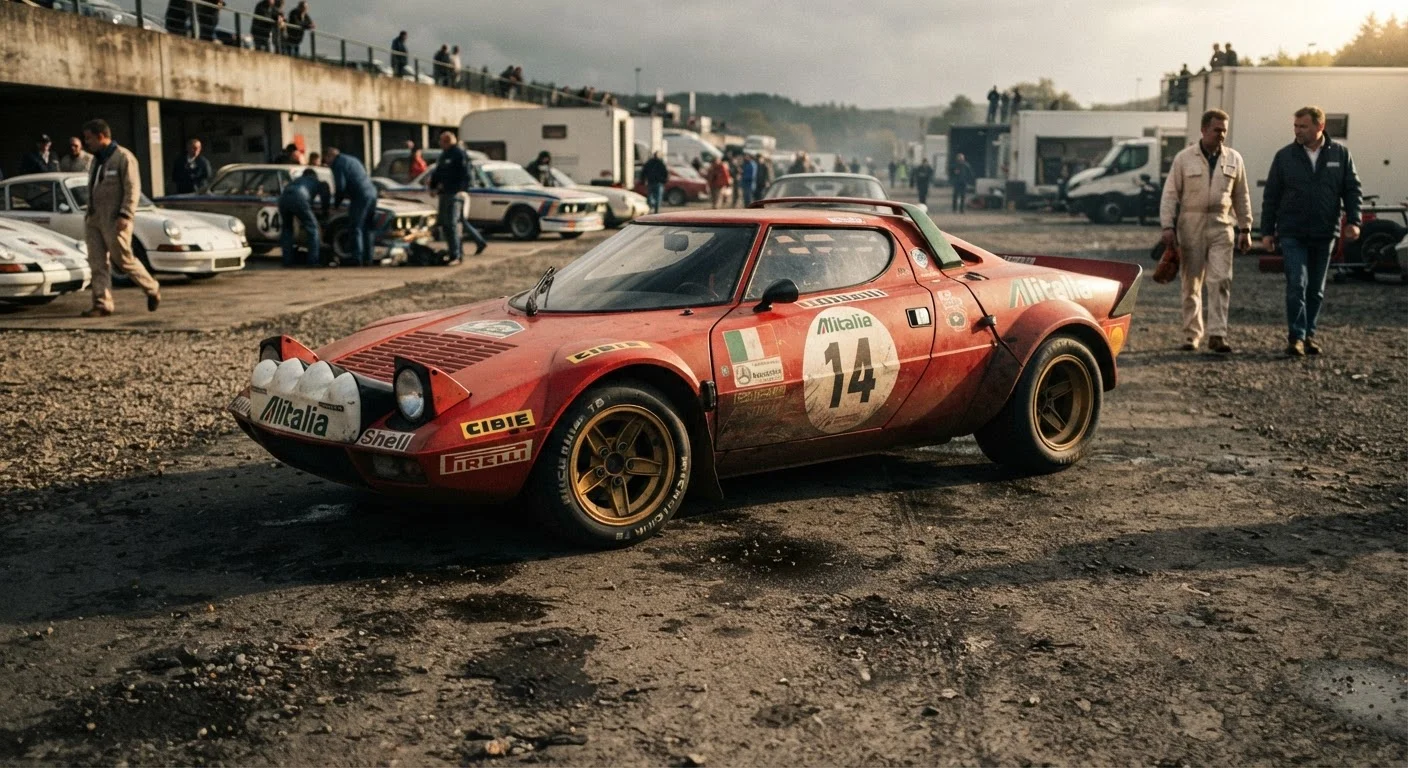
Homologation specials shared a common engineering philosophy: strip away everything unnecessary, add everything the rules permitted, and produce the minimum number of examples required. Wide-body flares accommodated larger wheels dictated by race suspension geometry. Engine displacements were pushed to class limits. Aerodynamic elements - rear wings, front splitters, hood vents - appeared on production cars because the race version needed them homologated. Interior trim was often deleted or reduced to the bare minimum required for street legality.
Perhaps most significantly, these cars frequently received powertrain configurations that never appeared in any other production vehicle. Turbocharged four-cylinder engines producing extraordinary specific outputs, sequential gearboxes barely detuned from their competition counterparts, and bespoke suspension geometry developed on rally stages all found their way into cars that dealers were theoretically required to sell to walk-in customers. The contrast between the cars' ostensible purpose - transportation - and their actual engineering brief was striking.
200
Minimum units for FIA Group B evolution homologation
FIA Group B regulations required manufacturers to produce at least 200 road-legal examples of an evolution variant before it could be fielded in World Rally Championship competition.
5,000
Production threshold for Group A touring car eligibility
FIA Group A regulations, which governed many touring car championships through the late 1980s and 1990s, required manufacturers to produce a minimum of 5,000 units for standard homologation approval.
~$2M+
Auction results for top Group B homologation specials
Documented, numbers-matching examples of rare Group B homologation vehicles have achieved prices exceeding two million dollars at major collector car auctions in recent years, reflecting their status as finite, irreplaceable artifacts.
For collectors, that engineering extremity translates directly into desirability. These vehicles are not merely fast old cars; they are physical artifacts of a specific regulatory moment, a snapshot of what engineers could accomplish when given permission - and a mandate - to go to extremes.
Provenance, Documentation, and the Collector Market
Authenticity is the central challenge of the homologation special segment. Because these cars are so desirable, the incentive to misrepresent ordinary production variants as homologation-specification examples is substantial. Verifying a genuine example requires exactly the kind of documentation discipline that separates serious collectors from casual buyers. Factory build sheets and period records are not merely interesting historical artifacts in this segment - they are the primary instruments of authentication.
Marque registries play a disproportionately important role here. Organizations dedicated to specific homologation models often maintain chassis records compiled from factory sources, dealer allocations, and decades of community research. Owner registries and marque clubs can confirm whether a specific VIN falls within the documented production run and whether the specification matches factory records. For any significant purchase in this segment, engaging with those resources is a necessary step, not an optional one.
Verify Before You Buy
Before purchasing any vehicle represented as a homologation special, request the full VIN and cross-reference it against the relevant marque registry or manufacturer production records. Specialist clubs for many significant homologation models maintain detailed chassis databases compiled over decades. Independent verification through these resources is one of the most reliable checks available to prospective buyers.
The question of what constitutes a "classic" intersects with homologation vehicles in nuanced ways - age alone rarely captures their significance. How collectors define "classic" shapes how these vehicles are categorized for insurance, concours judging, and registry eligibility, making that definitional debate practically relevant to owners.
Why These Cars Remain Culturally Significant
Homologation specials represent a category of vehicle that cannot be replicated under modern conditions. Contemporary motorsport regulations, manufacturer liability concerns, and production economics have made the extreme homologation special largely a phenomenon of the past. The window during which a manufacturer could build 200 barely-streetable rally cars and call them a production model has effectively closed. What remains is a finite population of survivors, each one a direct product of a specific regulatory environment that no longer exists.
That irreproducibility is precisely what sustains collector interest. These are not simply performance cars that happened to go racing; they are evidence of a particular moment when motorsport rules and engineering ambition aligned to produce something genuinely extraordinary. Preserving a homologation car's complete history - from factory build records through any competition use - honors that context and sustains the vehicle's long-term significance within the collector community.
This article provides general educational information about automotive history and collector vehicle segments. It does not constitute financial, investment, or purchasing advice. Consult qualified appraisers and legal professionals before making significant purchase decisions.