Why Collector Communities Are Irreplaceable Custodians
When a vehicle falls outside the mainstream - an obscure pre-war American marque, a limited-production European sports car, or a factory-built homologation special produced in double-digit numbers - institutional memory rarely survives in any single archive. Factory records were destroyed in wartime, lost in corporate acquisitions, or simply never maintained with collectors in mind. What fills that void is the organised passion of enthusiast communities: registries, clubs, and independent archives that have spent decades doing the preservation work no manufacturer thought to fund.
Understanding what actually makes a car 'classic' is inseparable from understanding who preserves the evidence that supports those definitions. The six functions below illustrate how these communities operate - and why their work matters far beyond club membership cards and weekend shows.
Owner Registries: The Living Chassis Database
A marque registry is essentially a crowd-sourced census of surviving examples. For vehicles where factory production records were destroyed, incomplete, or never publicly released, the registry becomes the authoritative source. Volunteers cross-reference VINs, body tags, and broadcast sheets submitted by owners to build a picture of how many genuine examples remain - and in what configuration.
For rare variants such as factory race homologation specials, registry data has directly influenced auction valuations by confirming or refuting a vehicle's claimed specification. The process is painstaking: a single entry may require corroborating evidence from multiple independent sources before it earns a verified status.
For vehicles with lost factory records, the registry often becomes the only authoritative survival count.
Marque Clubs as Living Technical Libraries
Single-marque clubs accumulate decades of collective repair experience that no factory service manual fully captures. Members document workarounds for discontinued parts, identify reproduction component suppliers who have passed community vetting, and maintain marque-specific torque specs, lubricant tolerances, and wiring peculiarities compiled from hands-on experience.
For owners of early postwar European or American orphan brands - makers who ceased production entirely - this distributed knowledge base may be the only functional resource available. Club technical advisors often hold institutional knowledge passed down directly from original factory engineers or veteran restorers, making the club's archives genuinely irreplaceable.
Club technical advisors may carry institutional knowledge passed directly from original factory engineers.
Photographic and Documentary Archives
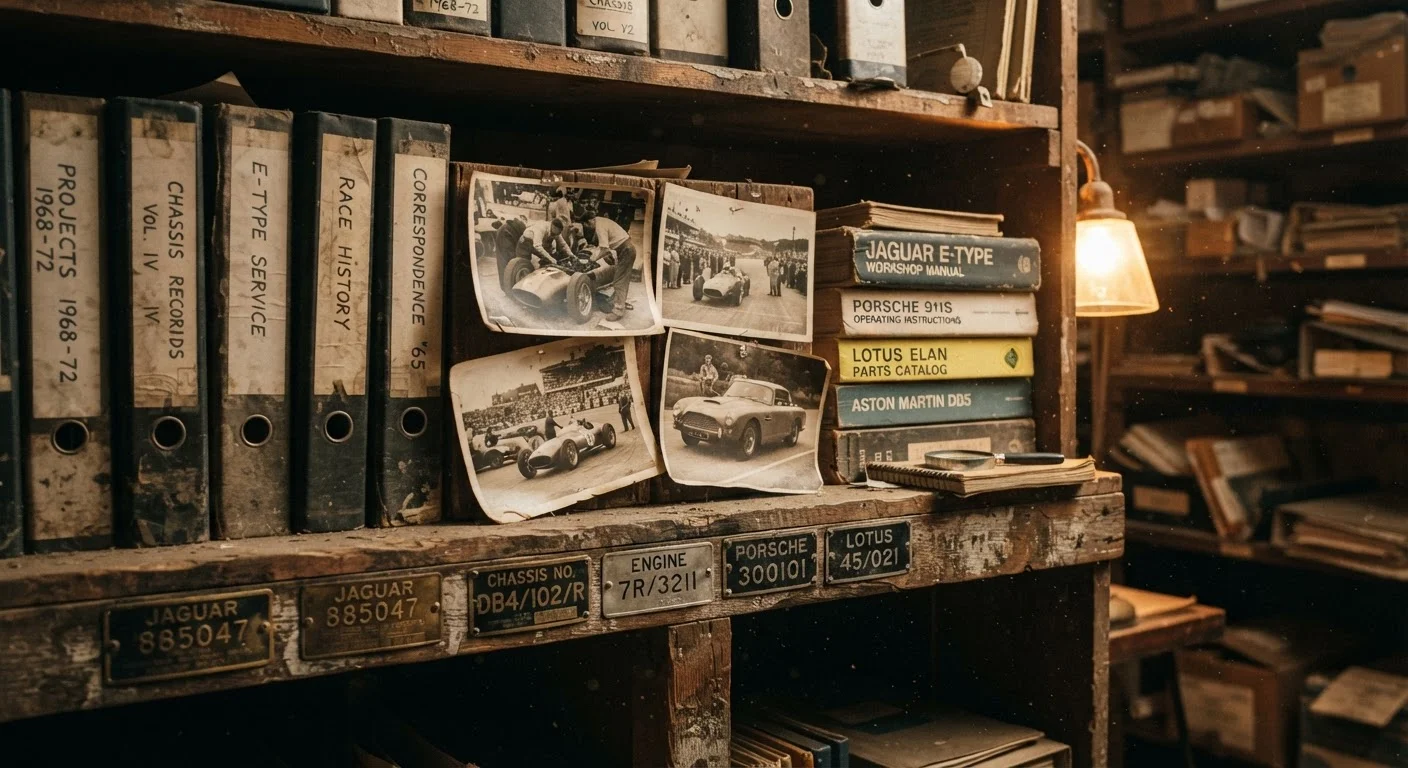
Period photographs, press kit materials, dealer brochures, and factory correspondence form a documentary layer that complements physical evidence. Several marque organisations have partnered with university libraries and automotive history collections to digitise and preserve these materials under archival conditions.
This documentation carries practical weight beyond sentiment. A period factory photograph showing a specific accessory package or paint code can resolve a correctness dispute during a concours evaluation. Provenance documents shape both a vehicle's story and its price, and archival images often serve as an independent corroborating source when physical build records are absent.
A single period factory photograph can resolve a concours correctness dispute worth thousands of dollars.
Decoding Events and Judging Standards
Many clubs host structured decoding events where experienced members help owners interpret body tags, data plates, trim codes, and option-order sequences. These sessions translate cryptic factory alphanumeric codes into a human-readable specification sheet that confirms - or contradicts - how a vehicle is currently presented.
Established judging rubrics maintained by major clubs create a reproducible correctness standard that appraisers, insurers, and auction houses routinely reference. Understanding what appraisers actually need for specialty vehicle documentation often begins with the decoding criteria a club has spent years refining.
Club judging rubrics create the reproducible correctness standards that appraisers and auction houses rely on.
Community-Led Research Publications
The most established marque communities publish peer-reviewed technical journals, restoration guides, and production-number studies that rival academic automotive history in rigor. These publications document findings from chassis inspections, factory archive visits, and estate discoveries - creating a permanent, citable record for future researchers and restorers.
This body of work matters especially for niche segments such as microcars and early cyclecars and voiturettes, where mainstream automotive history has often overlooked the vehicles entirely, leaving community scholarship as the definitive source.
Community journals on obscure marques often represent the only peer-reviewed scholarship those vehicles will ever receive.
Parts Interchange and Casting Number Documentation
One of the most tangible preservation functions clubs perform is cataloguing parts interchange data: which components crossed over between model years, which casting numbers are genuine period-correct, and which reproduction parts meet structural or authenticity standards. This granular information is rarely consolidated anywhere in the public domain.
When a numbers-matching restoration is at stake, the difference between an original casting and a period-compatible replacement can represent a significant valuation gap - a gap only auditable through the kind of detailed cross-referencing clubs maintain in their technical archives. Building a documented history for a classic car depends heavily on this underlying parts-level knowledge.
Parts interchange catalogues maintained by clubs can mean the difference between a correct restoration and a costly mistake.
Engaging With These Communities as an Owner or Researcher
Document Before You Restore
Before any restoration work begins, photograph every tag, plate, casting number, and original component in situ. Submit copies to the applicable marque registry and club archive. Once a vehicle is disassembled or repainted, irreplaceable factory evidence can be lost permanently - and the registry record you create today may become the reference standard for future authenticity evaluations.
Registry Participation Is Voluntary
Most owner registries rely entirely on voluntary submission of information by current and past owners. There is no central authority requiring registration, which means survival counts for even well-documented vehicles are often underestimates. If you own a rare or niche vehicle, submitting your chassis data to the relevant registry contributes to the collective record - benefiting future owners and researchers alike.
For owners entering the collector hobby, connecting with the appropriate marque community early pays dividends that compound over time. A chassis recorded in a registry, a technical question answered by a veteran club member, and a period photograph sourced from a club archive can collectively transform a vehicle's documented history - and, by extension, its long-term value and insurability. The regional club scene operates across every segment of the hobby, from muscle car one-marque organisations to micro-marque societies preserving vehicles most general histories have forgotten entirely.
Collectors seeking a broader understanding of what ownership involves - community dimensions included - will find that classic car ownership spans heritage, community, cost, and compromise in ways that registry participation only deepens. The preservation mission these organisations carry out is ultimately inseparable from the experience of owning the vehicles they document.