Why Cargo Method Matters More Than Capacity Alone
Choosing a cargo solution by maximum rated weight is a common mistake. A pannier rack rated to 55 lbs doesn't mean you'll enjoy riding with 55 lbs hanging off the rear wheel - handling degrades well before you hit the physical limit. The smarter framework weighs where weight sits, how it affects bike geometry, and whether the setup fits your actual infrastructure: doorways, bike parking, transit connections.
For riders already thinking about multi-day load distribution, our guide to bikepacking kit packing covers how frame-mounted bags compare to rack systems on a touring ride. And if you transport your bike to a trailhead by vehicle first, bike rack options for road trips is worth reviewing before you add a trailer into that equation.
| Panniers | Trailer | Cargo Bike | |
|---|---|---|---|
| Practical load capacity | 20-35 lbs | 50-100 lbs | 100-200 lbs |
| Effect on bike handling | Moderate - rear-heavy | Low - load trails behind | Minimal - purpose-built geometry |
| Relative cost to entry | Low | Moderate | High |
| Ease of parking and storage | Easy - bags detach | Moderate - adds length | Harder - larger footprint |
| Compatibility with existing bike | Needs rack/eyelets | Works with most bikes | Separate vehicle required |
| Best terrain fit | Flat to moderate hills | Flat to moderate hills | Flat to moderate, e-assist for hills |
Panniers: Accessible, Versatile, and Weight-Sensitive
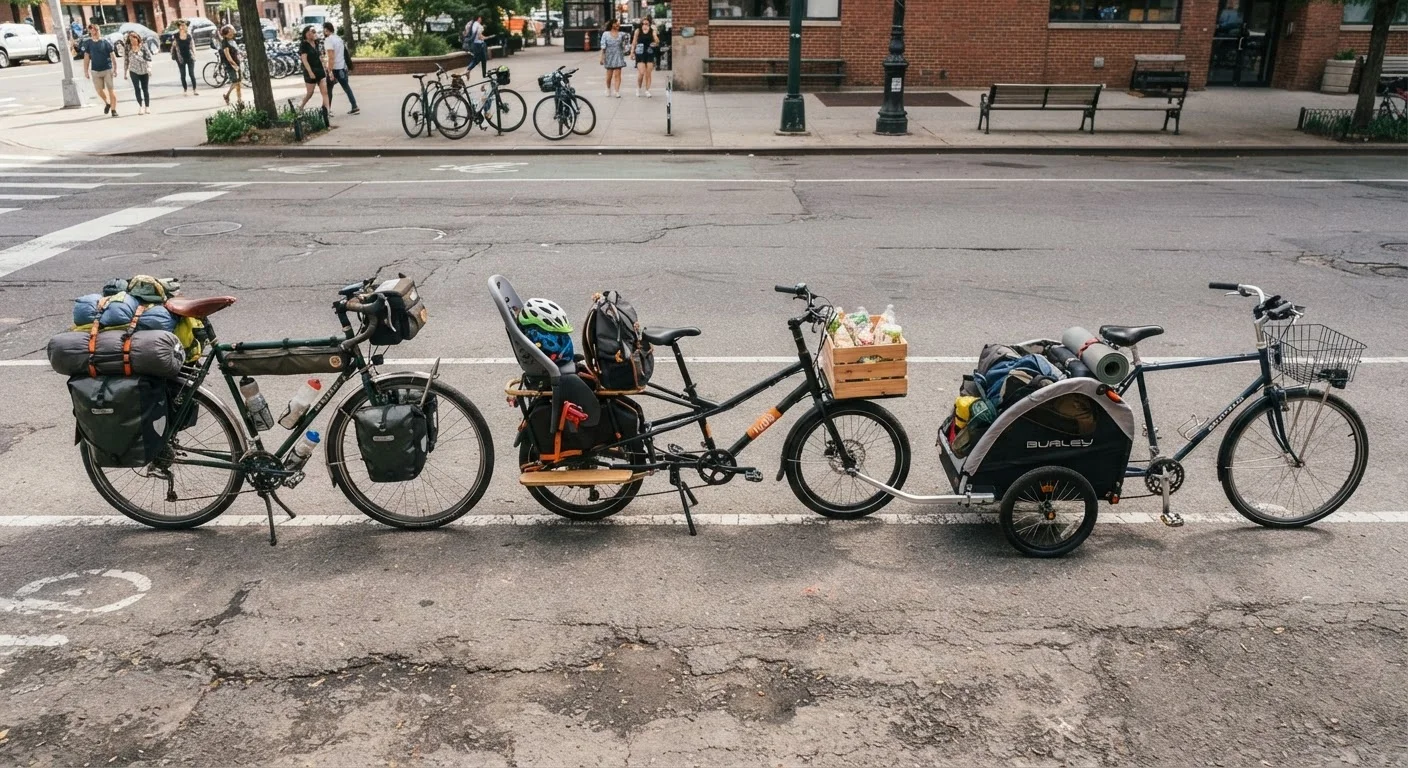
Panniers - bags that clip or hook onto a rear or front rack - are the starting point for most cyclists moving beyond a backpack. They keep the load low and close to the axle, which generally produces more predictable handling than a high seat-post bag. A quality rear rack plus two mid-size panniers can carry a week of groceries or a couple of days of touring kit without meaningfully altering bike geometry.
The ceiling is real, though. Rear-heavy loading raises the center of gravity and makes low-speed maneuvers noticeably twitchier. Front panniers help balance the load, but introduce steering weight. Practical usable load for most riders sits in the 20-35 lb range before handling becomes a concern. Panniers also require a compatible rack, which means frame eyelets or an add-on clamp system - not every bike accommodates them cleanly.
Balance Load Across Both Sides
Uneven pannier loading - even a few pounds heavier on one side - creates a persistent pull that fatigues the rider on longer rides. Weigh items before packing and aim for roughly equal distribution left and right. On a rear-and-front pannier setup, keeping roughly 60% of the load at the rear and 40% at the front generally produces balanced handling on flat terrain.
Waterproofing varies substantially between pannier designs; if riding in wet conditions, sealed roll-top designs or dedicated dry bags inside standard panniers are worth the added cost.
Trailers: High Capacity Without Replacing Your Bike
A single-wheel or two-wheel trailer hitches to the rear axle or seat post and can carry loads that would be physically unsafe on a rack - 50 to 100 lbs is realistic for a well-made two-wheel trailer. The bike's own handling is largely preserved because the load trails behind rather than sitting on the frame.
The trade-offs are length and maneuverability. A loaded trailer adds roughly 3-5 feet to your effective vehicle length, which complicates lane changes, tight turns, and most standard bike parking. Storage at home requires space for both the bike and the trailer. Single-wheel trailers track more closely and fit through narrower gaps; two-wheel models carry more volume but demand wider clearances.
Trailer Braking Demands Extra Attention
A loaded trailer increases your stopping distance and can push the rear wheel under hard braking, especially on downhill grades. Practice braking with the trailer before riding in traffic or on technical terrain. Check that your hitch connection is rated for the loaded weight you intend to carry - hitch failure under load is a genuine safety hazard.
Trailers are also more affected by crosswinds and road camber at speed. On descents, a heavily loaded trailer can push the rear of the bike, requiring earlier and more deliberate braking. Factor this into route planning if you're riding on hilly terrain.
Cargo Bikes: Built for the Job, Not Bolted On
A cargo bike - whether a longtail, a long-john front-loader, or a box bike - integrates carrying capacity into the frame design itself. Weight sits lower and is distributed across a purpose-built structure rather than added to a standard frame. The result, when loaded, is often more stable than a pannier-laden road or hybrid bike because the geometry is engineered around the load.
Capacity scales accordingly: most cargo bikes handle 100-200 lbs of combined passenger and cargo load, and electric-assist versions extend practical range significantly. The cost and commitment are proportionally higher - cargo bikes represent a meaningful investment and require more storage space than a standard bike plus accessories. They're also less practical to transport by vehicle without a dedicated rack setup.
For those comparing cargo solutions across different vehicle types, the same weight-distribution principles that apply here also show up in towing contexts - our piece on external vehicle storage options covers similar trade-offs for cars and trucks.
~35 lbs
Typical safe rear-pannier load ceiling
Most rack and frame manufacturers recommend keeping rear-loaded panniers under 35 lbs to preserve predictable handling.
100+ lbs
Cargo bike combined load rating
Purpose-built cargo bike frames are typically rated for 100-200 lbs of combined cargo and passenger weight, depending on design.
Matching the Right Solution to Your Actual Use Case
Run through these four filters before committing:
- Load weight and type: Loose groceries in bags suit panniers. Bulky items like lumber, a child seat, or a large cooler point toward a cargo bike or trailer.
- Trip distance and terrain: For multi-day touring, the incremental drag of a trailer becomes significant on climbs. Panniers are generally more aerodynamic over long distances.
- Home storage: Panniers detach and fit in a closet. A trailer or cargo bike needs a garage, shed, or dedicated space.
- Budget: A basic pannier setup can be assembled for well under $200. A quality trailer typically runs $300-$700. Cargo bikes start higher and scale upward with features, assist motors, and accessories.
If you're already thinking about hauling accessories more broadly, matching hauling gear to your actual needs applies many of the same evaluation principles to vehicle-based cargo systems.