How Each System Works
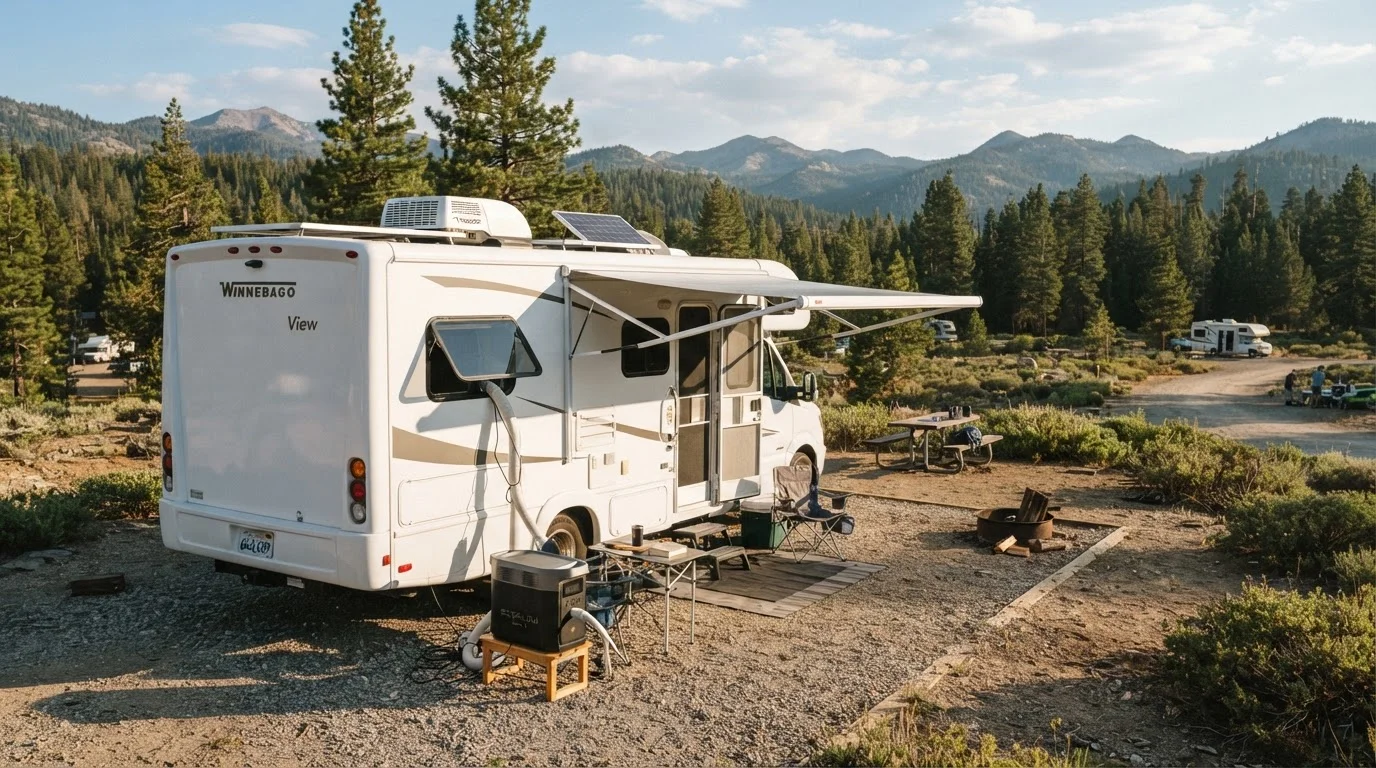
A roof-mounted RV air conditioner mounts through a ceiling cutout - typically a 14×14-inch opening - and uses a sealed refrigerant cycle to pull heat from interior air and exhaust it through the rooftop unit. The evaporator and blower sit inside a ceiling cassette, while the compressor and condenser are housed in the exterior shroud on the roof. No ductwork is required in most cases; air circulates directly through the ceiling register.
A portable air conditioner is a self-contained unit that sits on the floor inside the RV. It cools air using the same refrigerant cycle, but it must exhaust hot air through a hose - usually routed out a window, roof vent, or a specially fitted vent cap. This exhaust requirement is the key constraint: the hot air has to go somewhere, and any gaps around the hose allow warm outside air to leak back in, reducing efficiency.
Understanding your RV's power situation is essential for either choice. See our guide to RV power sources for a full breakdown of shore power, solar, and generator trade-offs.
Cooling Capacity and Power Draw
Most residential roof-mounted RV units range from roughly 13,500 to 15,000 BTU, with some high-output models reaching higher. That capacity is generally sufficient to cool a 30-foot travel trailer or mid-size motorhome in moderate heat. Power draw typically falls between 12 and 16 amps at 120V AC - meaning a 30-amp shore power connection can support one unit alongside other appliances, while a 50-amp service comfortably handles two.
Portable units marketed for RVs typically range from 8,000 to 14,000 BTU. While the top-end numbers overlap with roof units, real-world efficiency is lower: the exhaust hose radiates heat, and imperfect seals around window openings reduce net cooling output. Portables draw similar amperage - often 7 to 13 amps - so they aren't dramatically lighter on your electrical system.
| Criterion | Roof-Mounted AC | Portable AC |
|---|---|---|
| Typical BTU range | 13,500-15,000+ BTU | 8,000-14,000 BTU |
| Typical amp draw (120V) | 12-16 amps | 7-13 amps |
| Installation required | Yes - roof penetration, sealing | No - plug-and-play setup |
| Interior floor space used | None | Moderate (unit + hose) |
| Off-grid viability | Limited - needs generator/hookup | Limited - same power demands |
| Noise location | Primarily outside cabin | Inside living space |
| Portability | Fixed to RV | Moveable between vehicles/spaces |
Neither option is a genuine off-grid solution without significant battery capacity. A 14,500 BTU roof unit pulling 13 amps would drain a 200Ah lithium battery bank in under two hours at full load - a realistic constraint worth planning around.
13,500 BTU
Most common roof AC capacity for RVs
13,500 BTU is the standard entry-level capacity for roof-mounted RV air conditioners, widely found across Class A, B, and C motorhomes and travel trailers.
~13 amps
Typical roof AC running current at 120V
Running current for a standard 13,500 BTU roof unit is roughly 12-13 amps, which is a key constraint on 30-amp shore power connections with multiple appliances active.
60-90 lbs
Typical roof-mounted AC unit weight
Roof structural integrity and weight ratings should be verified before installation, particularly on older or lightweight RV roofs.
Installation, Compatibility, and Roof Considerations
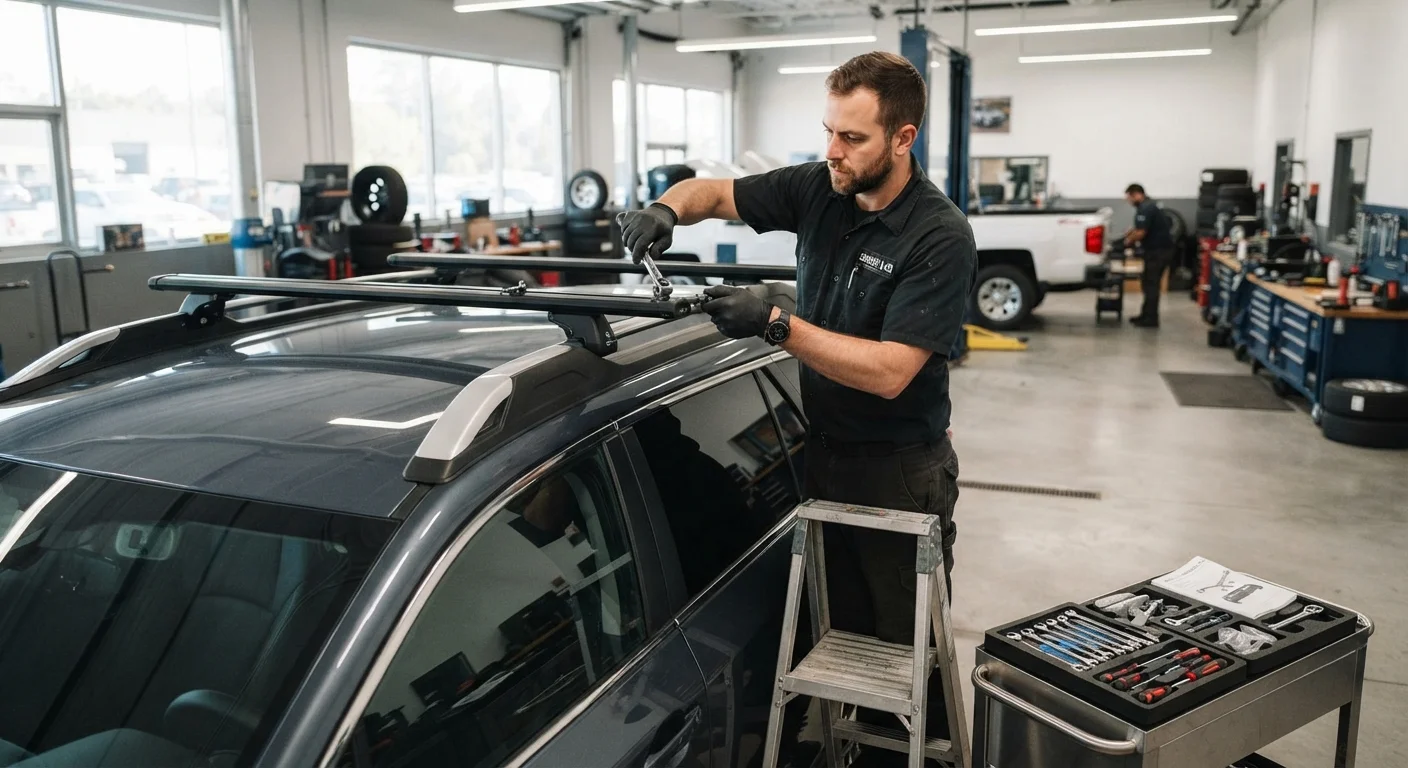
Installing a roof-mounted unit involves cutting or verifying an existing opening, confirming the roof structure can support 60 to 90 pounds of added weight, and sealing the unit properly against leaks. Roof material matters: rubber (EPDM), fiberglass, and TPO roofs all have different sealing requirements. For guidance on what your roof can handle, our RV roof material comparison covers those distinctions. Improper installation can lead to water intrusion - a serious risk to the RV's structural integrity. Unless you have direct experience, this is a job for a qualified RV technician.
Portable units require no roof work at all. Setup involves placing the unit, routing the exhaust hose to a vent or window kit, and plugging in. This simplicity is their clearest advantage. However, exhaust hose kits designed for RV roof vents vary in quality and fit, so verifying compatibility with your specific vent model before purchasing a portable unit is worth the effort.
If you're still deciding on your RV format altogether, our motorhome vs. towable comparison may help clarify which platform best suits your camping plans - a decision that directly affects which AC approach makes sense.
Check Your RV's Roof Weight Rating
Before purchasing a roof-mounted unit, confirm your RV manufacturer's roof load rating - typically found in the owner's manual or on a data placard. Adding a unit that exceeds the rated capacity can compromise roof structure over time. If you're uncertain, consult an RV service technician rather than relying on general estimates.
Practical Trade-Offs for Different Camping Styles
For campers who gravitate toward campgrounds with electrical hookups, a roof-mounted unit delivers the most seamless experience: set the thermostat, forget it, and sleep comfortably. For those who explore dispersed or off-grid camping scenarios, neither option is plug-and-play - but portables at least don't lock you into a permanent commitment on a rig you may reconfigure later.
Portables also appeal to campers who use multiple vehicles or want the unit available for home use in the off-season. Roof units, by contrast, become part of the RV itself and can add appeal at resale - buyers generally expect working climate control in a motorhome or travel trailer.
Noise is another practical factor. Roof units tend to produce a consistent white-noise hum from outside the cabin, while portables operate from inside the living space and can be noticeably louder during compressor cycles. If you're a light sleeper, positioning matters.