Understanding the Three Core RV Power Sources
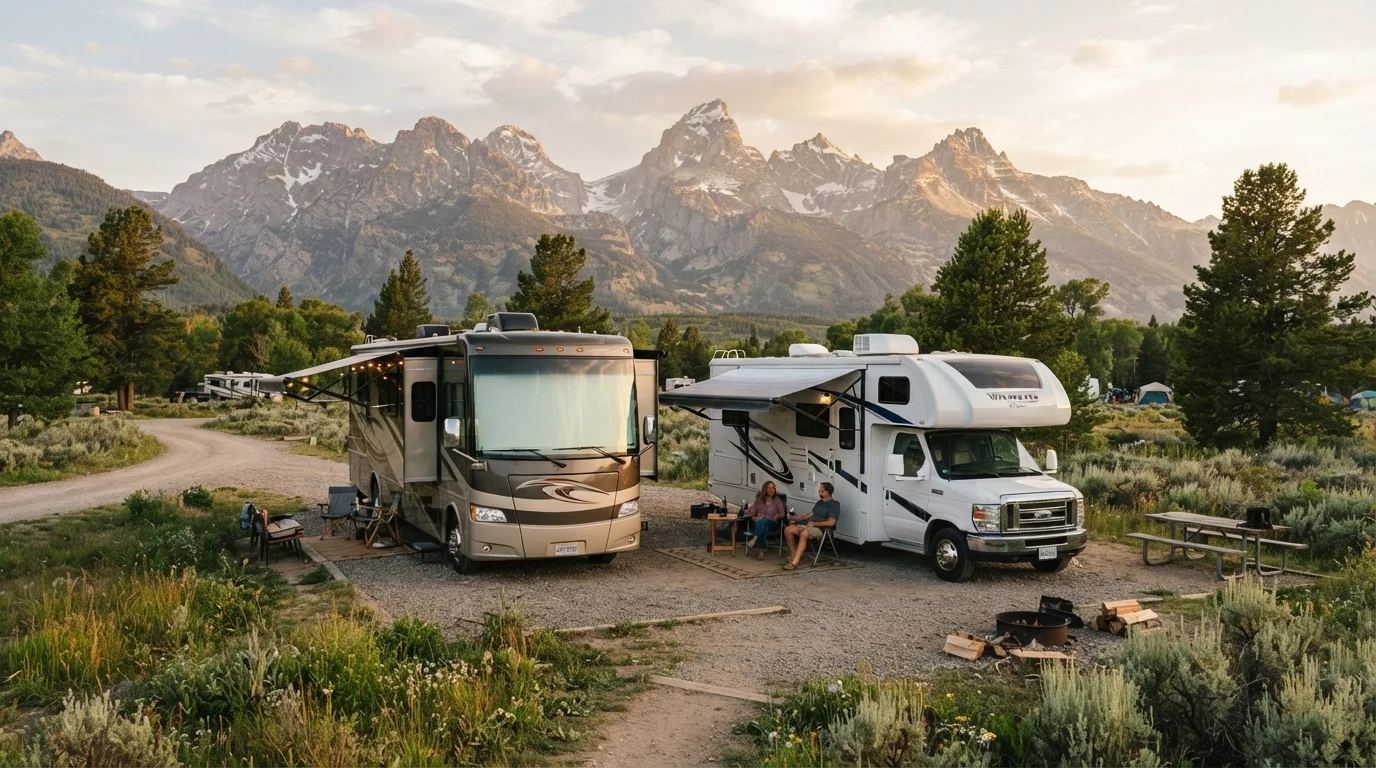
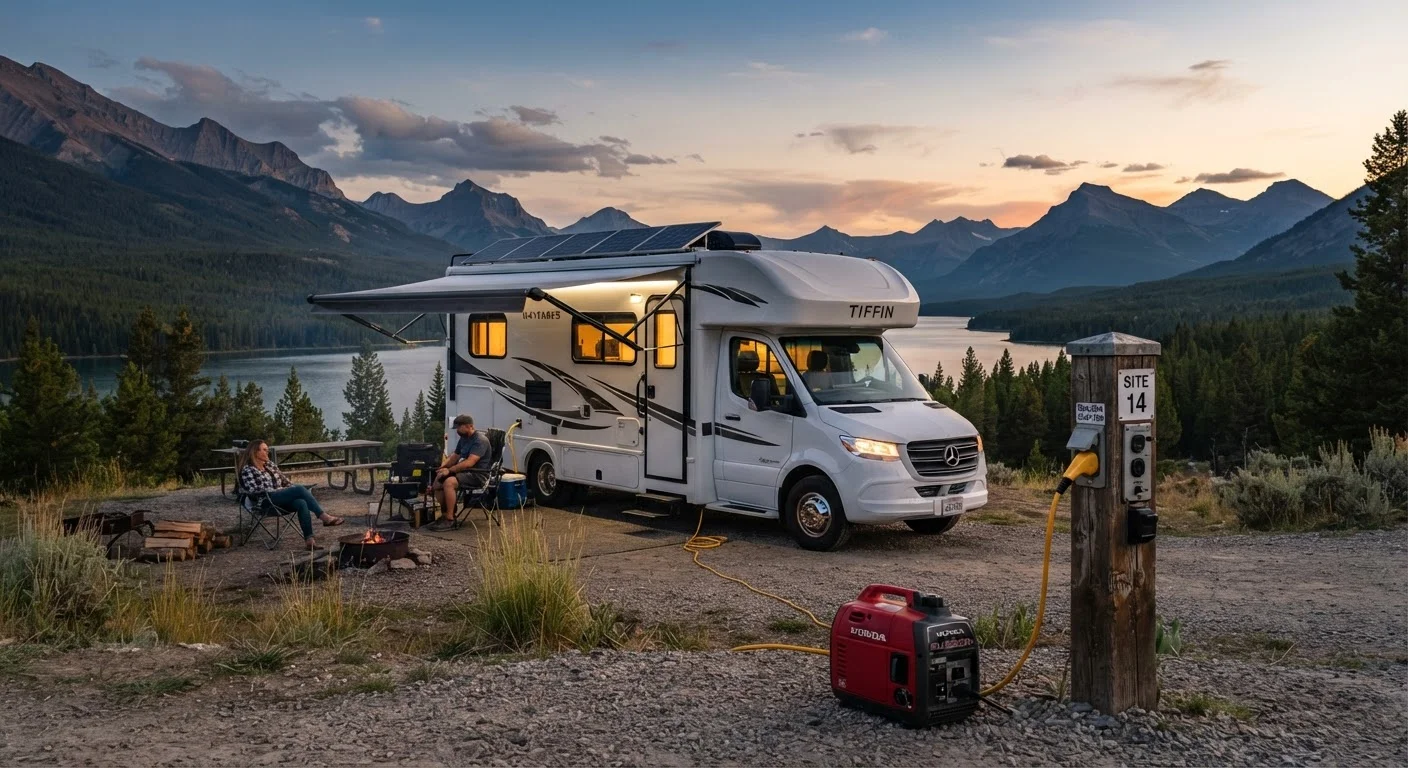
Every RV power decision starts with understanding what each source actually delivers. Shore power - also called hookup power - connects your rig directly to a campground's electrical pedestal, typically via a 30-amp or 50-amp service. It functions like a household outlet: you draw as much electricity as your RV's panel allows, continuously, without worrying about depletion. For a fuller explanation of the physical connections involved, see RV hookup connections explained.
Solar power captures sunlight through roof-mounted or portable panels, feeds it through a charge controller into a battery bank, and draws from that stored energy as needed. The system is silent and generates no ongoing fuel cost, but output depends on panel wattage, battery capacity, and available sun. Living off-grid in an RV covers how solar integrates with a broader self-sufficient setup.
Generators - whether portable gas units or built-in diesel or propane models - burn fuel to produce AC power on demand. They operate independently of location and sunlight, making them a strong backup option. The trade-off is noise, fuel logistics, and more hands-on maintenance compared to the other two sources.
| Shore Power | Solar | Generator | |
|---|---|---|---|
| Upfront cost | Low (hookup fees only) | High (panels, batteries, inverter) | Moderate (unit purchase) |
| Ongoing cost | Campground site fees | Minimal after installation | Fuel + maintenance |
| Location dependence | Campground hookup required | Anywhere with sunlight | Anywhere with fuel supply |
| Noise level | Silent | Silent | Loud; campground restrictions common |
| Power capacity | Unlimited (30A or 50A) | Limited by battery bank size | High on-demand output |
| Setup complexity | Plug-in simplicity | Installation and sizing required | Moderate; fuel management needed |
| Weather dependence | None | High (sunlight required) | None |
| Best use case | Campground stays | Off-grid and boondocking | Backup or high-demand off-grid |
Cost, Convenience, and Capacity Trade-Offs
Shore power carries the lowest upfront cost for access - campground fees typically include electricity - but limits you to sites with electrical pedestals. Nightly rates at full-hookup campgrounds generally run higher than primitive sites, so the convenience premium is real over extended stays.
Solar requires a meaningful upfront investment: panels, a charge controller, a battery bank (increasingly lithium iron phosphate for RV use), and an inverter to convert DC to AC. Ongoing costs are minimal once installed, but the system's practical ceiling depends on your battery bank size and how much sun your route actually provides. If you've encountered solar underperformance, common solar charging problems explains the usual culprits.
Generators sit between the two in upfront cost, but fuel and maintenance expenses accumulate over time. Many campgrounds restrict generator hours to reduce noise impact, which limits when you can run them - a meaningful constraint for full-timers relying on them as a primary source.
Size Your Battery Bank to Your Real Load
Before investing in solar, calculate your actual daily amp-hour consumption - refrigerator, lighting, fans, and devices combined. Many RVers undersize their battery bank relative to their panels, creating a bottleneck that limits overnight power availability. Lithium iron phosphate (LiFePO4) batteries offer higher usable capacity and longer cycle life compared to lead-acid alternatives, though at a higher initial cost.
Matching Power Sources to Your Travel Style
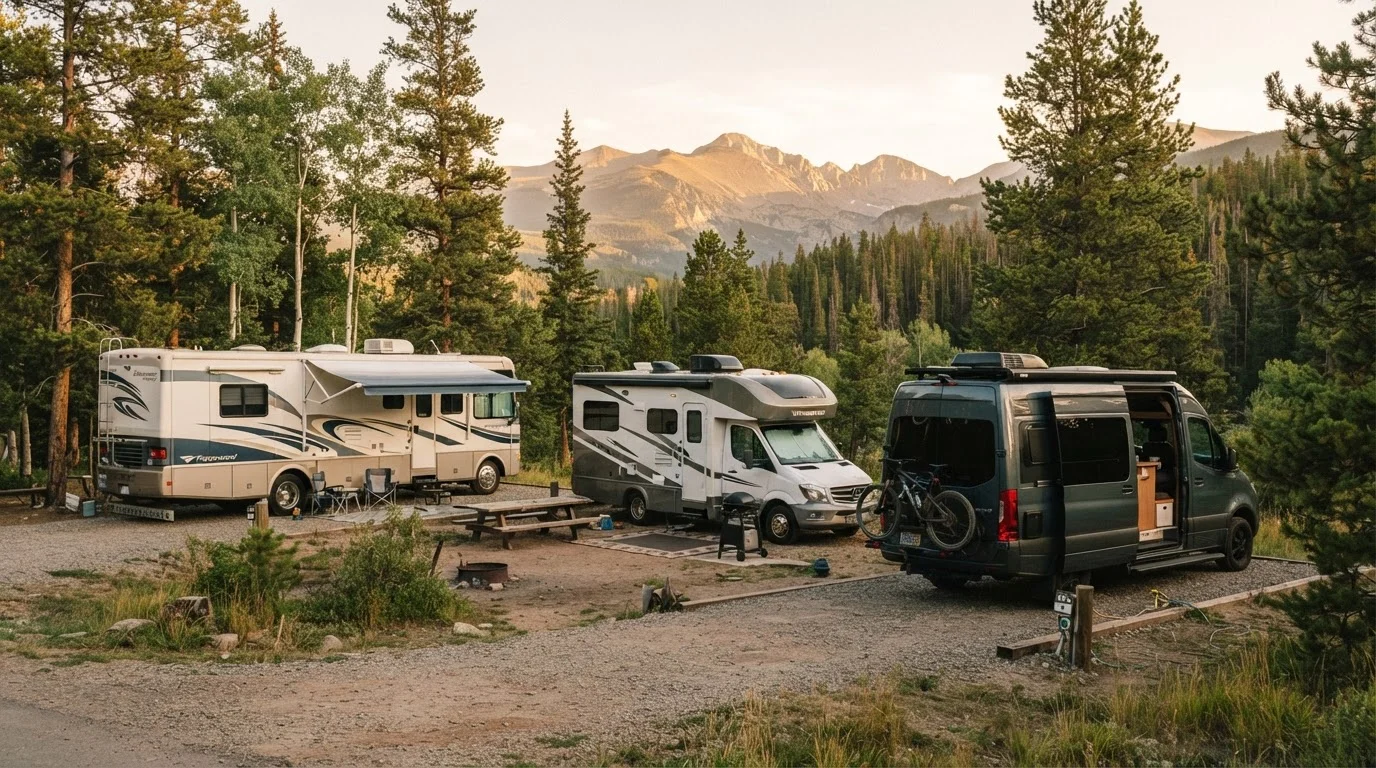
Your RV class and type influences which power approach is most practical. Larger Class A motorhomes pulling 50-amp service can run air conditioning, a residential refrigerator, and entertainment systems simultaneously on shore power - something even a robust solar-plus-battery setup struggles to sustain for extended periods. Class B camper vans, with limited roof space, often pair modest solar arrays with a generator for backup.
Boondockers and those favoring dispersed camping on public land - where hookups simply don't exist - lean heavily on solar with generator backup. That combination, managed well, can sustain comfortable living for weeks without a campground. For a contrasting perspective on off-road self-sufficiency, overlanding vs. RV camping is worth reading before committing to a power build.
High-draw appliances like rooftop air conditioners present the biggest challenge for solar-only systems. Roof-mounted vs. portable RV air conditioners compares their power demands - a critical input for sizing your power system. Managing smaller loads is more straightforward; managing USB ports, inverters, and 12V sockets covers the device-level picture.
Never Run a Generator Indoors or in Enclosed Spaces
Carbon monoxide from generator exhaust is odorless, colorless, and lethal. Always operate portable generators outdoors with exhaust directed away from windows, vents, and doors. Install a carbon monoxide detector inside your RV and test it regularly - this is a non-negotiable safety step, not optional redundancy.
Full-timers with variable itineraries often find the most resilient arrangement is a well-sized solar-and-battery system as the daily workhorse, a generator for cloudy stretches or high-demand days, and shore power whenever a well-priced hookup site makes sense. Regular upkeep of all three keeps them ready when needed - RV maintenance fundamentals covers the routine checks that prevent larger failures.