What Full-Time RV Living Actually Means
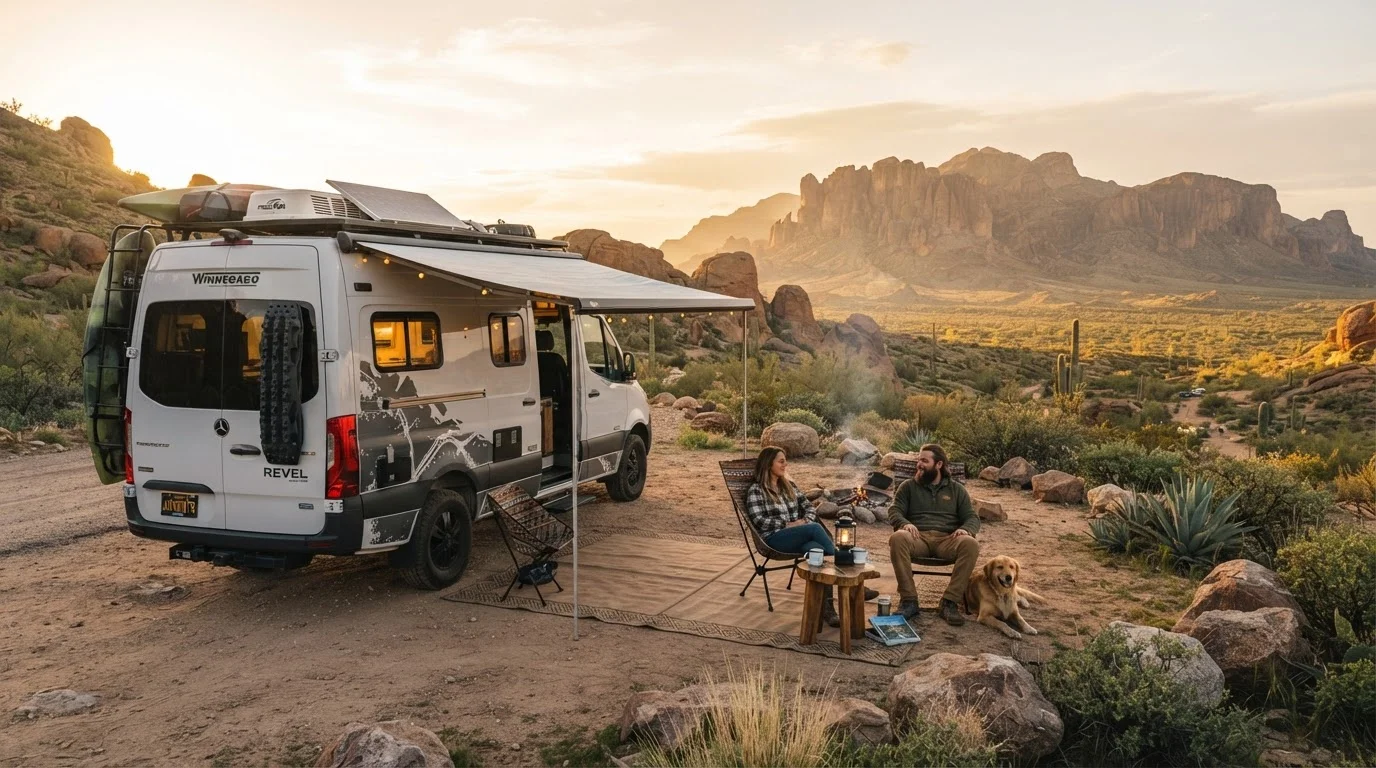
Living full-time in an RV means your vehicle is your primary residence - no apartment lease, no mortgage, no fixed address in the traditional sense. Estimates from RV industry surveys suggest hundreds of thousands of Americans now identify as full-time RVers, though the figure is difficult to pin down precisely because "full-time" has no standard legal definition.
The decision touches nearly every layer of daily life: where you sleep, how you work, how you receive mail, how you access healthcare, and how you maintain both your home and your vehicle simultaneously. Before weighing the pros and cons, it helps to read what life on the road actually looks like day to day, since the lived experience diverges substantially from social media portrayals.
The Genuine Advantages
Several benefits of full-time RV living hold up under scrutiny rather than collapsing into wishful thinking.
Genuine location flexibility for remote workers and retirees
Full-timers can follow weather, stay near family, or explore new regions without the commitment of relocation. This benefit is most tangible for those with location-independent income or retired schedules.
Potential cost savings over high-rent urban housing
In expensive metros, eliminating a lease in favor of campground fees and a paid-off rig can reduce monthly housing costs. The math depends heavily on rig depreciation, fuel, and travel frequency.
Reduced material accumulation and simplified possessions
Space constraints force a degree of intentionality about belongings that many full-timers report as a net positive. Fewer possessions typically means fewer maintenance obligations and financial commitments.
Stronger sense of community among full-timing networks
RV parks, rallies, and online communities create consistent social opportunities. Many full-timers report surprisingly rich social lives centered on shared lifestyle values.
Access to nature and outdoor recreation is built in
Parking at national forests, state parks, and Bureau of Land Management land places outdoor activities at the doorstep without requiring separate travel planning or lodging costs.
Location flexibility is perhaps the most substantive advantage. Remote workers can follow good weather, stay near family for extended periods, or explore regions they'd otherwise only visit briefly. For retirees with no fixed schedule, the ability to move at will is a qualitative upgrade that's hard to replicate in conventional housing.
Cost is more situational. In high-rent metropolitan areas, shedding a lease and living in a paid-off RV can produce meaningful monthly savings - particularly when campground fees average significantly less than urban apartment rents. However, this comparison depends heavily on rig type and depreciation. See the real ongoing costs full-timers face before treating savings as guaranteed.
The Real Disadvantages
The trade-offs are equally concrete and deserve the same direct treatment.
Limited living space creates persistent compression stress
Even large Class A motorhomes typically top out around 400-450 square feet. After extended periods, confined quarters can strain relationships and make hobbies requiring physical space difficult to sustain.
Ongoing mechanical reliability is an ever-present concern
An RV is simultaneously your home and a complex vehicle. Engine issues, roof leaks, slide-out failures, and plumbing problems can disrupt daily life in ways a conventional home repair would not.
Healthcare access and health insurance are genuinely complicated
Nationally valid health coverage is available but often more expensive or limited than employer-sponsored plans tied to a fixed location. This is a significant planning burden for full-timers under 65.
Establishing domicile, mail, and legal residency requires effort
Full-timers must select a domicile state for licensing, registration, and taxes - a process involving mail forwarding services, occasional physical visits, and professional legal or tax guidance.
Social continuity takes active management
Maintaining friendships and family relationships across changing geography requires deliberate effort. Geographic distance from support networks can become isolating during difficult periods.
Total costs are often higher than initial estimates suggest
Fuel, campground fees, maintenance reserves, insurance, and depreciation add up. Full-timers who travel frequently often find costs comparable to or exceeding modest apartment rents in mid-tier cities.
Space compression is one adjustment people consistently underestimate. A 400-square-foot RV feels different after week two than it did on a weekend shakedown trip. Couples and families with children face particular strain. Storage for tools, gear, and personal belongings requires ruthless editing and ongoing discipline.
For a deeper look at trade-offs before committing, the trade-offs worth knowing before you downsize covers the friction points that catch new full-timers off guard.
Insurance and Registration Considerations
Full-time RV insurance is a distinct product category from standard RV policies, designed to cover a vehicle used as a primary residence. Standard auto or RV policies may exclude full-time use, leaving coverage gaps. It's worth confirming your specific use case with a licensed insurance professional before hitting the road permanently.
Logistics That Require Active Management
Several administrative realities sit beneath the lifestyle conversation and demand practical planning.
Domicile and mail. Full-timers must legally establish a domicile state for vehicle registration, driver's licensing, and tax purposes. South Dakota, Texas, and Florida are commonly chosen due to their relatively straightforward residency processes, but rules change and individual circumstances vary - consult a qualified legal or tax professional before choosing a domicile state.
Healthcare access. Health insurance that works nationally is achievable but requires research. Plans tied to narrow local networks become impractical when you're rarely in one state for long. This is a non-trivial cost and planning burden, particularly for those under 65 who don't yet qualify for Medicare.
Rig selection matters. Whether a motorhome or a towable setup suits your lifestyle is a genuine decision with long-term consequences. motorhome vs. fifth wheel for full-time living breaks down the trade-offs between the two most common full-timing configurations.
~1M
Estimated full-time RVers in the US
Industry observers and RV advocacy groups have cited figures in this range, though no single census-level count exists for full-time RV residents.
$1,500-$3,000+
Typical monthly all-in cost range for full-timers
Costs vary widely based on travel pace, rig type, and campground mix; slow travelers using free dispersed camping skew lower, frequent movers skew higher.
Is It Right for You?
The decision isn't binary. Many people test the lifestyle through extended trips before committing fully. transitioning to full-time RV life outlines a structured approach to making that leap without burning bridges prematurely.
For those genuinely drawn to the lifestyle, the RV living and setup hub and the broader RV types and classes guide can help you match your expectations to the right rig category before any purchase commitment.
The honest answer is that full-time RV living suits a specific type of person in a specific season of life - and that's not a limitation so much as a clarity worth having before you sell your furniture.