How Each Unit Actually Works
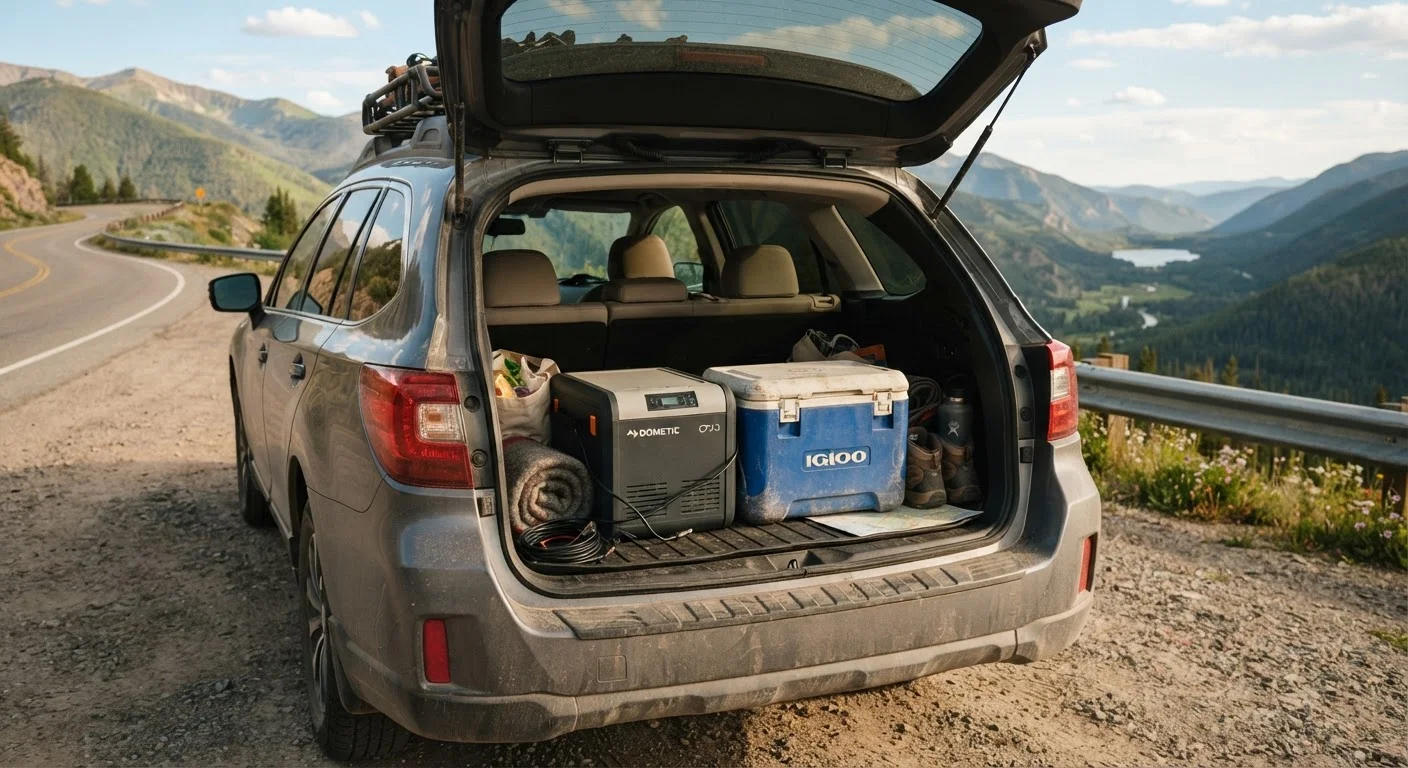
A passive cooler - commonly called an ice chest - uses insulated walls and a sealed lid to slow heat transfer. It holds temperature by relying on pre-loaded ice or ice packs. No power required. The trade-off: as ice melts, internal temperature rises, and without replenishment, food safety windows shrink. Insulation quality, measured loosely by wall thickness and foam density, determines how long ice lasts - anywhere from 24 hours in a basic unit to 5-7 days in a high-end rotomolded model.
A 12V portable electric fridge uses a compressor - the same refrigeration cycle found in your home fridge - to actively cool its interior. Plugged into a vehicle's 12V outlet or an auxiliary battery, it maintains a dialed-in temperature regardless of ambient heat. Most units can cool contents to below 40°F (4°C) or even freeze at 0°F (−18°C). They draw between 1 and 5 amps depending on load, ambient temperature, and compressor duty cycle. See our guide to managing 12V power on road trips to understand how that power draw stacks up against other devices.
| Criterion | Passive Cooler | 12V Electric Fridge |
|---|---|---|
| Power requirement | None | 12V DC (1-5A continuous) |
| Temperature control | Indirect - depends on ice load | Precise, user-set (±2°F) |
| Typical price range | $30-$400+ | $200-$800+ |
| Ongoing cost | Ice purchases per trip | Electricity only |
| Usable capacity loss | Up to 30-50% lost to ice | Full capacity usable |
| Weight when loaded | Heavy (ice adds significant mass) | Moderate, stable |
| Best trip length | 1-3 days | 3+ days or extended travel |
Performance, Cost, and Practical Trade-offs
The performance gap between a budget cooler and a quality one is substantial. Thin-walled coolers with poor lid gaskets bleed cold within hours. Rotomolded construction and thick polyurethane foam dramatically extend ice retention but push prices toward the $200-$400 range - overlapping with entry-level electric fridges. At that price crossover, trip frequency and power availability should drive the decision.
Electric fridges start around $200 for thermoelectric units (which are less efficient and not true compressor fridges) and range to $800 or more for dual-zone compressor models. Compressor-based units are meaningfully more capable and worth the premium if you're comparing seriously. Running costs depend entirely on how much time the vehicle is running or whether you have an auxiliary battery setup - something covered in depth when planning what gear actually belongs in your car.
Watch for Thermoelectric vs. Compressor Labels
Not all portable electric coolers use a compressor. Thermoelectric units (often labeled 'cooler/warmer') use a Peltier device and can only cool to roughly 40°F below ambient temperature - meaning on a 90°F day, they may only reach 50°F inside. Compressor-based fridges refrigerate actively and maintain set temperatures regardless of ambient heat. Verify the technology before purchasing if true refrigeration performance is your goal.
Weight and footprint also factor in. A rotomolded cooler packed with ice can exceed 60-70 lbs when fully loaded. A 40-liter electric fridge typically weighs 25-35 lbs with no consumable weight increase. If cargo space is already tight, review external storage options to understand what fits where.
Matching the Right Unit to Your Trip
The clearest decision rule: if your trip exceeds three days and ice sourcing is inconvenient, an electric fridge pays for itself in reduced spoilage and hassle. For shorter outings where you're passing through towns regularly, a quality passive cooler is lighter on the wallet and simpler to operate.
RV and van-life setups almost universally benefit from compressor fridges, particularly if paired with a solar or auxiliary battery system. For context on how electric cooling fits into a larger rig setup, the RV living and setup hub covers power and appliance planning in detail. If temperature-sensitive medications or specialty foods are involved, an electric fridge's precision control - typically ±2°F - removes guesswork that a melting-ice environment simply can't match.
Passengers' overall comfort on long drives often hinges on small logistics like cold drinks and fresh snacks being reliably available. That makes cold storage a practical comfort investment, not just a food-safety one. Our guide to passenger comfort on multi-day drives addresses related cabin accessories worth considering alongside your cooler choice.
~30%
Usable space lost to ice in a typical cooler
Ice and ice packs typically consume 30-50% of interior volume, reducing effective food storage capacity in standard coolers.
2-5A
Average 12V fridge current draw
Most compressor-based 12V portable fridges draw between 2 and 5 amps when the compressor is running, with duty cycle varying by ambient temperature and insulation quality.