Why Passenger Comfort Deserves Deliberate Planning
Most road-trip planning centers on the driver: route, fuel stops, tire pressure. Passengers - especially rear-seat occupants on a multi-day haul - are often an afterthought. That's a mistake. Uncomfortable passengers create driver distraction, demand more frequent stops, and arrive at the destination exhausted rather than ready to enjoy it.
The good news is that a modest investment in cabin accessories and some structured habits can dramatically change how a long drive feels for everyone on board. This isn't about luxury - it's about removing the friction points that grind people down over six, eight, or twelve hours in a moving vehicle. See our guide to road trip packing for broader context on what gear genuinely earns its place on a long drive.
Seating Support: The Foundation of Long-Haul Comfort
Factory seats are designed for average bodies on average trips. On a multi-day drive, their limitations become apparent fast. Lumbar rolls and inflatable back supports can fill the gap between a seat's built-in contour and a passenger's actual spine, reducing the muscular strain that builds over hours of sitting.
Seat cushions - particularly those with a coccyx cutout or memory foam base - redistribute pressure from the sit bones and reduce the numbness that typically sets in after 90 minutes. These are especially useful for rear passengers, who tend to have less adjustability than the driver's seat offers.
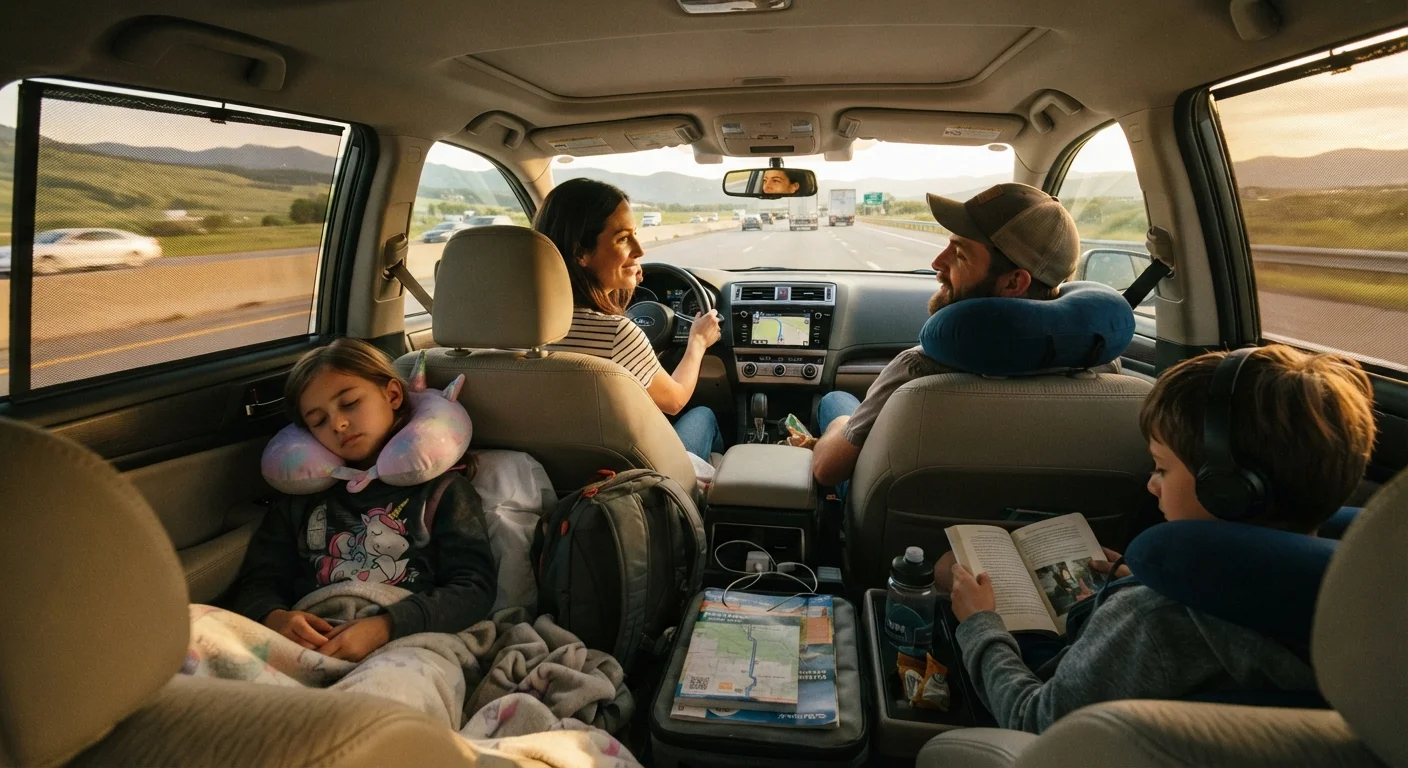
Neck pillows are worth evaluating carefully. U-shaped travel pillows are widely available, but the fit varies significantly by neck and shoulder geometry. Passengers should test their own pillow at home before the trip rather than discovering it doesn't work at mile 200.
Sun, Heat, and Glare Management
Rear passengers in SUVs and sedans often sit in direct sun for hours - a significant source of fatigue, dehydration, and irritability that most drivers don't notice from the front. Snap-on or suction-cup window shades block a meaningful portion of solar heat and UV exposure without requiring permanent modification.
For vehicles used regularly on long trips, aftermarket window tint film (applied professionally and within your state's legal limits for visible light transmission) offers a more durable solution. Check your state's regulations before applying any tint, as legal limits vary considerably and non-compliance can result in fines or required removal.
Polarized sun shades for rear side windows are a particularly underrated tool for families with young children, who are more sensitive to heat and glare than adults and less able to communicate discomfort clearly.
Climate Control and Air Quality Inside the Cabin
Even when the HVAC system is working well, airflow is rarely equal across the cabin. Rear passengers in many vehicles receive significantly less direct vent output than those in front. Clip-on vent extenders - flexible tubes that attach to rear seat-back vents - can redirect airflow more precisely to where it's needed.
Cabin air quality is a secondary but real factor on long drives. Recirculation mode keeps pollen out but can cause CO₂ to build up over time in a full car, which contributes to drowsiness. Switching periodically to fresh-air mode - even briefly - helps maintain alertness. A small, portable battery-operated fan placed in the rear footwell can also improve circulation without demanding HVAC adjustment from the driver.
For more on managing driver alertness specifically, see our driver fatigue guide.
Cabin Organization and Within-Reach Essentials
Disorganization is a quiet comfort killer. When passengers have to dig through bags for headphones, medication, or snacks, it creates frustration and distracts the driver. Seat-back organizers, which hang from the front-seat headrests, put the most-used items within easy reach of rear passengers and keep the floor and seat clear.
A small soft-sided bag or pouch at each seat position - carrying items like hand sanitizer, lip balm, a charger cable, and a small snack - reduces the need to access the main luggage during the drive. This is especially useful on interstates where stopping requires planning ahead.
For a deeper look at cabin storage options matched to specific vehicle layouts, see our cabin storage accessories guide. And if you're traveling with pets, the gear calculus changes significantly - our pet road trip guide covers restraints and carrier options in detail.
Structured Breaks: The Accessory That Costs Nothing
No cabin accessory replaces the physiological need to stand, walk, and move. Sitting for extended periods - regardless of seat quality - reduces circulation in the legs and increases the risk of stiffness and soreness. Planning a 10-15 minute movement break every 90 to 120 minutes is consistently supported by ergonomics research as a meaningful countermeasure.
The practical challenge is that drivers often resist stopping because it feels like lost time. Building stops into the route plan in advance - targeting rest areas, scenic overlooks, or small-town main streets rather than just gas stations - makes them feel purposeful rather than like delays. Passengers who know a stop is coming at a set interval also tend to tolerate discomfort more patiently in the meantime.
Keeping snacks and drinks organized and accessible reduces the pressure to stop purely for food. A portable cooler or 12V fridge in the cabin or cargo area can make the difference between a productive snack stop and a 40-minute detour to find an open restaurant.
This article provides general information for educational purposes. Always follow applicable traffic laws and manufacturer guidelines when modifying or accessorizing your vehicle.