Why Pet Restraints Are a Safety Issue, Not Just a Comfort One
Most drivers who travel with pets focus on whether the animal is comfortable. That's understandable - but it's secondary to a more pressing concern. An unrestrained dog or cat in a moving vehicle is a physics problem. In a collision at 35 mph, a 60-pound dog generates an impact force roughly equivalent to 2,700 pounds. Even at low speeds, a loose pet can injure passengers, cause the driver to swerve, or become critically injured itself.
Driver distraction is the less dramatic but more common risk. Studies by organizations such as the AAA Foundation for Traffic Safety have noted that in-vehicle pet distraction is a meaningful contributor to driver inattention. A dog climbing into the front seat or a cat vocalizing from the floor mat creates exactly the kind of sustained distraction linked to lane-departure and reaction-time failures.
An Unrestrained Pet Is a Cabin Hazard
In even a moderate collision, an unrestrained dog or cat can cause fatal injuries to human passengers as well as the animal itself. This is not a fringe scenario - it's a predictable consequence of Newton's first law applied to anything unsecured inside a moving vehicle. Effective restraint protects everyone in the car, not just the pet.
Restraint isn't optional for safety-conscious travelers. It benefits the pet, the driver, and everyone else sharing the road. Think of it the same way you'd think about cargo management - unsecured items in a cabin are hazards, and your pet is no different in that context.
Harnesses and Seat Belts for Dogs
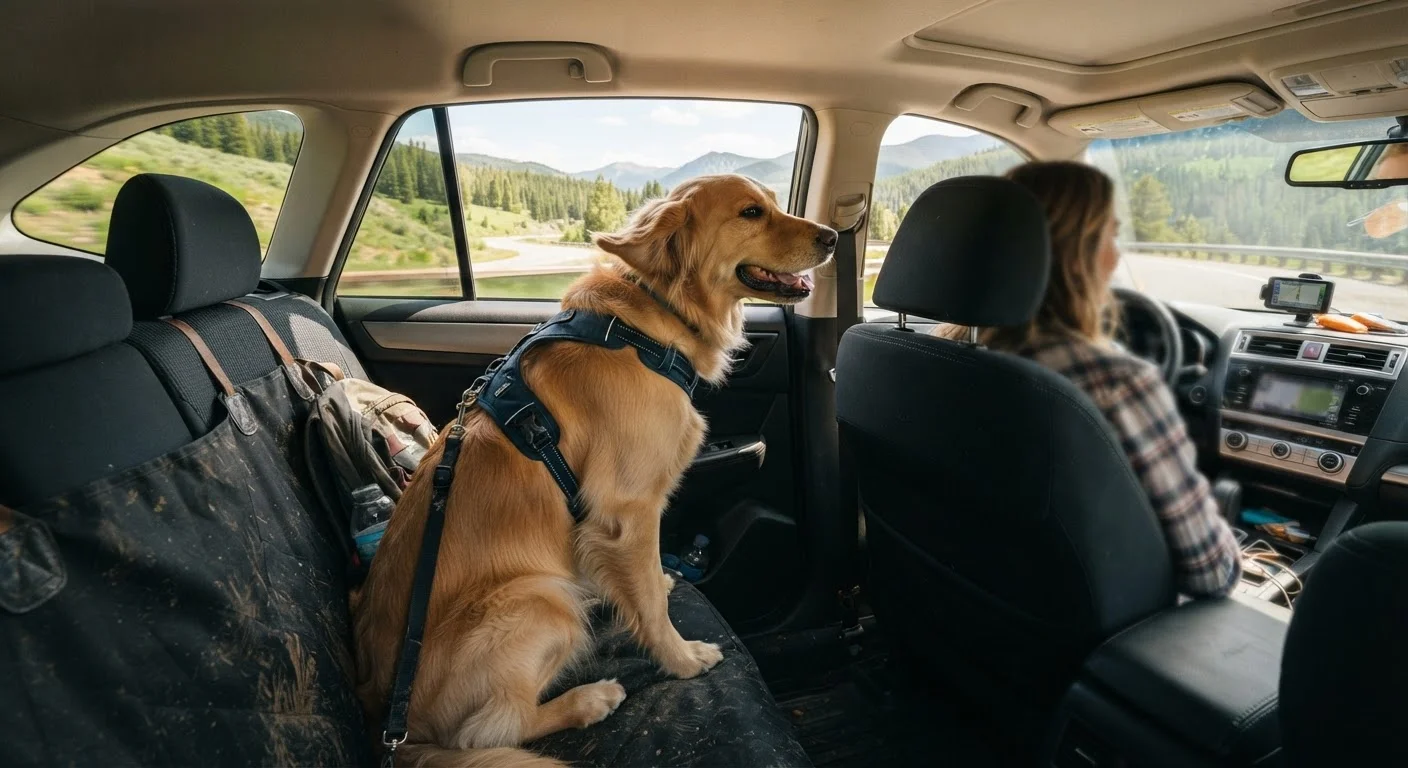
A vehicle-rated dog harness clips into the standard seat belt receiver and distributes crash forces across the chest and shoulders rather than the neck. Not all harnesses marketed as 'car harnesses' have been independently crash-tested, so look for products that have undergone testing under standards such as those from the Center for Pet Safety (CPS), a US-based nonprofit that conducts vehicle-specific pet restraint testing.
Fit matters as much as the harness type. The webbing should sit snug against the body without restricting breathing, and the tether should be short enough to prevent significant forward travel in a stop. Chest-clip harnesses differ from back-clip walking harnesses - using a walking harness in a vehicle provides minimal protection and can worsen spinal injury risk in a crash.
Always buy a harness that has been independently crash-tested to a recognized standard - the label alone doesn't confirm protection. Check the manufacturer's published test data or third-party certifications before purchasing.
Marketing claims for pet restraints frequently outpace the actual structural performance of the product. Independent crash-test data from organizations like the Center for Pet Safety provides a more reliable benchmark than product descriptions.
Anchor any crate with ratchet straps rated to at least double the combined weight of the crate and pet - cargo anchor points in most modern vehicles are rated for luggage, not crash loads, so treat them accordingly.
Vehicle tie-down points have specific load ratings that may be exceeded in a collision. Using higher-rated straps and inspecting the anchors before each trip reduces the chance of the crate becoming airborne in a sudden stop.
Dogs that are new to car travel benefit from short conditioning trips before a long haul. Introduce the harness at home first, then progress to parked-car sessions, then short drives. This reduces anxiety-driven pulling against the restraint, which extends harness life and keeps the dog calmer on the road.
Crates and Carriers: When a Kennel Is the Right Call
A rigid, well-secured crate is arguably the most protective option available for dogs that tolerate confinement well. The crate absorbs and redirects crash energy, and if anchored properly to cargo anchor points or secured with straps, it prevents the kennel itself from becoming a projectile. Crash testing conducted by the CPS has shown that some well-constructed rigid crates outperform harnesses in high-speed impact scenarios.
For SUVs, station wagons, and trucks with covered beds, the cargo area is a natural home for a crate. The crate must be secured - a loose kennel in the cargo area offers false security. Use ratchet straps rated for the crate's weight plus the pet's weight. Soft-sided crates offer little structural protection in a collision and are better suited for calm, short trips or airline travel.
Crate Sizing and Comfort Both Matter
A crate that fits the crash-protection requirement but is too cramped will cause stress on a long trip, which increases vocalizing and restlessness - both of which distract the driver. Size selection is a safety consideration on both ends: too loose reduces crash protection, too tight increases behavioral disturbance.
Size the crate so the pet can stand, turn around, and lie down in a natural position. A crate that's too small causes stress on long hauls; one that's too large allows excessive movement that reduces crash protection. Lining the crate floor with a familiar-smelling blanket significantly reduces travel anxiety for many dogs. See our road trip packing guide for broader advice on organizing your cargo space before departure.
Barriers and Cargo Dividers
Barrier grilles and net dividers fit between the rear seating area and the cargo section, keeping pets out of the front cabin. They're widely used and far better than no restraint at all for distraction reduction - but they should not be mistaken for crash-protective systems. A barrier prevents a dog from leaping into the driver's lap; it does not prevent the dog from being thrown forward into the barrier structure in a collision.
Metal grille barriers attached to the vehicle's structural anchor points perform better than tension-mounted nets in sudden stops. If a barrier is your primary containment method, pair it with a back-seat restraint or crate for meaningful crash protection. Cabin organizers and cargo nets also help keep the rest of your gear - water bowls, leashes, food containers - from becoming secondary hazards in the same space.
Barriers Do Not Replace Crash Restraints
A cargo barrier or net will keep your dog in the back seat under normal driving conditions but offers little protection in a collision. If you rely solely on a barrier, your pet remains at significant injury risk in any sudden stop or crash event. Use a barrier in combination with a harness or secured crate for meaningful protection.
Travelling with Cats and Smaller Pets
Cats present a different challenge. Most cats do not tolerate harness-and-tether restraint the way dogs can be trained to, and free-roaming cats in a vehicle are both a distraction risk and vulnerable to injury. A hard-shell carrier secured to the seat with the seat belt passed through the carrier's belt loop (if the carrier supports it) or placed in the footwell behind the front seat is the practical solution for most cat owners.
The carrier should be large enough to allow the cat to shift position but not so large that it slides around inside. Line it with an item carrying a familiar scent. Cover three sides with a light cloth to reduce visual stimulation - many cats calm down significantly when they can't see movement outside the carrier. Avoid placing the carrier on the front passenger seat where airbag deployment poses a lethal risk to the animal.
For small dogs, rabbits, or other small animals, the same hard-shell secured carrier logic applies. The seat belt airbag risk applies equally to any carrier placed in the front passenger position. Keeping all passengers comfortable on multi-day drives includes managing the cabin environment - temperature, airflow, and noise - which directly affects small pets as well.
65%
Drivers who travel with pets unrestrained
According to AAA survey data, approximately 65% of dog owners reported engaging in at least one distracting behavior while driving with their pet.
2,700 lbs
Force of a 60-lb dog in a 35-mph crash
Physics calculations cited in pet safety advocacy literature illustrate the projectile force generated by an unrestrained pet in a moderate-speed collision.
Packing the Rest of Your Pet Kit
Restraint and containment are the foundation, but a complete pet travel kit covers a few additional essentials. Water and a collapsible bowl belong within easy reach for rest stops - pets dehydrate faster in a warm vehicle, and hydration breaks double as exercise breaks that reduce restlessness. A travel-sized first aid kit for pets (bandaging materials, antiseptic, a copy of vaccination records) adds minimal weight and real utility if something goes wrong far from home.
Plan rest stops every two hours for dogs. Most cats prefer to stay in the carrier throughout, but check on them regularly. If your route crosses state lines, check whether those states have specific laws about pet restraint or transport conditions - regulations vary and some carry fines. Seasonal gear considerations also apply to pets: a vehicle interior on a hot summer day reaches dangerous temperatures rapidly, and winter trips introduce cold exposure during rest stops.
Driver fatigue and pet management pull attention in the same direction - both erode your margin for safe reaction. Strategies for managing driver fatigue on long hauls complement your pet travel plan because a rested, focused driver handles unexpected pet behavior far more safely than an exhausted one.
This article provides general educational information about pet travel safety and vehicle accessories. It is not a substitute for veterinary advice regarding your specific animal's health or behavior needs. Consult a licensed veterinarian before traveling long distances with a pet that has known medical conditions or anxiety disorders.