Why Seasonal Gear Swaps Matter
A first-aid kit and a phone charger are year-round staples. But a surprising amount of road trip gear is season-specific - and carrying the wrong items (or missing the right ones) can turn a manageable situation into a genuine problem. This reference breaks down what changes across summer heat, wet weather, and winter driving, so you can build a kit that matches your actual conditions rather than a generic packing list.
For a solid starting point on what belongs in the car regardless of season, see what actually belongs in your car. This article builds on that foundation by addressing the seasonal layer on top.
| Tire pressure behavior in heat | Increases ~1 PSI per 10°F rise in temperature (General automotive engineering principle) |
| Wiper replacement interval | Every 6-12 months under normal use (General manufacturer guidance) |
| Minimum battery reserve in cold | A 12V battery can lose 35-50% capacity at 0°F (Battery Council International data) |
| Emergency water recommendation | 1 gallon per person per day in desert/heat conditions (General emergency preparedness guidance) |
| Legal requirement risk | Chains/snow socks required on some passes in CA, WA, CO, and other states (State DOT regulations vary - check before each trip) |
Summer Heat: Protect People, Fluids, and Electronics
High ambient temperatures stress both your vehicle and its occupants in ways that milder conditions don't. Here's what to prioritize:
- Cooling and hydration: Carry significantly more water than you think you'll need - a minimum of one gallon per person per day if traveling through desert regions. Insulated coolers with ice or ice packs help maintain safe food and drink temperatures when outside temps exceed 90°F.
- Sun management: Reflective windshield shades reduce interior cabin temperature substantially when parked. Polarized sunglasses reduce glare-related driver fatigue on long stretches of open highway.
- Electronics protection: Heat degrades lithium batteries faster than cold does. Keep devices and power banks out of direct sunlight; avoid leaving them on a dashboard for extended periods.
- Roadside readiness: Summer is prime tire-blowout season - heat expands air pressure and surfaces get scorching. A quality portable air compressor and tire pressure gauge belong in every summer kit. Check pressures when tires are cold, before you've driven more than a mile.
Also check your vehicle's coolant level, drive belt condition, and AC system before a summer trip. The seasonal vehicle maintenance checklist covers those checks in detail.
~1 PSI
Tire pressure rise per 10°F temperature increase
A general engineering principle relevant to summer overinflation risk; always check pressures cold before departure.
Up to 50%
Battery capacity loss at 0°F vs. 80°F
According to Battery Council International, cold dramatically reduces a 12V lead-acid battery's available power.
Rain and Wet Conditions: Visibility and Traction Are Everything
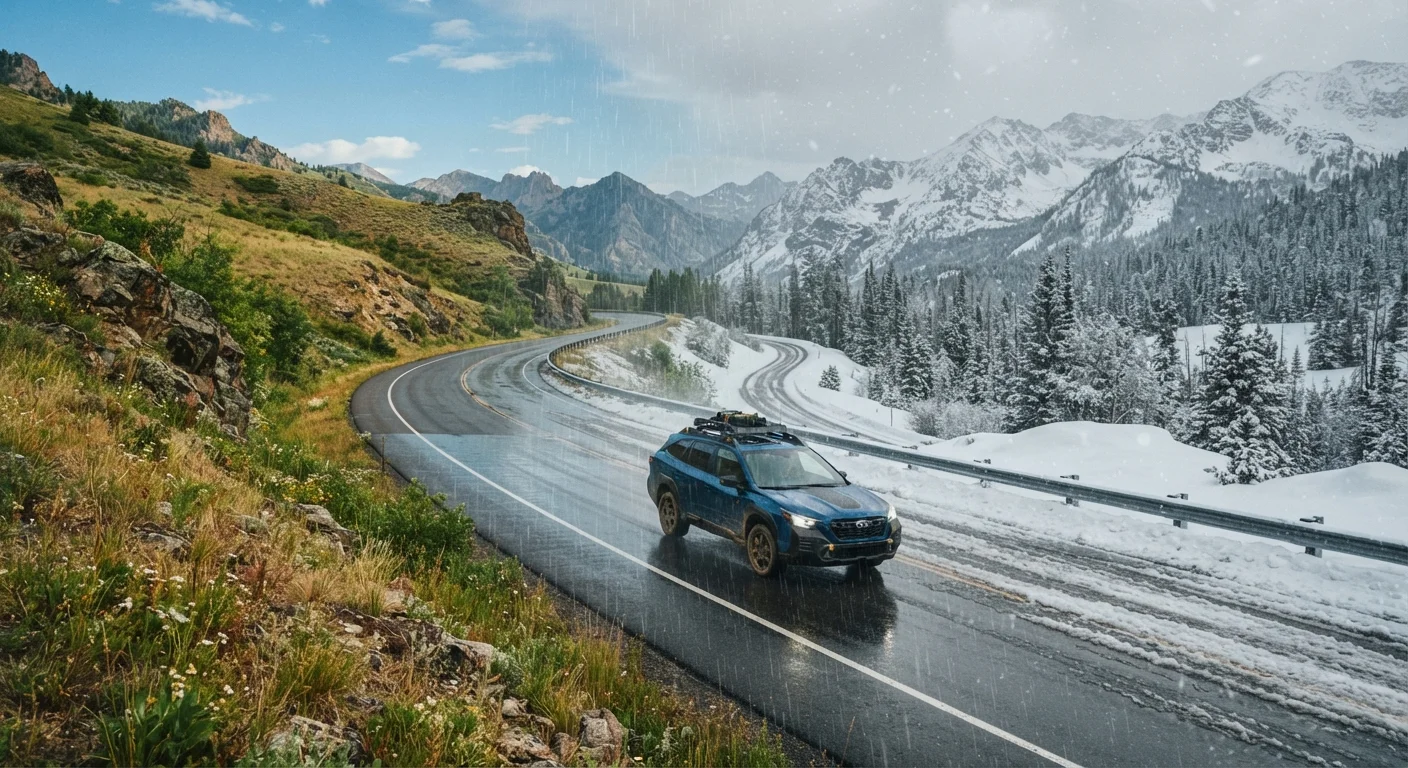
Wet-weather road tripping introduces slip risk and dramatically reduced visibility. The gear that addresses those two factors is what matters most:
- Wiper condition: Wipers are consumables - most need replacing every 6-12 months. Carry a spare set or at minimum inspect and replace before any trip involving significant rainfall.
- Traction aids: Ensure your tires have adequate tread depth (the penny test is a quick field check). Rain grooves and tread depth work together to channel water away from the contact patch.
- Rain gear for occupants: Packable waterproof jackets, waterproof footwear, and a compact umbrella become essential when you're stopping frequently or if you experience a breakdown in wet weather.
- Waterproofing for cargo: Dry bags or waterproof stuff sacks protect essential documents, electronics, and clothing from interior condensation or water intrusion through older door seals.
If your trip involves cycling segments, the waterproofing principles translate directly - see packing a bikepacking kit for how to protect gear across weather on two wheels.
Check State Chain Laws Before Mountain Routes
Several western US states have enforceable chain control requirements on specific mountain passes during winter weather events. Penalties for non-compliance can include fines or being turned back at checkpoints. Always verify current requirements for your specific route via the relevant state DOT website before departure - rules can vary by vehicle class and road segment.
Winter and Snow: Emergency Readiness Takes Priority
Winter driving shifts the gear calculus toward emergency preparation more than any other season. The risk isn't just discomfort - it's becoming stranded in dangerous cold. Build your winter kit around these categories:
- Traction and recovery: A collapsible snow shovel, traction mats (sand or synthetic), and a bag of sand or cat litter can get you unstuck without needing a tow. These are compact and cheap relative to a roadside service call.
- Visibility tools: An ice scraper with a long-handled brush is non-negotiable. Keep it inside the car - not in the trunk, where it may be unreachable if the trunk freezes shut.
- Emergency warmth kit: Space blankets, hand warmers, an extra wool or synthetic-fill layer, and warm waterproof footwear should stay in the vehicle whenever you're traveling through cold regions. These are for emergencies, not daily use.
- Jumper cables or jump starter pack: Cold temperatures reduce battery capacity measurably. A portable lithium jump starter pack is more practical than cables if you're regularly traveling solo.
- Chains or snow socks: Required by law in some states on certain routes during winter weather. Check regulations for any mountain passes on your route before departure.
RV travelers have additional winterizing concerns beyond the cab itself - winterising your RV walks through protecting plumbing, batteries, and tires when temperatures drop.
Traction mats
Portable devices placed under drive wheels to provide grip when a vehicle is stuck in mud, snow, or sand. They allow the tire to gain traction without spinning uselessly.
Cold cranking amps (CCA)
A battery rating measuring how much current it can deliver at 0°F for 30 seconds. A higher CCA rating indicates better performance in cold weather.
Dry bag
A waterproof bag sealed at the top to keep contents dry even in wet conditions. Commonly used to protect electronics, documents, and clothing from moisture.
Tire tread depth
The measurement of the groove depth remaining on a tire. In wet conditions, adequate tread depth (at least 2/32 inch minimum, 4/32 recommended for rain) is critical for channeling water and maintaining grip.