Why Accessory Terminology Matters
Browsing accessory listings without understanding the terminology is a reliable way to end up with parts that don't fit, ratings that don't apply, or specs that sound impressive but deliver little in practice. This glossary collects the terms you'll encounter most often - from fitment language to electrical ratings - and explains what they actually mean for a real-world purchase decision.
For broader context on what qualifies as an accessory versus a modification, see what counts as an add-on vs. a modification. And if you're also researching vehicle parts at a component level, the Parts Explained hub provides a useful parallel reference.
| IP67 Water Resistance | Withstands submersion up to 1 meter for 30 minutes (IEC Standard 60529) |
| Class III Hitch Receiver Size | 2-inch square receiver tube (SAE J684 Trailer Coupler Standard) |
| Payload vs. GVWR Relationship | Payload = GVWR minus curb weight (General industry definition) |
| Typical OEM vs. Aftermarket Price Gap | Aftermarket parts often 20-50% less than OEM equivalents (General industry observation; varies significantly by category) |
| LED Color Temperature Range (Driving Lights) | 5,000-6,500 Kelvin (cool white daylight range) (Common specification range for auxiliary driving lights) |
Core Fitment and Compatibility Terms
Fitment errors are the single most common reason accessory purchases go wrong. These terms define how an accessory relates to your specific vehicle.
OEM (Original Equipment Manufacturer)
Parts or accessories made by the same supplier that produced the component for your vehicle's factory assembly. OEM accessories are designed to match factory specifications exactly, which generally means predictable fitment but a higher price point than alternatives.
Aftermarket
Any part or accessory made by a company other than the original vehicle manufacturer. Aftermarket options vary widely in quality, price, and compatibility - some exceed OEM standards, others do not.
Universal Fit
An accessory designed to work across multiple vehicle makes and models without being engineered for any specific one. Universal-fit items typically require more effort to install and may need trimming, brackets, or adapters to seat correctly.
Vehicle-Specific Fit
An accessory engineered for a defined set of makes, models, years, and trim levels. These parts are more likely to install cleanly but must be verified against your exact vehicle configuration before purchase.
IP Rating (Ingress Protection)
A standardized two-digit code (e.g., IP67) indicating how well a product resists solid particles and liquids. The first digit rates dust protection (0-6) and the second rates water resistance (0-9); higher numbers mean greater protection.
Payload Capacity
The maximum combined weight of passengers, cargo, and accessories a vehicle is rated to carry. Adding heavy aftermarket accessories counts against this figure, and exceeding it can affect handling, braking, and warranty coverage.
GVWR (Gross Vehicle Weight Rating)
The maximum operating weight of a vehicle as specified by the manufacturer, including the vehicle itself, fluids, passengers, and all cargo. Exceeding GVWR can be unsafe and may void certain warranties.
Tow Rating
The maximum weight a vehicle is rated to pull behind it when properly equipped. This figure depends on engine, transmission, axle ratio, and hitch type - not every vehicle with a hitch receiver can tow to its theoretical maximum.
Receiver Hitch Class
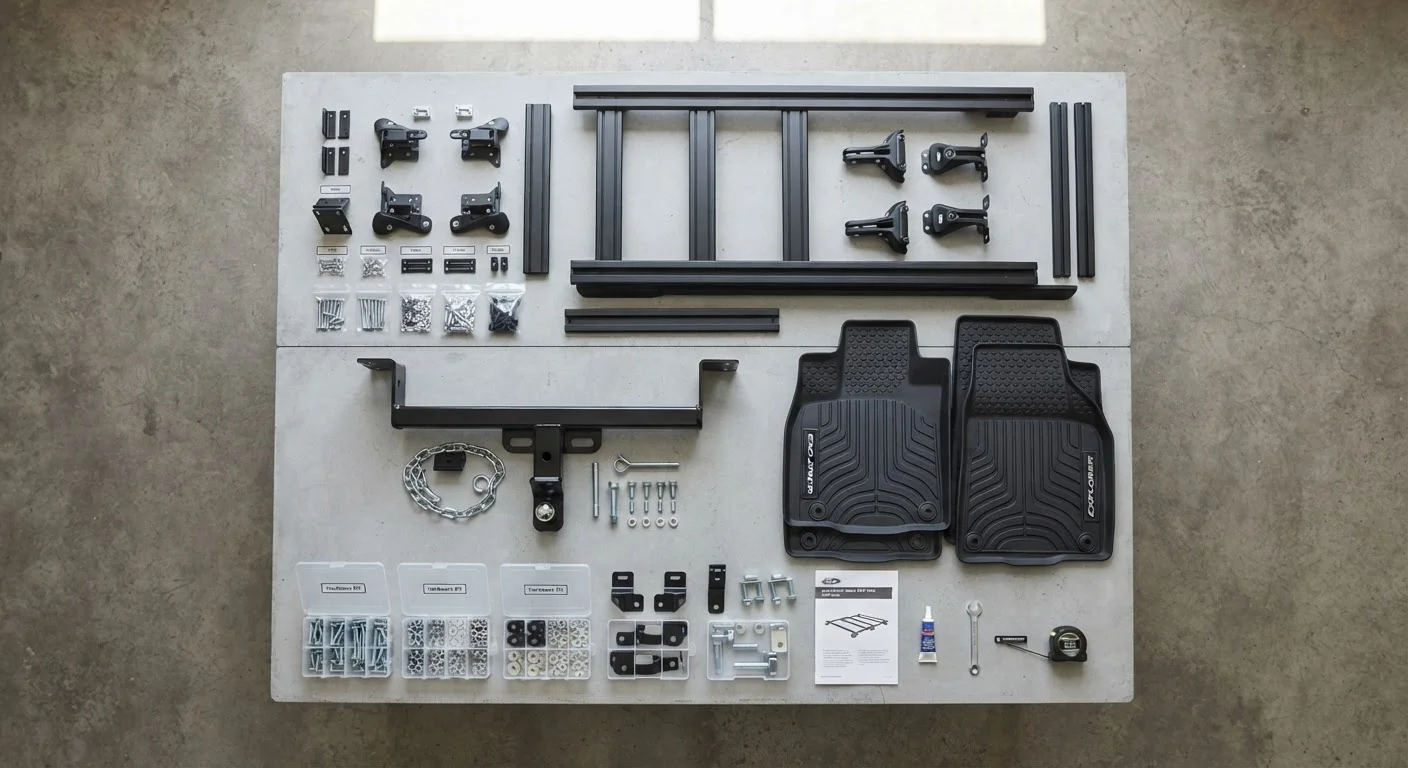
A standardized classification (Class I through Class V) that defines a trailer hitch receiver's tube size and towing capacity. Matching your hitch class to your tow rating is critical; mismatched hardware is a safety risk.
Lumen Output
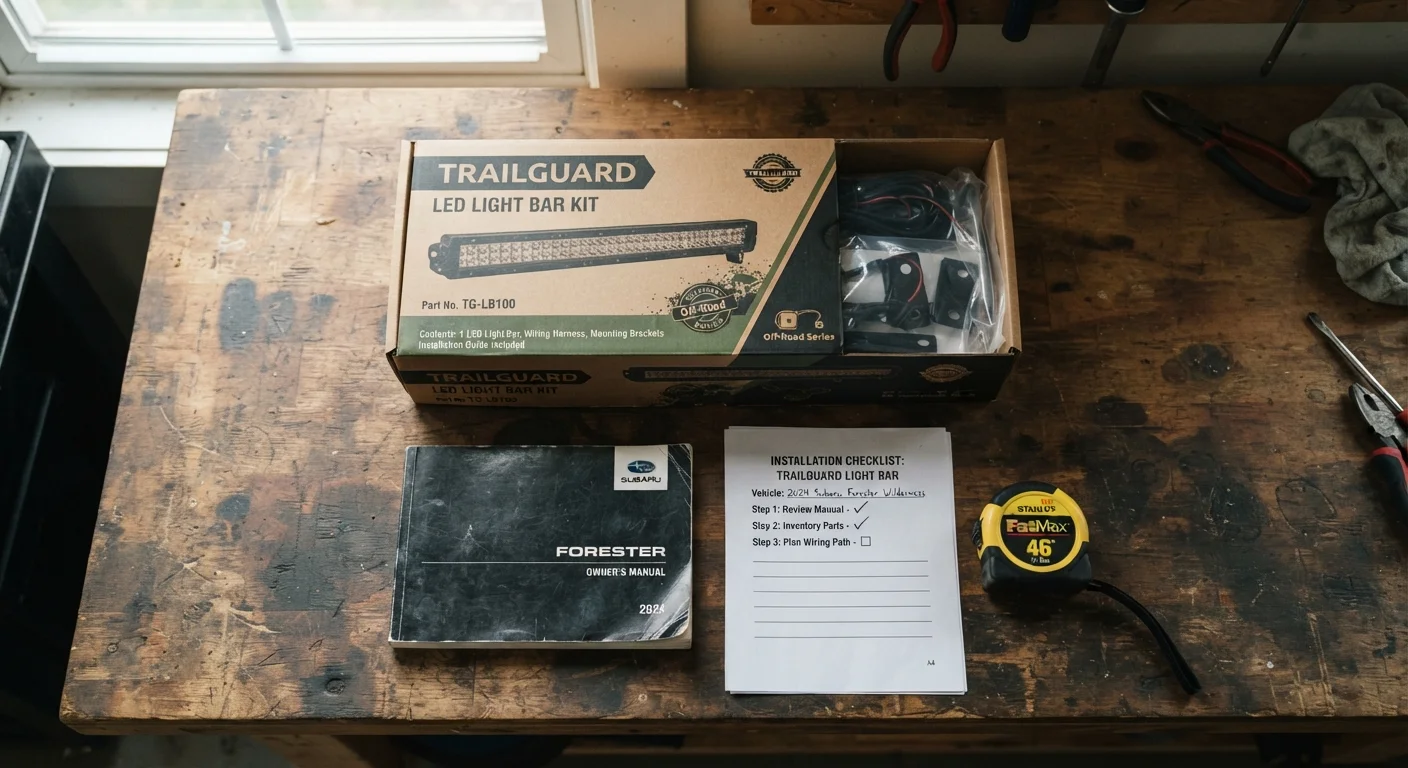
A measurement of the total quantity of visible light emitted by a lighting accessory. Higher lumens indicate brighter output; lumens alone do not describe beam pattern, color temperature, or how usable the light is in practice.
Color Temperature (Kelvin)
A measure of the hue of a light source expressed in Kelvin (K). Lower values (around 3,000K) produce warm yellowish light; higher values (5,000-6,500K) produce cool, daylight-like white light commonly used in LED driving lights.
Plug-and-Play
An accessory that connects to an existing factory connector or mount without cutting wires, drilling, or fabricating brackets. Genuinely plug-and-play items are generally reversible and carry lower risk of voiding warranties.
The distinction between OEM and aftermarket runs deeper than price. OEM, OES, and aftermarket parts carry distinct trade-offs that affect durability, fitment precision, and warranty exposure. Universal-fit items are particularly easy to misjudge - what works on one truck bed or door panel may require significant rework on another, even within the same model year.
Fitment Verification Is Non-Negotiable
Even accessories marketed as "vehicle-specific" can vary by sub-model, cab configuration, bed length, or factory option package. Always cross-reference the part number against your vehicle's full build data - year, make, model, trim, and any relevant factory codes - before committing to a purchase. A reputable parts lookup tool or your vehicle's VIN can surface those details quickly.
Warranty Implications of Accessories
Installing aftermarket accessories does not automatically void your factory warranty under the Magnuson-Moss Warranty Act in the U.S. However, if an accessory directly causes a specific component to fail, that component's warranty coverage may be affected. When in doubt, consult your dealership's service department or a qualified mechanic before installing accessories that interface with powertrain, electrical, or emissions systems.
If you're moving into your first aftermarket purchases, where enthusiasts usually start with aftermarket accessories offers a practical roadmap for prioritizing what to add first.
Ratings, Capacities, and Electrical Specs
Beyond fitment, accessories carry performance ratings that determine whether they'll actually do the job. Misreading these is almost as costly as a fitment mistake.
IP Ratings appear on lighting, cameras, switches, and any electronics exposed to the elements. A product rated IP67 will survive a rain-soaked trail; one rated IP54 won't hold up to a pressure washer. Always check both digits, not just the marketing headline.
Lumen output and color temperature both matter for lighting decisions, but neither tells the whole story alone. A high-lumen floodlight with a poor beam pattern can create more glare than usable illumination. Look for candela ratings and beam pattern diagrams when comparing auxiliary lighting seriously.
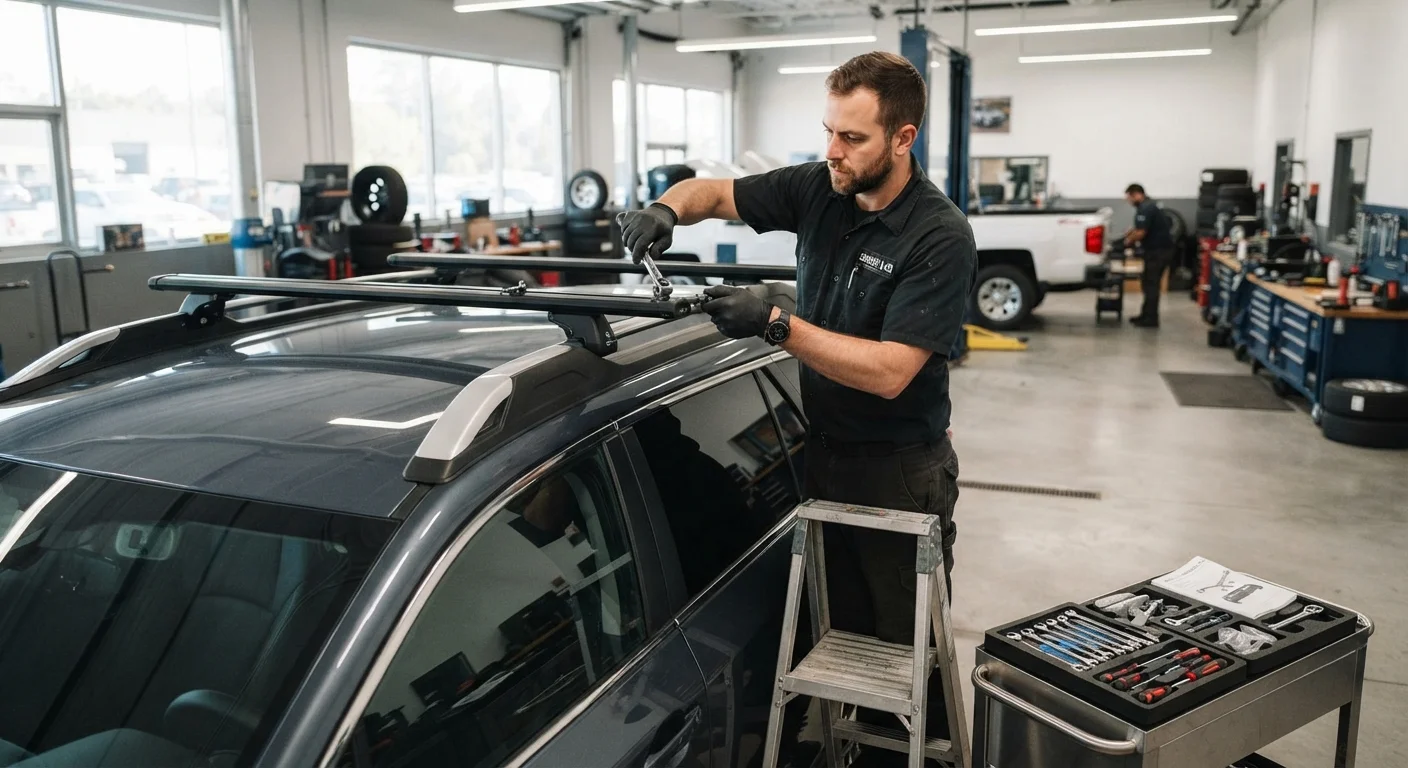
Payload and tow ratings are not suggestions. Both figures are engineering limits set by the manufacturer, and accessories - particularly roof racks, cargo carriers, and towing hardware - consume those limits directly. Roof racks that carry gear add weight above the center of gravity, which also affects handling independent of raw payload numbers.
Hitch receiver class is often confused with tow rating, but the two are separate. Your vehicle's tow rating is the ceiling; the hitch class defines the hardware interface. You need both to match your actual towing load, along with the correct ball mount, coupler size, and trailer wiring configuration. For RV-specific terminology around weights and hitching, the RV glossary covers GVWR, dry weight, and related concepts in that context.
For a broader look at how terminology varies across vehicle categories - including collector and classic vehicle language - decoding collector condition terms is a useful companion reference.