The Alternator's Role in Your Charging System
Most drivers assume the battery powers everything in their car. In reality, once the engine is running, the alternator takes over. The battery's primary job is to start the engine; after that, the alternator supplies power to the ignition system, fuel injectors, headlights, HVAC blower, infotainment, and every other electrical load your vehicle carries.
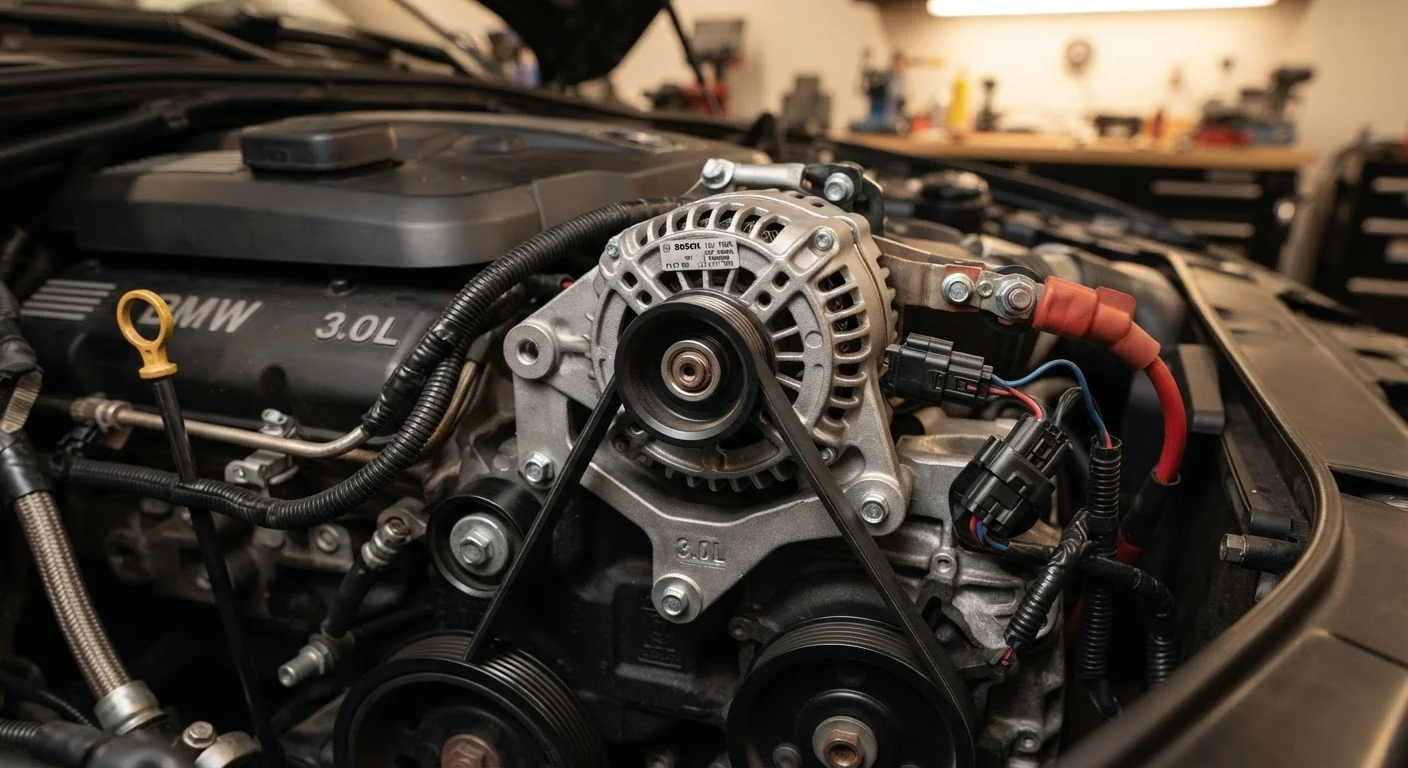
The alternator is belt-driven - it spins via the serpentine belt connected to the engine's crankshaft. Inside, a rotor spins within a set of stator windings, inducing alternating current through electromagnetic induction. A built-in rectifier converts that AC to DC, and a voltage regulator keeps output stable regardless of engine RPM or electrical demand.
If your alternator output drops or fails, the battery picks up the slack - but only briefly. Understanding this relationship matters when diagnosing problems. If your new battery keeps dying, the alternator is often the real culprit.
13.5-14.8V
Normal alternator charging voltage range
This is the DC output range most passenger vehicle alternators maintain at idle and under load, per standard automotive electrical specifications.
80k-150k mi
Typical alternator service life
Industry estimates vary by vehicle and usage; higher electrical demands and extreme heat tend to push lifespan toward the lower end of this range.
~30-60 min
Battery-only driving time after alternator failure
Duration depends on battery state of charge and total electrical load at the time of failure - a rough estimate cited by automotive technicians.
Warning Signs of a Failing Alternator
Alternators rarely fail without warning. Recognizing early symptoms can save you from a roadside breakdown.
- Battery warning light: This light monitors the charging system voltage, not just the battery. If it illuminates while driving, check the alternator first.
- Dimming or flickering lights: Headlights and interior lights dim under normal load when the alternator struggles to maintain voltage.
- Electrical gremlins: Slow power windows, a sluggish instrument cluster, or intermittent accessory failures can all point to low charging voltage.
- Whining or grinding noise: Worn bearings inside the alternator produce a distinct whine that often changes with engine RPM. A slipping serpentine belt can also cause a squealing sound near the alternator pulley.
- Dead battery: If a battery repeatedly drains despite being in good condition, the alternator isn't keeping it charged. This pattern is worth investigating before replacing the battery again - see our guide on habits that shorten battery life.
Check Belt Condition While You're At It
When diagnosing alternator issues, inspect the serpentine belt at the same time. A cracked, glazed, or loose belt reduces alternator efficiency and can mimic charging system symptoms. Belts are inexpensive relative to alternators and should be replaced on schedule - typically every 60,000 to 100,000 miles depending on vehicle and belt type.
How to Test Your Alternator at Home
A basic charging system check requires only a digital multimeter, available at most hardware stores.
- Test battery voltage with the engine off. A fully charged battery should read approximately 12.6 volts. Anything below 12.4 volts suggests the battery is partially discharged.
- Start the engine and retest. Set the multimeter to DC voltage and touch the probes to the battery terminals. A healthy alternator raises voltage to between 13.5 and 14.8 volts at idle.
- Apply an electrical load. Turn on the headlights and blower motor. Voltage should stay above 13 volts. A significant drop suggests the alternator can't keep up with demand.
If your readings fall outside these ranges, have a full charging system test performed - many auto parts retailers offer this at no charge. Note that these are general diagnostic guidelines; interpretation can vary by vehicle. When in doubt, a qualified technician can give you a definitive assessment.
Voltage Readings Vary by Vehicle
Some modern vehicles with smart charging systems intentionally vary alternator output based on battery state of charge and driver demand. In these systems, voltage may fluctuate more than the ranges above suggest. If your vehicle uses a smart charging system, consult the factory service manual or a technician before assuming a reading is out of spec.
Alternator Lifespan and What Affects It
Alternators are robust components, but they're not indefinite. Several factors influence how long yours will last:
- Electrical load: Vehicles with heavy accessory draws - aftermarket audio systems, winches, auxiliary lighting - stress the alternator more than a stock setup. High-demand builds sometimes benefit from a higher-output replacement unit.
- Heat: Engine bay heat accelerates wear on the internal bearings and diode rectifier. Vehicles in hot climates or with poor underhood airflow tend to see shorter alternator life.
- Belt condition: A worn, glazed, or improperly tensioned serpentine belt reduces alternator efficiency and can cause premature wear on the pulley bearing. Belt inspection at every oil change is worthwhile.
- Short-trip driving: Frequent short trips prevent the alternator from fully recharging the battery after each cold start, which cycles the system harder over time.
RV and camper owners running onboard electrical systems should note that vehicle alternators are generally not designed to charge large auxiliary battery banks efficiently. Purpose-built DC-to-DC chargers or a dedicated solar charging setup are better suited for that role.