Why Battery Habits Matter More Than Brand
A vehicle battery is one of those components most drivers ignore until it fails - usually at the worst possible moment. The truth is that battery lifespan is more often a product of daily driving habits and maintenance practices than the battery's manufacturing quality. Understanding what actually degrades battery performance puts you in control of prevention rather than reaction.
Most standard 12-volt lead-acid batteries are designed to last roughly three to five years under normal operating conditions. That window can shrink dramatically if the battery is routinely stressed. The habits described below are among the most common culprits, and they affect both conventional and absorbent glass mat (AGM) batteries found in modern vehicles. For those managing auxiliary or house batteries in an RV or camper, see RV battery maintenance specifics, as those systems have additional considerations.
Taking frequent short trips without allowing the battery to fully recharge.
Why it happens: Urban drivers often make multiple sub-10-minute trips daily, and each cold start draws significant current. The alternator needs sustained driving time - typically 20 to 30 minutes - to restore what was used during startup.
Leaving accessories running with the engine off - lights, radio, phone chargers, or HVAC fans.
Why it happens: It's easy to forget a dome light or leave a device plugged into a 12V socket when stepping away from the vehicle. Even small parasitic draws add up quickly when the engine isn't running to compensate.
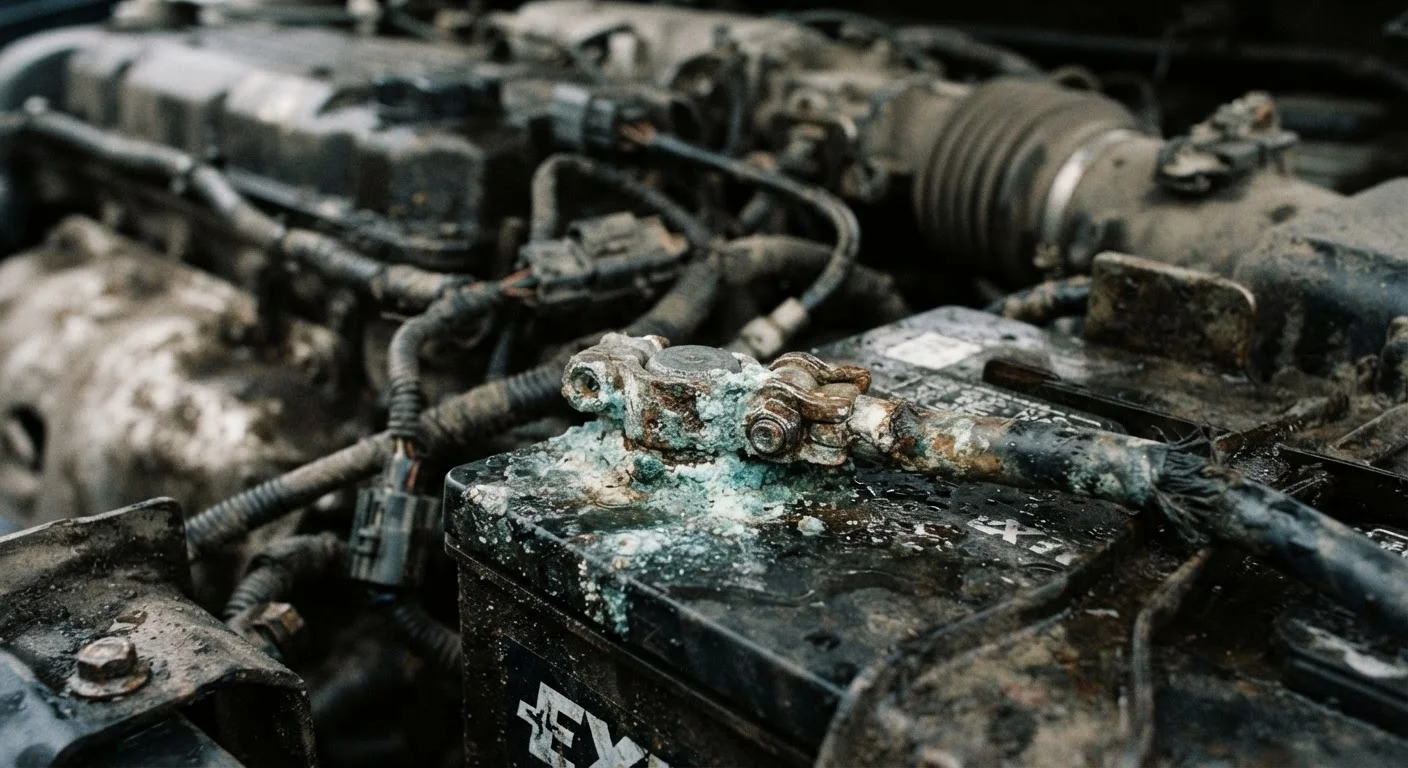
Ignoring terminal corrosion until the battery fails to start the vehicle.
Why it happens: The white or bluish crust that builds up on battery terminals develops gradually and is easy to overlook during routine checks. Many drivers don't inspect the battery unless something goes wrong.
Exposing the battery to extreme heat without any preventive measures.
Why it happens: Many drivers associate battery failure with cold weather and assume summer is safe. In reality, sustained high temperatures accelerate internal corrosion and cause electrolyte evaporation in flooded lead-acid batteries, degrading capacity faster than freezing temperatures do.
Allowing the battery to sit fully or deeply discharged for extended periods.
Why it happens: Seasonal vehicles - motorcycles, RVs, classic cars - are routinely parked for months without any power management. A lead-acid battery left in a discharged state undergoes sulfation, where lead sulfate crystals harden on the plates and permanently reduce capacity.
The Hidden Costs of Ignoring the Warning Signs
A battery that is struggling rarely fails without giving some advance notice. Slow engine cranking, dashboard warning lights, and electrical accessories behaving erratically are all early indicators. The problem is that many drivers interpret these as isolated glitches rather than a pattern pointing to battery stress.
3-5 years
Typical lead-acid battery lifespan
Industry service data consistently cites this range under normal operating conditions, with poor habits capable of cutting it to under two years.
~20-30 min
Drive time needed to recharge after a cold start
Automotive engineers generally note that alternators require sustained driving at moderate speeds to restore the charge consumed during engine startup.
If your battery keeps dying even after you've replaced it, the root cause is likely something other than the battery itself - a parasitic draw, a failing alternator, or corroded terminals are frequent culprits. That scenario is covered in detail in why your battery keeps dying after replacement. Likewise, drivers running multiple USB chargers, inverters, or 12V accessories should understand how those loads interact with the charging system - managing vehicle power on road trips explains how to balance those demands without stressing the battery.
Don't Jump-Start Without Checking First
Repeatedly jump-starting a deeply discharged battery can damage both the battery and sensitive vehicle electronics. If a battery needs a jump more than once in a short period, have the battery and charging system load-tested by a qualified technician before driving long distances. A battery at the end of its service life won't reliably hold a charge no matter how many times it's jumped.
For electric and hybrid vehicle owners, battery degradation follows different chemistry and different rules. The EV and hybrid battery degradation data article breaks down what research actually shows about long-term capacity loss in those systems.