Why a Pre-Trip Inspection Is Non-Negotiable
An RV carries far more complexity than a standard passenger vehicle - propane systems, fresh and grey water tanks, 120-volt shore power hookups, slide-out mechanisms, and roof-mounted equipment all need to be in a known-good state before you leave your driveway. Skipping a structured walkthrough doesn't just risk a breakdown; it can create safety hazards for you and other road users.
This checklist is designed to be run the morning of every departure, whether you're heading out for a weekend or embarking on a cross-country leg of full-time travel. Think of it as your pre-flight routine - systematic, unhurried, and repeatable. For a complementary look at what to do once you arrive, see the RV arrival checklist every full-timer should run through.
The tools and supplies below are what you'll want on hand before you begin.
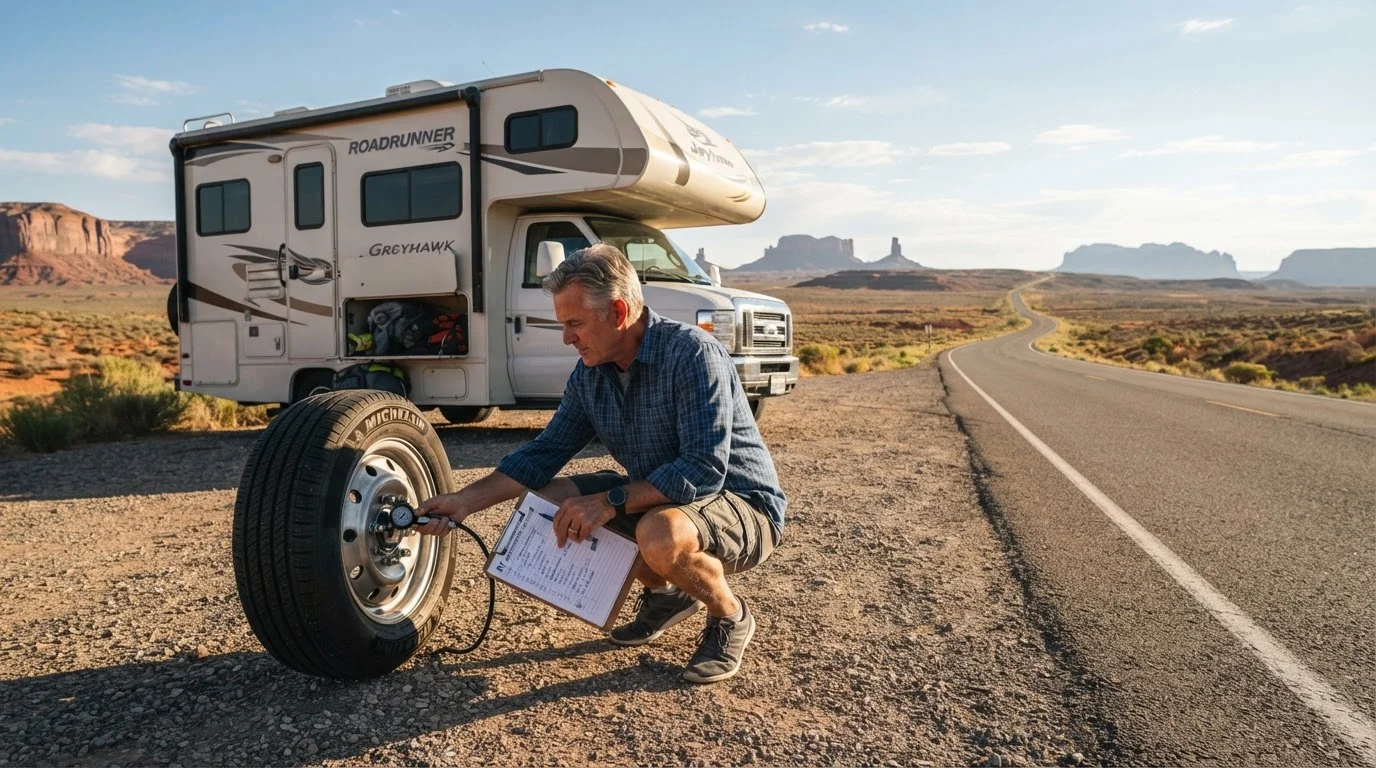
Calibrated Tyre Pressure Gauge
Accurately measure cold tyre pressure across all tyres, including the spare.
Torque Wrench
Verify lug nuts are tightened to the manufacturer's specified torque after any tyre service.
Multimeter or Circuit Tester
Diagnose lighting or electrical faults quickly without relying on visual inspection alone.
Printed or Digital Checklist
Provides a consistent, step-by-step reference so no inspection group is accidentally skipped.
Flashlight or Headlamp
Inspect undercarriage, compartments, and wheel wells in low-light conditions.
The Full Pre-Trip Inspection Checklist
Work through these groups in order. Safety-critical items come first so that any show-stopping issue surfaces before you invest time on cosmetic or comfort checks.
Life Safety Systems
Tyres and Wheels
Exterior and Slide-Outs
Chassis and Engine (Motorhomes)
Lights and Electrical
Water and Waste Systems
Slide-Outs Left Extended Have Caused Fatalities
Departing with a slide-out even partially extended can shear the mechanism, damage the coach structure, and create a road hazard for other drivers. Before moving the vehicle, physically confirm each slide from outside - a visual check from the driver's seat is not sufficient. Build this habit into your muscle memory.
Once you've cleared all groups, do a final slow walk around the exterior - full circle, eyes high and low. It takes ninety seconds and has caught forgotten wheel chocks, disconnected umbilicals, and open basement compartment doors that every other step missed.
If your RV has a tow vehicle or is itself a motorhome towing a dinghy, also run through the seasonal vehicle maintenance checklist periodically to stay ahead of wear items that don't surface on a single pre-trip pass.
What to Do When You Find a Problem
Not every issue you discover is a trip-stopper, but some are. Use this simple triage framework:
- Safety systems failure (propane leak, inoperative CO or smoke detector, brake fault, tyre damage): Do not depart. Address the issue or have the unit inspected by a qualified technician before travel.
- Mechanical concern (fluid leak, unusual engine noise, check-engine light): Understand what the warning indicates before deciding. Reading dashboard warning lights before they become bigger problems explains the most common symbols and appropriate responses.
- Minor comfort or convenience issue (awning motor slow, levelling jack noisy): Log it, monitor it, and schedule service at your destination or on return.
Don't Defer Safety System Faults
A malfunctioning LP gas detector or inoperative smoke alarm is not a minor inconvenience - it is a departure-blocking issue. Propane leaks and carbon monoxide exposure are leading causes of serious RV incidents. Do not travel until life-safety devices are confirmed operational or replaced.
It also pays to know the limits of your roadside assistance plan before you need it. What roadside assistance actually covers - and where it falls short outlines typical coverage gaps that catch RV owners off guard, and pairs well with carrying a properly stocked emergency roadside kit.
This article provides general educational information for RV owners and is not a substitute for inspection by a qualified RV technician. Always follow the manufacturer's guidelines for your specific unit.