Why RV Tyres Age Differently
RV tyres face a set of stresses that ordinary passenger car tyres rarely encounter at the same intensity. The combination of heavy gross vehicle weight, long periods of stationary storage, and intermittent high-mileage trips creates a demanding cycle. Unlike a daily-driver tyre that wears down through consistent use, an RV tyre can reach a dangerous state of age-related degradation while the tread still looks perfectly serviceable.
The rubber compounds in tyres oxidise over time - a process accelerated by ozone, UV radiation, and heat. Sidewall cracking (sometimes called "weather checking") is one visible sign, but internal structural degradation can occur before any outward warning appears. For a deeper look at how age codes, load ratings, and pressure interact, see our guide on RV tyre safety fundamentals.
5-7 years
Typical recommended RV tyre service life
Industry guidance from multiple RV tyre manufacturers suggests replacement within this window from the DOT manufacture date, regardless of tread depth.
~1-2 PSI
Pressure change per 10°F temperature shift
This relationship means an RV parked through a 30°F overnight drop could lose 3-6 PSI before the next morning's departure check.
Core Maintenance Practices That Make a Measurable Difference
Consistent habits - not one-off inspections - are what separate tyres that last from tyres that fail early. The practices below address the most common causes of premature RV tyre deterioration.
Check cold inflation pressure before every trip, not just at the start of the season.
Tyre pressure changes with temperature - roughly 1 to 2 PSI for every 10°F shift. An RV sitting between trips can lose meaningful pressure through normal permeation alone, and an under-inflated tyre under a multi-ton vehicle generates heat that compounds internal damage with every mile.
Decode the DOT date code and plan tyre replacement proactively, not reactively.
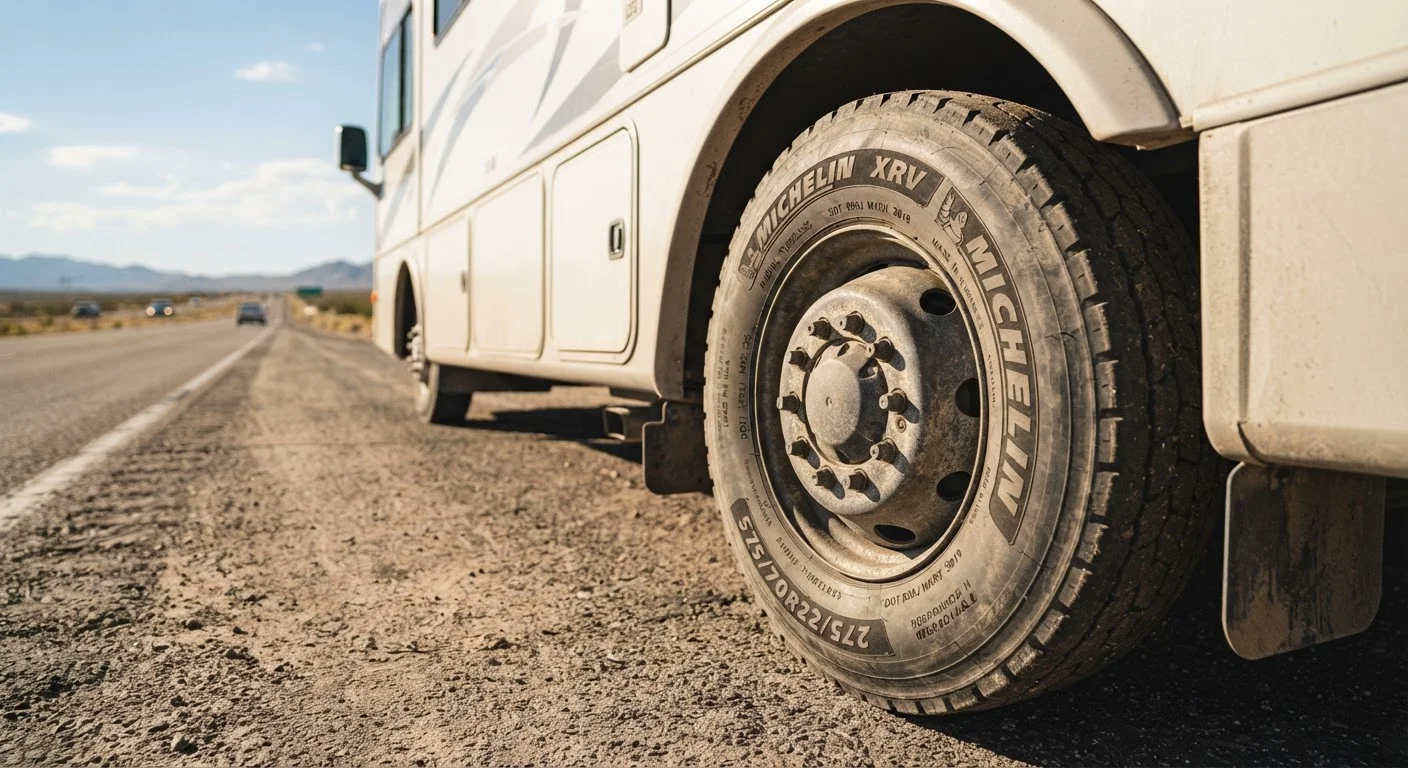
The last four digits of the DOT code on the tyre sidewall indicate the week and year of manufacture. Most RV tyre manufacturers and industry bodies suggest replacement at five to seven years from the manufacture date, irrespective of tread depth, because rubber compounds degrade structurally with age.
Distribute load evenly and verify axle weights at a certified scale.
RV load ratings are per-tyre figures, not just total vehicle weight. An uneven distribution - heavy slide-out, water tank on one side, dense cargo in a rear corner - can individually overload one tyre while the overall gross weight reads as acceptable. Overloading is a leading contributor to tyre sidewall failure.
Rotate tyres on motorhomes according to a documented schedule.
Drive axle, steer axle, and tag axle tyres wear at different rates due to different force inputs. Unrotated tyres develop uneven wear patterns that both shorten service life and can mask underlying alignment or suspension issues.
Apply tyre covers during any storage period exceeding a few days.
UV radiation and atmospheric ozone attack exposed rubber continuously. Tyre covers - even basic opaque fabric designs - block the UV exposure that accelerates sidewall cracking and compound hardening. This is especially relevant for RVs stored outdoors for extended periods.
Inspect tyres visually at each hitching or pre-departure check, looking beyond tread depth.
Sidewall bulges, cracking between tread blocks, cord showing through rubber, and valve stem deterioration are all signs of a tyre that may fail under load - none of them register on a tread-depth gauge. Early detection is far less costly than a roadside blowout.
Storage and Off-Season Protection
The majority of RV tyre damage occurs not on the road but during storage. Static load on the same contact patch for months creates flat-spotting risk and accelerates ozone attack on the sidewalls. A few targeted steps at storage time pay dividends when the season opens again.
For a comprehensive walkthrough of everything that needs attention before cold weather arrives - including tyre-specific steps - the RV winterising guide covers the full process. If you're evaluating longer-term storage options, long-term RV storage considerations weighs the trade-offs of covered lots versus climate-controlled facilities.
Move the RV Periodically During Long Storage
If circumstances allow, moving the RV forward or backward by a few feet every four to six weeks during storage shifts the tyre contact patch and reduces flat-spotting risk. Even a quarter-turn of the wheel repositions the load point meaningfully. This is one of the simplest, zero-cost storage habits with a real payoff at season start.
Pressure, Load, and Ongoing Monitoring
Correct inflation is the highest-leverage daily habit for RV tyre longevity. Under-inflation generates excess heat and flexing in the sidewall; over-inflation reduces the contact patch and increases susceptibility to impact damage. Both conditions accelerate wear and raise the risk of sudden failure under load.
Always measure pressure cold - meaning the vehicle has been stationary for at least three hours and has not been driven more than one mile. Pressure rises as tyres warm up, so a reading taken after driving will understate the true cold inflation figure. Refer to the RV manufacturer's placard (not the maximum pressure moulded into the tyre sidewall) for the correct target figures for your specific load configuration.
Load distribution matters as much as total weight. An unevenly packed RV can push one axle end significantly beyond its rated capacity even when the total gross weight is within limits. Periodic weighing at a certified truck scale - measuring each corner individually where possible - gives an accurate picture. Tools that provide continuous pressure and temperature data while driving are covered in our article on tyre pressure monitoring and inflation tools. For a broader grounding in tyre maintenance principles applicable across vehicle types, tyre maintenance from the ground up is a useful reference.
Dually Configurations Complicate Load Assessment
On RVs with dual rear tyres, the inner tyre is effectively impossible to inspect visually without removing the outer tyre. Pressure monitoring systems that include inner duals are particularly valuable in this configuration. A tyre that fails silently on a dual position can go unnoticed until the outer tyre begins to overheat from carrying the full load - making periodic physical inspection of inner tyres a non-negotiable part of the maintenance schedule.