Why Home Charging Setup Deserves Careful Planning
Home charging is where the daily practicality of EV ownership either succeeds or frustrates. Unlike public charging, it's an infrastructure investment tied to your property, your electrical service, and your usage patterns. Getting it right upfront avoids costly retrofits later - and getting it wrong can mean slow overnight charges, tripped breakers, or failed inspections.
If you're still in the vehicle selection phase, the factors worth scrutinising before you commit include home charging feasibility - particularly relevant for renters or owners of older homes. And if you're weighing whether a full EV or a PHEV suits your situation, the trade-offs of full EV ownership are worth reviewing before finalising your choice.
What you will need
The sections below walk through what you'll need, what each installation stage involves, and what drives costs up or down. Understanding these variables positions you to have a productive conversation with an electrician and make equipment choices that align with your vehicle's actual capability.
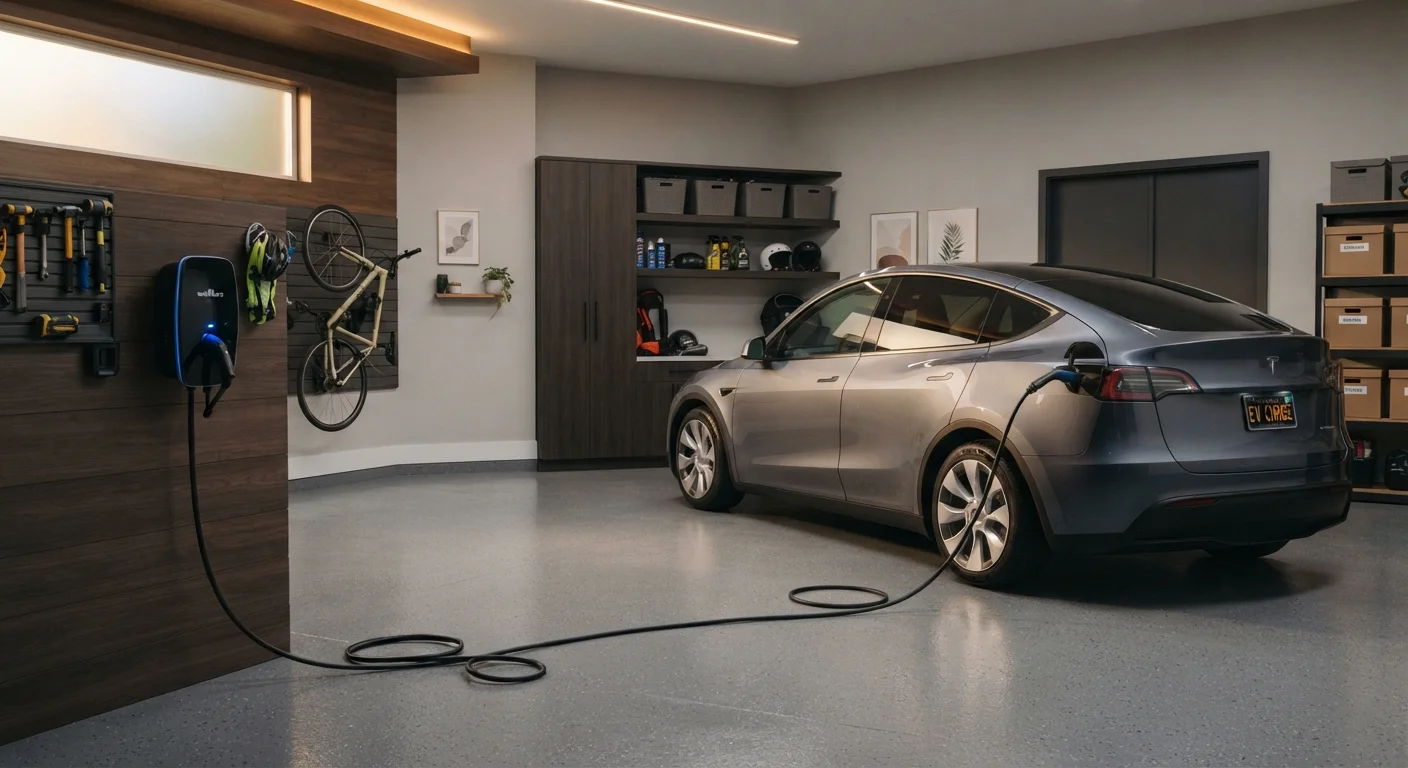
Level 2 EVSE (Wallbox / Home Charger)
Delivers 240V AC power to the vehicle at 16-48A, providing 20-35+ miles of range per hour of charging.
Licensed Electrician
Required to install the dedicated 240V circuit, pull permits, and ensure code compliance.
Electrical Panel Load Calculator
Used to determine whether your existing panel has capacity for a new 40-50A dedicated circuit.
Smart Charger App or Vehicle Scheduling Feature
Allows scheduling of charging sessions to align with off-peak utility rates.
NEMA 14-50 Outlet (as alternative to hardwired install)
A 240V outlet that accepts a portable EVSE plug - lower install cost, slightly less charging speed.
What Drives Installation Cost - and How to Manage It
Installation quotes vary widely - from roughly $300 for a straightforward panel-adjacent garage install to $2,000+ when conduit must run long distances, panels need upgrading, or exterior weatherproof enclosures are required. The three biggest cost drivers are: distance from panel to parking location, current panel capacity, and local permit and inspection fees.
Understanding what each charging level actually delivers helps set realistic expectations for how a Level 2 install changes your daily routine versus relying on a standard 120V outlet. Most full EV owners find Level 1 (120V) impractical for regular daily driving - a 60 kWh battery pack can take 40-50 hours to fully charge at 120V.
Panel Capacity Can Make or Break Your Budget
Older homes with 100-amp service panels may not have headroom for a 40-50A dedicated EV circuit without a panel upgrade, which can add $1,500-$4,000 or more to your project. Get a panel assessment before purchasing charging equipment. A load calculation from a licensed electrician is the only reliable way to know what your current service can support.
Time-of-Use Rates Can Cut Charging Costs Significantly
Many utilities offer time-of-use (TOU) rate plans where electricity costs less during off-peak hours - typically late night to early morning. Programming your EV or charger to charge between roughly 11 PM and 6 AM can meaningfully reduce your per-kWh cost. Contact your utility to ask about EV-specific TOU plans before your first billing cycle.
For ongoing cost tracking, note that home charging energy costs fall under your regular vehicle ownership costs - and at typical US electricity rates, home charging is substantially cheaper per mile than gasoline for most driving patterns, though exact figures depend heavily on local utility rates and driving habits.
This article provides general information about home EV charging infrastructure and is not a substitute for advice from a licensed electrician or qualified tax professional regarding your specific property and financial circumstances.