
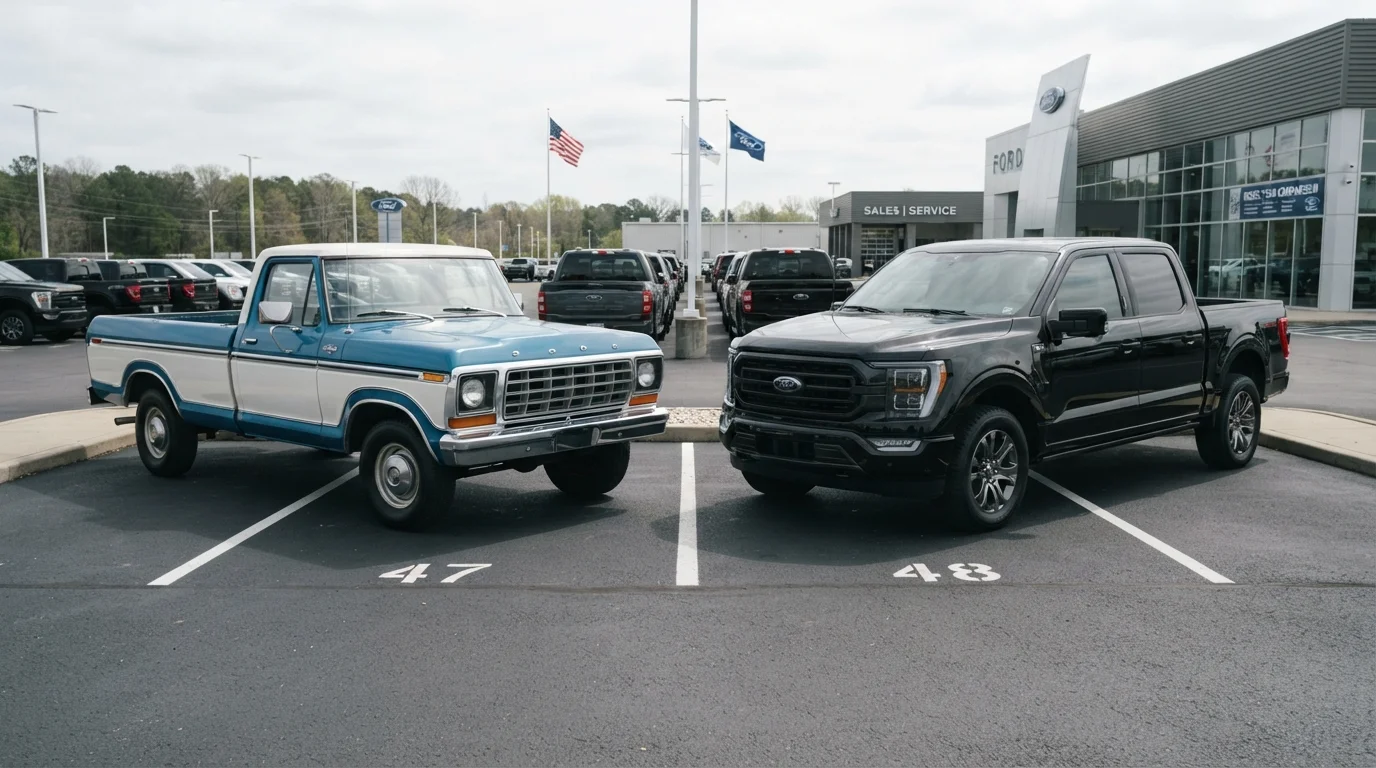
Why Model-Year Comparisons Go Wrong
Truck shoppers often build a mental benchmark from a model they already know - a neighbor's rig, a fleet vehicle, or a truck they previously owned. That benchmark becomes the measuring stick for every subsequent comparison, even when the trucks being evaluated span multiple generations, trim levels, or configuration variables. The result is a comparison built on mismatched data.
The problem compounds when using third-party aggregator sites that pull spec data without flagging generational changes or methodology differences. Reading a truck's towing chart correctly is already a nuanced task; doing it across model years without a consistent framework makes accurate comparison significantly harder.
Treating the nameplate as a guarantee of consistent capability across years.
Why it happens: Shoppers assume a model name signals continuity, so they apply specs from a version they know well to a newer or older variant without checking for generational changes.
Using the maximum advertised tow figure as the default comparison point.
Why it happens: Headline numbers appear prominently in marketing materials and are easy to find, creating a false impression that they represent a typical configuration.
Conflating towing capacity with payload capacity when evaluating real-world utility.
Why it happens: Both numbers describe "how much the truck can carry," which leads many buyers to treat them interchangeably or focus solely on the larger figure.
Ignoring mid-cycle refresh changes that altered suspension, axle, or transmission specs.
Why it happens: Mid-cycle updates are less visible than full redesigns and rarely generate the same press coverage, so buyers comparing a pre-refresh model to a post-refresh model may not realize they're looking at mechanically distinct trucks.
Comparing trucks tested under different SAE towing standards without accounting for the methodology shift.
Why it happens: The industry transitioned to stricter SAE J2807 towing standards at different points, meaning some trucks were rated under older, less conservative methods.
Overlooking how a half-ton versus three-quarter-ton classification interacts with model-year capability shifts.
Why it happens: Shoppers focus on the year-over-year delta within one class without considering whether a different class from an adjacent year might better serve their needs.
How to Build a More Reliable Cross-Year Comparison
A defensible comparison starts with isolating variables. Before placing any two trucks side by side, confirm: the generation each belongs to, the specific powertrain and axle configuration, and the SAE standard under which each was rated. Only then do the numbers become comparable in a meaningful way.
Payload Labels Are Configuration-Specific
The payload sticker inside a truck's door jamb reflects that exact vehicle's build - axle ratio, cab style, bed length, and installed options. A number pulled from a spec sheet for a different trim or year may differ by hundreds of pounds. Always reference the door-jamb label for the specific truck you're evaluating.
For shoppers evaluating multiple listings of the same model across years, a structured approach to trim, mileage, and specification differences is equally important. Comparing multiple listings systematically reduces the risk of anchoring to a number that doesn't reflect the actual vehicle's capability or condition.
Don't Use Older-Generation Specs as a Baseline
Manufacturers periodically revise how they calculate and market tow ratings, sometimes adopting new SAE standards mid-generation. A number sourced from a pre-revision year may have been derived under a different methodology, making it incompatible with current figures even for the same model line. Verify which standard applies before drawing any conclusion.
If the truck's intended use involves towing an RV or large trailer, capability misjudgments carry real consequences. First-time RV buyers frequently overestimate or underestimate tow vehicle requirements - and pairing that with inaccurate cross-year truck specs compounds the risk. Verify numbers against the door-jamb label and the manufacturer's configuration-specific towing guide before any purchase decision.
This article provides general educational information about truck specifications and is not a substitute for consulting manufacturer documentation or a qualified automotive professional for decisions specific to your situation.