The Tow Rating Gap Is Bigger Than It Looks
Walk a dealership lot and you'll find tow ratings plastered across window stickers for nearly every SUV class. But those numbers represent dramatically different engineering realities depending on whether you're looking at a unibody crossover or a body-on-frame full-sizer.
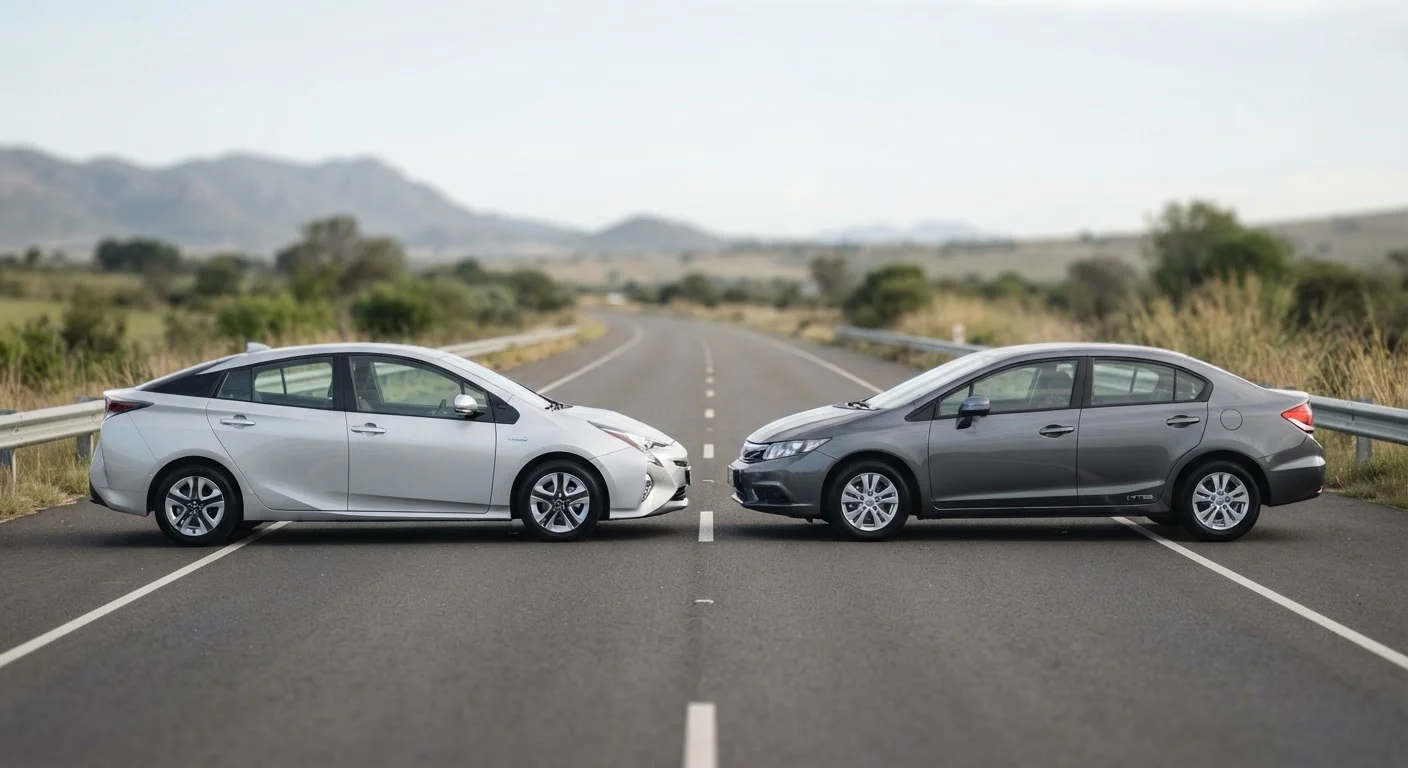
Mainstream crossover SUVs - the kind that dominate family driveways - typically carry factory tow ratings between 1,500 and 5,000 lbs. Some mid-size entries push toward 5,500 lbs with the right powertrain package. Full-size, truck-derived SUVs commonly reach 7,500 to 8,400 lbs when properly equipped. That's not a minor difference in degree; it's a structural and mechanical divergence rooted in how these vehicles are built. Body-on-frame construction versus unibody design is the single biggest factor driving that gap.
| Crossover SUV | Mid-Size Truck-Based SUV | Full-Size Body-on-Frame SUV | |
|---|---|---|---|
| Typical tow rating range | 1,500-5,000 lbs | 5,000-7,000 lbs | 7,500-8,400 lbs |
| Frame construction | Unibody | Body-on-frame or unibody | Body-on-frame |
| Sustained towing thermal headroom | Limited | Moderate | High |
| Unladen fuel economy | Better | Moderate | Lower |
| Payload capacity (typical) | 1,000-1,400 lbs | 1,200-1,600 lbs | 1,500-1,900 lbs |
| Factory tow package availability | Limited options | Usually available | Widely available |
| Daily driving ride quality | Car-like | Moderate | Truck-influenced |
| Purchase price premium | Lower | Moderate | Higher |
What Crossovers Actually Handle Well
Unibody crossovers aren't poorly engineered - they're optimized for a different mission. Their integrated chassis delivers a more car-like ride, better fuel efficiency, and lower load floors, which is why they outsell traditional SUVs by wide margins. For towing, they're genuinely competent within their rated range.
A crossover rated for 3,500 lbs can pull a personal watercraft, a small utility trailer, or a lightweight popup camper without drama under normal conditions. The limitations emerge under stress: sustained grades, high ambient temperatures, and frequent towing cycles. Unibody structures transfer more load into the passenger compartment, and many crossovers ship with transmission coolers sized for the base load case, not sustained towing at near-rated capacity.
Check Payload Before You Hitch
Before connecting any trailer, calculate your vehicle's remaining payload capacity by subtracting the curb weight from the GVWR - both figures appear on the door jamb sticker. Add up all passengers, cargo, and tongue weight. If that sum approaches or exceeds the payload limit, reduce the load before towing, regardless of what the hitch rating says. Exceeding payload puts stress on the suspension, frame, and brakes in ways the tow rating alone doesn't account for.
Payload is the constraint buyers most often overlook. Even if the hitch rating permits a 4,000-lb trailer, the vehicle's gross vehicle weight rating (GVWR) minus its curb weight determines how much tongue weight, passengers, and cargo can simultaneously be on board. Load up five adults with luggage and add tongue weight, and a crossover's actual towing margin can shrink substantially.
Where Full-Size SUVs Hold a Structural Advantage
Body-on-frame full-size SUVs share ladder frames, suspension geometry, and drivetrain components with the pickup trucks they're derived from. That lineage matters when towing loads are sustained or heavy. The frame absorbs trailer tongue weight without transferring stress into the cabin structure, rear axles are typically stouter, and factory tow packages on these vehicles usually include higher-capacity transmission cooling, trailer-integrated brake controllers, and heavier-duty hitches.
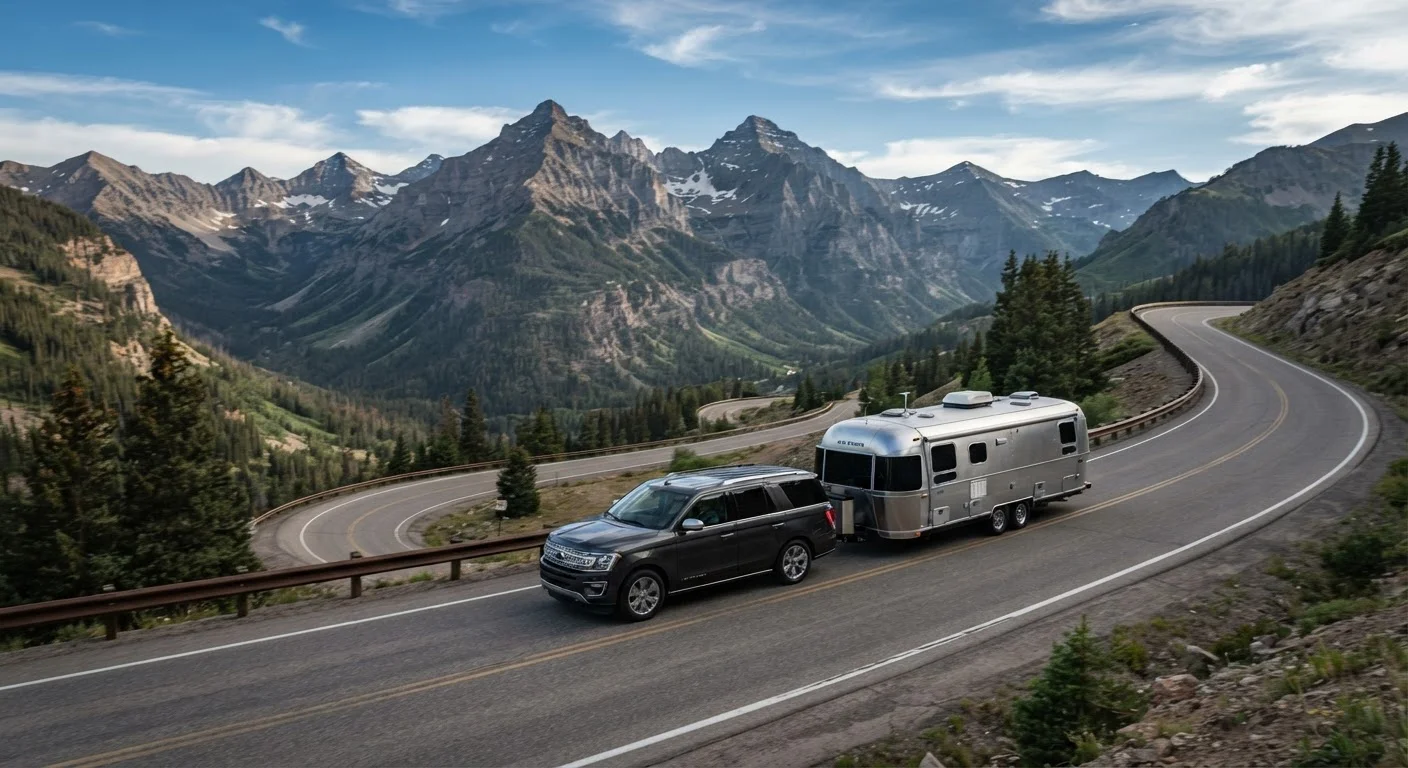
The practical difference shows on mountain grades. A crossover at 90% of rated capacity climbing a 6% grade in summer heat is working its transmission hard. A full-size SUV at the same relative load percentage generally has more thermal headroom and a lower-geared transfer case to draw on. The tradeoff is real: these vehicles are heavier, less fuel-efficient unladen, and costlier to purchase and maintain.
For buyers planning regular trailer use - particularly travel trailers or larger towable RVs - the full-size platform's safety margin justifies the compromises in daily driving economy.
80%
Recommended tow capacity utilization ceiling
Industry guidance consistently recommends staying at or below 80% of rated capacity to maintain stability and thermal margins during real-world towing.
10-15%
Tongue weight as share of trailer weight
SAE and trailer manufacturer guidelines specify that tongue weight should fall between 10% and 15% of total trailer weight to maintain safe handling.
Reading the Spec Sheet Honestly
Manufacturers publish tow ratings under SAE J2807 standards, which involve specific test conditions: a defined trailer type, a particular grade, measured at altitude. Those conditions may not reflect your use case. Advertised tow figures are highly configuration-dependent - the same model in a lower trim, with a different axle ratio or without the factory tow package, can carry a meaningfully lower real-world rating.
Key variables to verify before purchasing:
- Hitch class and receiver rating - not all factory hitches match the vehicle's maximum tow rating
- Tongue weight capacity - typically 10-15% of trailer weight; exceeding this creates dangerous instability
- Transmission and engine oil cooler - standard or upgraded; critical for sustained towing
- Integrated trailer brake controller - required in most states for trailers above 3,000 lbs
- GVWR and payload - calculate the actual margin after accounting for passengers and cargo
For a broader framework on mapping capability to actual use, see this utility ownership guide.
Never Rely Solely on the Window Sticker Rating
A vehicle's maximum tow rating applies only when it's fully and correctly equipped - factory tow package, appropriate axle ratio, proper hitch class, and within payload limits. Buying a model without the tow package and assuming the same rating applies is a common and potentially dangerous mistake. Always verify the specific configuration's rating in the owner's manual or manufacturer's towing guide, not just the trim-level advertised figure.