Why the Stamps Matter
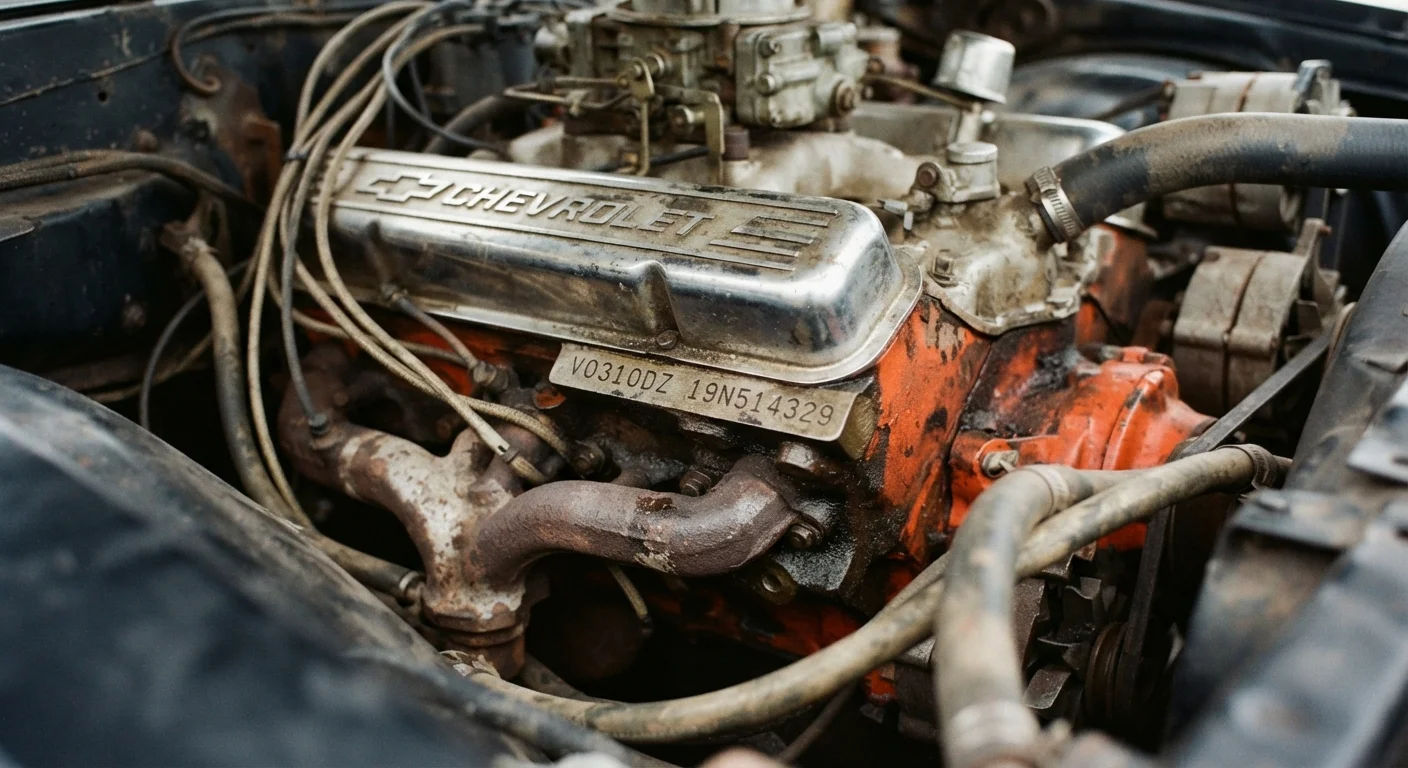
When a Detroit assembly line worker stamped a partial VIN into an engine block in 1969, that mark became a permanent link between one specific car and one specific engine. Decades later, that tiny stamping is often the difference between a six-figure auction result and a mid-tier sale.
The logic is straightforward: collectors value authenticity, and original factory stampings are among the most objective evidence of it. An engine that has never left the car since build day carries a provenance no replacement - however correct or period-accurate - can fully replicate. For serious buyers and appraisers, confirming those numbers is one of the first steps in any evaluation.
Understanding what those codes mean, where to find them, and how to interpret them is foundational knowledge for anyone navigating the collector market. For a broader look at how authenticity interacts with restoration work, see how factory originality compares to restored-to-spec examples.
What Gets Checked and Where to Look
On most American muscle cars from the 1960s and 1970s, the primary verification point is the engine pad - a machined flat surface on the block where the factory stamped a partial VIN along with an engine suffix code. That suffix identifies engine displacement, horsepower rating, and sometimes the intended vehicle line, allowing cross-reference against factory records or published decoder guides.
Beyond the engine pad, knowledgeable inspectors examine:
- Casting date codes - every major iron casting carries a date code that must pre-date the car's assembly date, typically by a few days to several weeks.
- Transmission tags and stampings - manual and automatic units often carry date-coded tags or case stampings that should align with the build window.
- Trim tags and cowl plates - these factory-applied data plates encode paint, interior, and option codes that cross-reference against the VIN and any surviving build documentation.
Each layer of verification adds confidence. A car whose engine pad, casting dates, and trim tag all align consistently is far more defensible than one where only a single data point checks out.
20-50%
Typical premium for numbers matching over non-matching
Industry observers and auction analysts broadly cite this range for comparable examples at major collector car sales, though results vary by marque, model, and market conditions.
~40 years
Age range of most intensely scrutinized muscle cars
American performance cars from roughly 1964 to 1972 attract the most rigorous numbers matching verification, reflecting peak collector demand for that era.
1 of 1
Effective scarcity of a confirmed matching original
Each VIN-stamped engine is unique to a single vehicle; once replaced, no identical factory-matched unit exists, making original examples inherently non-reproducible.
The Market Value Reality
Numbers matching status does not automatically guarantee a premium - context matters enormously. A matching-numbers example of a low-production, high-horsepower variant will attract fierce bidding at major auctions, while the same designation on a base-trim, common-engine car may move the needle only modestly. Scarcity compounds authenticity; the two factors together, rather than either alone, tend to produce the most dramatic results. For context on how production rarity interacts with value, explore how low build numbers and option codes drive classic car prices.
Buyers should also consider the difference between numbers matching and numbers correct. The latter describes a car fitted with period-appropriate, factory-equivalent components - perhaps sourced from a donor car - that match what the factory would have installed, but are not original to that VIN. Numbers correct cars can be excellent driver-quality classics, but they occupy a different tier in collector valuation.
“The stamp on that engine pad is the closest thing to a birth certificate a car has. Once it's gone, you can replicate everything else perfectly, but that original connection between the car and its factory drivetrain simply cannot be restored.”
— Collector Car Appraisal Community, Widely held position among marque-specific appraisers and auction specialists
For a full glossary of condition terminology used in classifieds and at auction, decode common collector condition terms to avoid misreading a seller's claims.
Verifying a Claim Before You Commit
Numbers matching is one of the most abused terms in collector car listings. Sellers sometimes apply it loosely, whether through genuine misunderstanding or deliberate overstatement. Prudent buyers treat every claim as a starting point for independent verification, not a settled fact.
Always Request a Pre-Purchase Inspection
For any significant transaction involving a numbers matching claim, engage a marque-certified inspector or registry-affiliated technical adviser before finalizing a deal. They know the exact stamping locations, correct suffix codes, and acceptable casting date windows for specific model years - knowledge that is difficult to replicate without hands-on experience with that marque.
The most reliable path to verification combines three resources: a marque-specific registry or club technical adviser, a published factory decoder guide for the model year, and - for significant transactions - a professional appraisal from an inspector who specializes in that marque. Documentation such as the original window sticker, build sheet, or broadcast sheet strengthens the picture further. Learn which provenance documents carry the most weight with appraisers and auction specialists.
When numbers matching status is confirmed and documented, it becomes one of the most durable value anchors a classic car can carry - one that tends to hold its premium relative to non-matching peers regardless of broader market cycles. That durability is why serious collectors regard verification not as optional due diligence, but as a fundamental step in understanding what they are actually buying.