Why Scarcity Commands a Premium
In any collector market, supply relative to demand sets price. Classic cars are no different - but the definition of "supply" is more nuanced than it first appears. Total production of a given model year is only the starting point. What serious buyers examine is how many examples were built with a specific combination of factory options, body styles, and performance equipment.
A muscle car produced in the tens of thousands sounds common until you learn that fewer than 300 were fitted with the top-tier engine and four-speed manual combination. At that granular level, genuine scarcity emerges - and prices respond accordingly. This is why two outwardly similar cars can differ dramatically in value at auction. The compounding variables behind top-tier valuations include exactly this kind of option-level rarity working alongside condition and provenance.
<300
Typical survivor count for rare factory performance variants
Marque registries for high-performance muscle car variants frequently document fewer than 300 confirmed survivors from original production runs that numbered in the hundreds to low thousands.
3-10×
Approximate value multiplier for documented rare-option examples
Auction results catalogued by major houses consistently show that authenticated rare-option variants - same body, rarer drivetrain - achieve multiples of comparable base-model prices, often three to ten times higher.
~15%
Estimated premium for original build sheet present
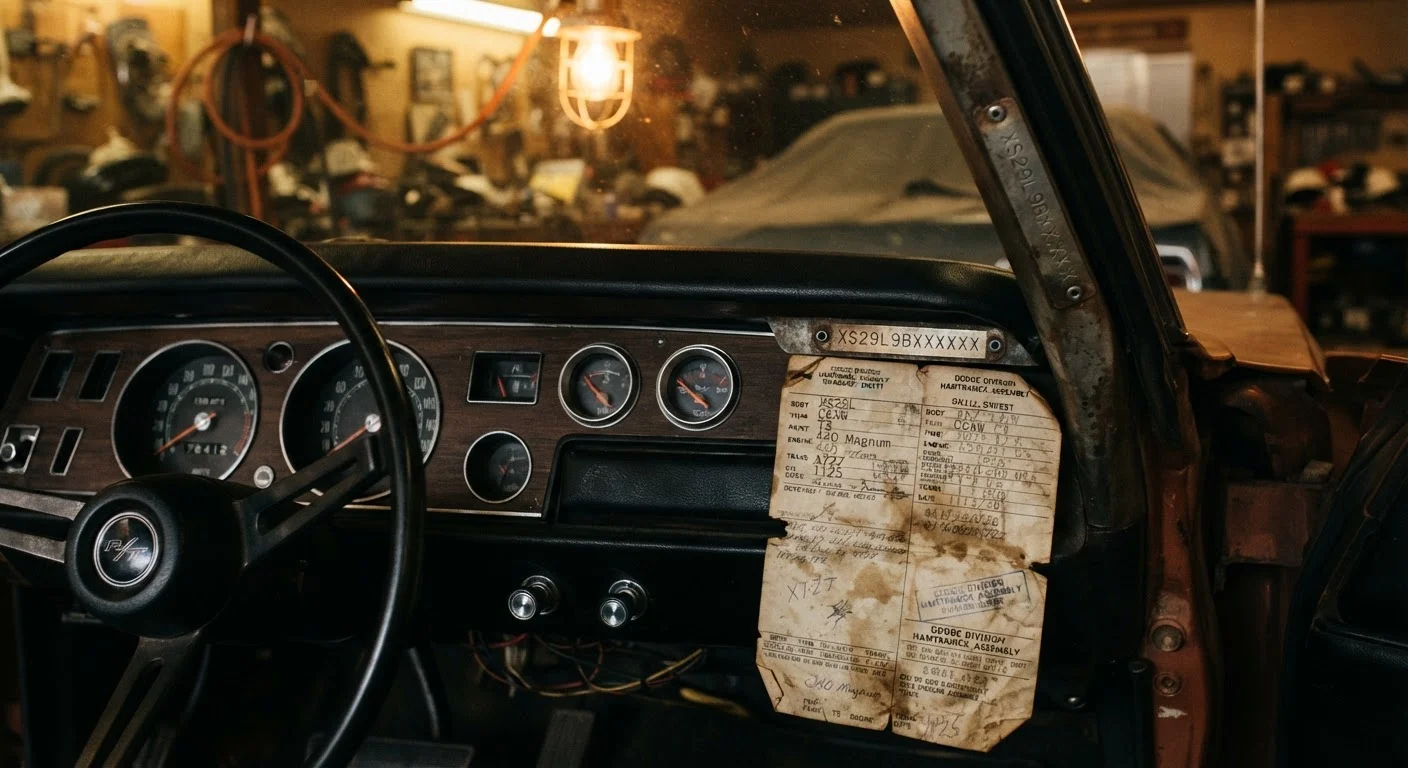
Collector community analysis and auction commentary suggest original factory documentation such as a build sheet or window sticker can add a meaningful percentage premium over an otherwise identical undocumented example.
Decoding Factory Option Packages
Performance-oriented factory packages - think Chrysler's 426 Hemi option, Ford's 428 Cobra Jet, or GM's RPO L88 - were often expensive, dealer-ordered configurations that relatively few buyers selected at the time. Because they required buyers to pay a substantial premium on the original purchase price, they were frequently under-ordered. Decades later, that original reluctance translates directly into collector premiums.
Each manufacturer used its own coding system. GM's RPO (Regular Production Option) codes appear on the trim tag or build sheet. Ford used axle codes, door data plates, and Marti Reports - decoded records drawn from the original factory production database. Mopar vehicles carry fender tags with option codes that experienced collectors can read like a fingerprint. Understanding these systems is foundational to evaluating any muscle-era car. Why original stampings and codes matter to valuation is a related concept that intersects directly with option-code verification.
Start With the Registry Before the Seller
Before engaging with a seller's rarity claims, consult the relevant marque registry or one-make club database. Many registries allow VIN lookups that will immediately confirm or contradict option-code claims. This step costs nothing and can prevent costly mistakes - especially with muscle-era vehicles where clone cars and option upgrades are well-documented hazards.
How to Research and Verify Production Data
Reliable production figures come from a hierarchy of sources. At the top sit factory records - some manufacturers have released model-year production breakdowns, though granular option-level data is rarer. Below that are marque registries maintained by one-make clubs, which aggregate VIN-confirmed survivors and provide a real-world picture of what exists today.
For documentation attached to the car itself, build sheets, broadcast sheets, and window stickers are primary evidence. These factory-generated documents list every option ordered, making them the most direct way to verify a rare package claim. How to build and preserve a car's provenance record explains how to locate, authenticate, and maintain these critical documents.
When factory records are incomplete, marque historians and published decoder guides fill the gap. Cross-referencing multiple sources - VIN, trim tag, build sheet, and registry - provides the strongest foundation for an authenticity claim. A single piece of documentation rarely suffices; convergence across sources is what the market respects.
Rarity Without Authentication Has Little Market Weight
A seller's claim that a car was "one of only 50 built" carries almost no value unless it can be substantiated. The collector market has encountered enough re-stamped, re-badged, and optioned-up tribute cars to be appropriately skeptical. Sophisticated buyers - and the auction specialists who advise them - look for corroborating evidence before assigning a rarity premium.
This is why provenance documents shape both a vehicle's story and its price. A numbers-matching rare-option car with an original build sheet, a traceable ownership history, and a confirmed registry entry is a fundamentally different asset than an identical-looking car lacking that paper trail. Understanding the difference is what separates confident buyers from those who overpay for unverified rarity.
For anyone approaching the classic car market as a new participant, grounding yourself in condition grades, comparables, and rarity factors first is essential. A beginner's introduction to pricing a vintage car provides that framework before committing to any transaction.
This article is for general informational and educational purposes only and does not constitute financial, investment, or professional appraisal advice. Consult a qualified appraiser or specialist for decisions about specific vehicles.