Shore Power: Understanding 30-Amp vs. 50-Amp Service
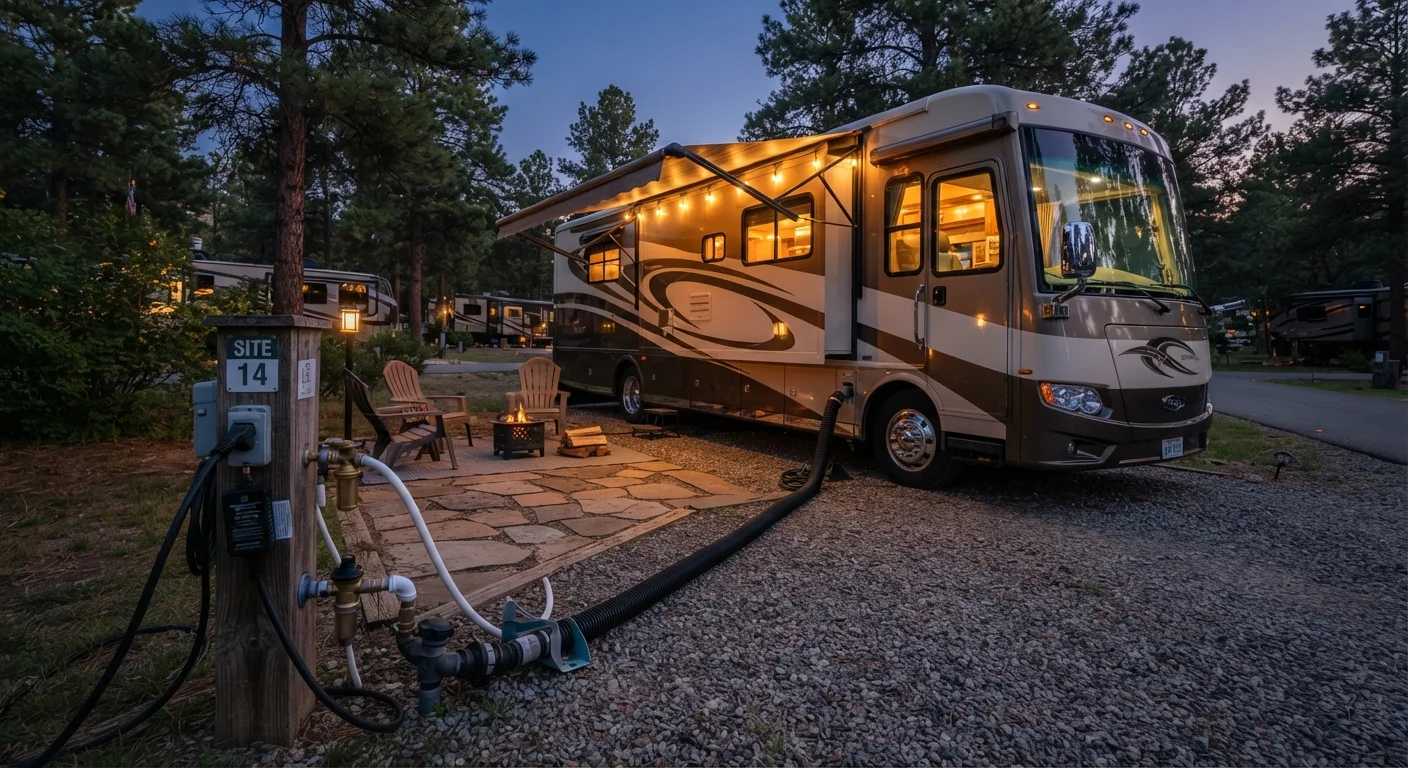
Shore power is the campsite-supplied electricity you plug into at a power pedestal. It works similarly to plugging into a home outlet, but RVs use either a 30-amp (120V) or 50-amp (240V, dual-leg) connection - and confusing the two is one of the most common and costly mistakes new RV owners make.
A 30-amp connection delivers roughly 3,600 watts of usable power. That's workable if you're running a single rooftop air conditioner, the refrigerator, and basic lighting - but running the AC and an electric water heater simultaneously can push the limit. A 50-amp connection provides up to 12,000 watts across two legs, comfortably handling multiple high-draw appliances at once. Larger Class A motorhomes and fifth wheels almost always require 50-amp service.
Always Use a Surge Protector at the Pedestal
Campground power pedestals can carry voltage irregularities - low voltage (brownout conditions) and power surges are more common than many campers expect. A portable surge protector or electrical management system (EMS) inserted between the pedestal and your shore power cord monitors incoming power quality and cuts the connection if it falls outside safe parameters. It's one of the more practical protective accessories for any RV using shore power regularly.
Dogbone adapters let you connect a 50-amp RV to a 30-amp pedestal (or vice versa), but they don't change the underlying amperage available. Use them as a fallback when your preferred service isn't available, and shed loads accordingly. For a broader look at power trade-offs, see Shore Power vs. Solar vs. Generator.
Fresh Water Connections: Pressure, Filters, and Hose Selection
The campsite water spigot connects to your RV's city water inlet via a standard drinking-water hose - these are typically white or blue and rated for potable use. Using a standard garden hose introduces plasticizers and off-flavors; it's not a safe substitute.
Two inexpensive accessories make a meaningful difference: a pressure regulator and an inline water filter. Campground pressure can vary widely - sometimes exceeding 80 PSI - while most RV plumbing is rated for 40-60 PSI. A pressure regulator threads between the spigot and your hose and costs under $20. An inline carbon filter addresses taste and sediment without eliminating the need for any onboard filtration your rig already has.
For a complete breakdown of onboard water systems - tanks, pumps, and filter stages - see the complete RV water system guide.
Drinking Water Hose vs. Garden Hose
Potable water hoses are specifically manufactured to be free of the chemicals and plasticizers commonly found in standard garden hoses. Look for hoses labeled 'drinking water safe' or 'NSF/ANSI 61 certified.' Using a non-rated hose may introduce off-flavors or compounds into your water supply, particularly in warm weather when hoses heat up in the sun.
Sewer Hookups: Grey Water, Black Water, and Safe Dumping Practice
The sewer connection is where many first-timers feel uncertain - but the process is straightforward once you understand what you're managing. Most RVs have two waste tanks: a grey tank (sinks and shower drain) and a black tank (toilet). Both drain through a common outlet, controlled by separate gate valves.
At a full-hookup site, you connect a flexible sewer hose from your RV's drain outlet to the ground-level sewer inlet and seal it with a bayonet fitting. A hose support ramp is important: it keeps the hose angled downward continuously so waste flows by gravity rather than pooling in low spots.
Standard dumping order: always dump the black tank first, then open the grey tank to flush the hose with relatively cleaner water. Keeping the black tank valve closed between dumps (rather than leaving it open continuously) allows liquid to accumulate, which helps flush solids and reduces sensor fouling. For more on common misconceptions that cause real plumbing issues, read RV holding tank myths.
40-60 PSI
Typical safe RV water inlet pressure range
Most RV plumbing components and fittings are rated for this range; campground pressure often exceeds it without a regulator in line.
30A / 50A
Two standard shore power service levels
The National Electrical Code governs RV electrical standards; 30-amp and 50-amp services use physically different connectors to prevent wrong-socket connections.
2-3 days
Typical dry camping duration for a standard RV
Duration varies based on fresh water tank size (commonly 30-100 gallons), holding tank capacity, and available power generation equipment.
Partial Hookups and Dry Camping: Managing Without Full Utilities
Not every site offers all three connections. A partial hookup typically means power and water but no sewer - you'll use your grey and black tanks and dump at a dump station when they're full. An electric-only site gives you power but requires you to manage both water and waste entirely from onboard tanks.
Dry camping - also called boondocking - means no external connections at all. You rely on your fresh water tank, holding tanks, battery bank, and a generator or solar panels. How long you can comfortably dry camp depends on your tank capacities and power generation. It's a realistic option for a weekend with some load discipline; extended dry camping requires purpose-built systems.
If off-grid living interests you beyond occasional boondocking, Living Off-Grid in an RV covers the full picture of what that realistically involves. Once you understand hookup types, the practical next step is the site arrival process itself - how to set up camp at an RV site walks through leveling, chocking, and making each connection safely.