Why Tyre Pressure Matters More on Long Trips
A short commute with slightly low tyres is inconvenient. A 600-mile road trip under the same conditions is a different calculation entirely. Extended highway driving generates sustained heat in the tyre carcass, and underinflated tyres flex more with every rotation - compounding that heat and increasing the risk of a sudden failure at speed.
Beyond safety, pressure directly affects fuel economy. The U.S. Department of Energy has noted that tyres underinflated by just 1 PSI can reduce fuel efficiency by roughly 0.2%, and most drivers don't notice gradual losses until they're meaningfully low. Across a multi-day trip, that adds up in both cost and range. For a fuller picture of how tyre condition affects long-term ownership expenses, see tyre costs over a vehicle's life.
Temperature swings between regions also matter. Driving from a cool mountain morning into a hot desert afternoon can alter your tyre pressure by several PSI in either direction. Drivers who set pressure once at home and never recheck are effectively flying blind for the rest of the journey.
Understanding Your Factory TPMS - and Its Limits
Every passenger vehicle sold in the U.S. after September 2007 includes a Tyre Pressure Monitoring System mandated by federal safety rules. When it works correctly, it's a useful last line of defense. The problem is where its threshold sits: most factory systems activate only when a tyre is about 25% below the recommended pressure. For a tyre rated at 36 PSI, that means the light may not appear until you're driving on roughly 27 PSI - well into underinflated territory.
Factory TPMS Doesn't Replace Manual Checks
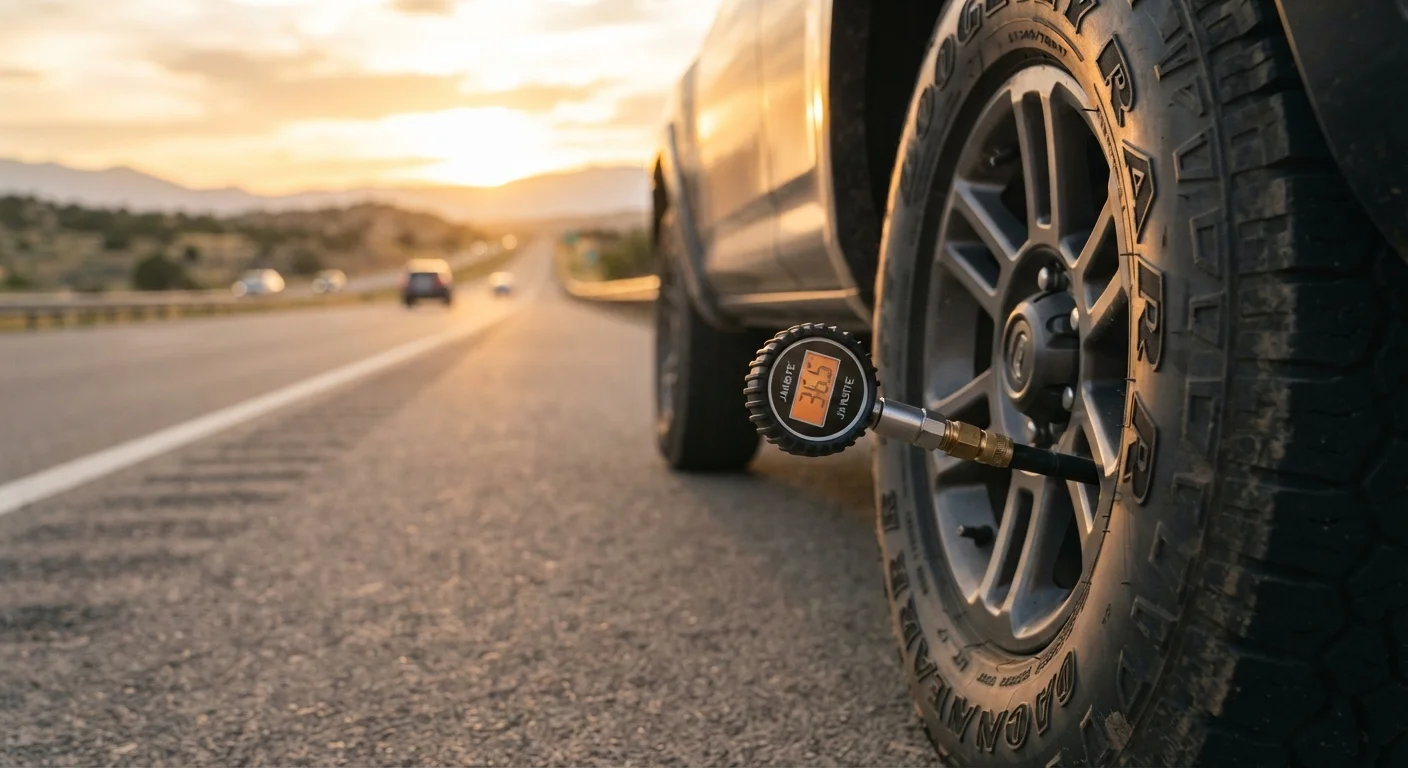
The factory TPMS is a warning system, not a monitoring system - it tells you when something is already wrong, not what your current pressure is. Incorporating a quality handheld gauge into your pre-trip checklist gives you accurate readings on demand and catches gradual losses the sensor threshold will miss. A digital gauge with a bleed valve is both accurate and practical for on-the-road adjustments.
The factory TPMS also won't show you which tyre is affected on older implementations, only that one of them has triggered the sensor. More recent systems do display individual tyre data, but capability varies by make, model, and trim level. Consult your owner's manual to confirm what your system reports.
For RV and trailer applications, factory TPMS may not cover the towed unit at all, making aftermarket monitoring tools especially relevant. The pressure, age, and load rating factors specific to RV tyres warrant their own review before any long haul.
Aftermarket TPMS: Real-Time Data for Every Tyre
Aftermarket TPMS kits address the factory system's limitations by providing continuous, per-tyre readings on a dedicated display. The sensors thread onto each valve stem in place of the standard cap, transmitting pressure and temperature data wirelessly. A small receiver - typically mounted on the dashboard - shows live readings so you can spot a slow leak developing over hours rather than reacting after it's already critical.
~25%
Pressure drop before factory TPMS activates
U.S. federal regulations set the TPMS warning threshold at approximately 25% below the vehicle manufacturer's recommended cold inflation pressure.
1 PSI per 10°F
Tyre pressure change per temperature shift
A commonly cited rule of thumb in tyre engineering: tyre pressure rises or falls approximately 1 PSI for every 10-degree Fahrenheit change in ambient temperature.
~0.2%
Fuel efficiency loss per PSI underinflation
The U.S. Department of Energy estimates fuel economy decreases by about 0.2% for every 1 PSI drop in tyre pressure across all four tyres.
When evaluating aftermarket TPMS options, key factors to weigh include: the number of tyres supported (important for trucks with duals or vehicles towing trailers), the display's readability in sunlight, battery life of the sensors, and whether the unit can be recharged via USB or requires replaceable coin cells. Some systems also pair with smartphone apps, though a standalone display tends to be more reliable during active driving.
Temperature monitoring is an underappreciated feature. A tyre that holds pressure but runs unusually hot may signal a developing internal issue - something a pressure-only reading won't reveal. This is particularly relevant for RV owners; smart habits for extending RV tyre life covers how heat and load interact over time.
Portable Inflators: Correcting Pressure on the Road
Knowing your pressure is low is only useful if you can act on it. Gas station air pumps are inconsistent - many are poorly calibrated, some charge fees, and they're rarely located conveniently when you need one on a remote stretch of highway. A quality portable inflator eliminates that dependency.
12V inflators plug into a vehicle's power outlet or directly to the battery and can bring a flat-low tyre back to spec in a few minutes. The practical specs to compare: maximum PSI output (confirm it covers your tyre type), airflow rate in liters per minute (higher means faster inflation), and whether the unit auto-shuts when the target pressure is reached. Auto-shutoff is a meaningful convenience feature that prevents accidental overinflation.
Always Check Pressure Cold
Tyre pressure should be measured before you've driven more than a mile, or after the vehicle has sat for at least three hours. Heat from driving temporarily raises pressure readings, which can lead you to believe tyres are correctly inflated when they're not. Make a pressure check part of your pre-departure routine, not something you do after pulling out of the driveway.
For those already attentive to tyre health as part of broader maintenance habits, see the comprehensive tyre maintenance guide covering pressure, tread depth, rotation, and alignment together. And if a road trip surfaces a puncture question, understanding when a puncture can be repaired versus when replacement is needed is a practical companion read.