What Makes a Slow Puncture Different
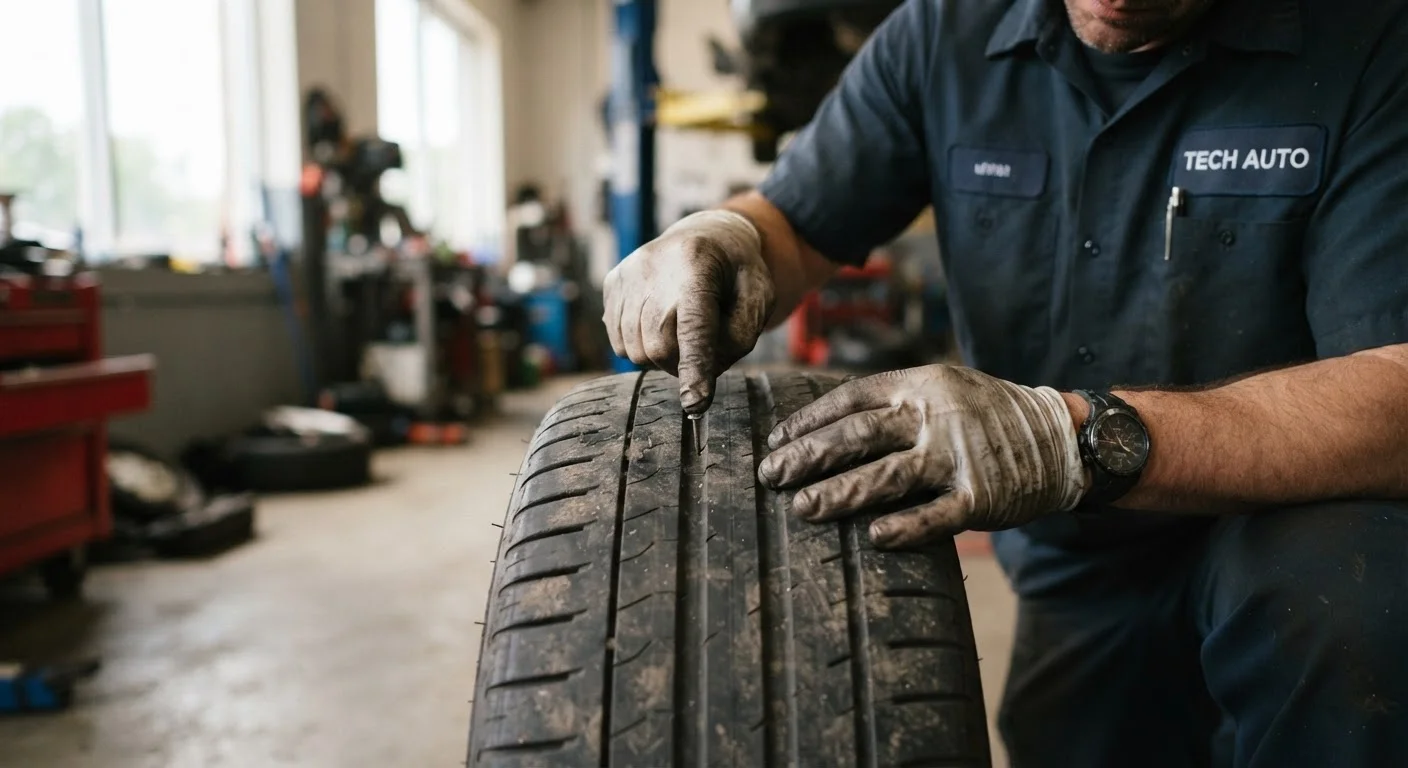
A slow puncture - one where the tyre loses pressure gradually over hours or days rather than deflating immediately - is usually caused by a small nail, screw, or road debris embedded in the tread. Because the object itself seals the hole partially, air escapes slowly. This distinguishes it from a blowout or a sidewall gash, and it's what makes repair a realistic option in many cases.
Before deciding anything, locate the source of the leak. Spray soapy water on an inflated tyre and watch for bubbling, or submerge the wheel in water if you have removed it. Common sources include tread punctures, valve stem leaks, and bead seal failures - each with different repair implications. For a broader look at keeping tyres in shape, see our tyre maintenance guide.
The Repair Decision: Key Criteria
Industry guidance from tyre safety organizations and tyre manufacturers converges on several clear criteria. Evaluate each one before committing to a repair.
Puncture Location
Only punctures within the central tread area - generally defined as the area between the tread shoulders - are candidates for repair. Damage to the sidewall or shoulder compromises the structural cords that give a tyre its strength. No plug or patch can restore this integrity, and driving on a repaired sidewall creates a blowout risk.
Puncture Size
The widely accepted maximum repairable diameter is 1/4 inch (6 mm). Larger holes distort the carcass and cannot be sealed reliably. If you can't measure the hole accurately, a tyre technician can assess it properly.
Tread Depth Remaining
Even a perfectly repaired tyre is unsafe if the tread is near the end of its life. The legal minimum in most U.S. states is 2/32 of an inch, measurable with a tread depth gauge or a penny (Lincoln's head fully visible = replace). If the tyre is close to this limit, repair is a short-term fix at best.
Was the Tyre Driven While Flat?
Running on a significantly underinflated or flat tyre - even briefly - can cause internal sidewall damage that isn't visible from the outside. This is a common reason a tyre that looks repairable externally must be replaced. Have a technician inspect the interior lining if there's any chance the vehicle was driven on the flat.
| Plug-Patch Repair | Full Tyre Replacement | |
|---|---|---|
| Puncture location | Central tread only | Any location |
| Maximum damage size | Up to 1/4 inch (6 mm) | No restriction |
| Sidewall damage | Not repairable | Resolves all damage |
| Structural integrity restored | Yes, if done correctly | Full OEM integrity |
| Typical cost (relative) | Lower | Higher |
| Tyre age or tread concern | Does not address wear | Starts fresh |
| Run-flat tyres | Often not repairable | Recommended option |
Repair Methods: What Works and What Doesn't
The industry-standard repair for a tread puncture is a combination plug-patch applied from inside the tyre after it has been dismounted from the wheel. The plug fills the puncture channel; the patch bonds to the inner liner and prevents air loss. This method is endorsed by the Tire Industry Association (TIA) and the Rubber Manufacturers Association as the only permanent repair procedure.
Always Dismount Before Patching
A proper repair requires removing the tyre from the wheel so a technician can inspect the inner liner for hidden damage. Skipping this step means you cannot confirm the carcass is intact. Even if you plan to do the repair yourself, inspecting the inside of the tyre is a non-negotiable step for a safe, lasting fix.
A plug-only repair - done without removing the tyre - is considered a temporary emergency measure. It can hold for a short drive to a shop but should not be treated as a finished repair. Similarly, aerosol tyre sealants (the kind you inject through the valve stem) are strictly a get-you-home solution; they can interfere with TPMS sensors and make it harder for a shop to perform a proper repair later.
If you ride a bicycle with tubeless tyres, the repair logic has some parallels but different specifics - see our guide to tubeless tyre setup for that context.
When Replacement Is the Only Option
Certain conditions make replacement non-negotiable regardless of how minor the damage appears:
- Sidewall or shoulder puncture of any size
- Hole larger than 1/4 inch in the tread
- Multiple punctures in close proximity
- Previous improper repair in the same area
- Visible cord or belt damage, bulges, or cracking
- Tyre age exceeding 6-10 years from the DOT manufacture date, regardless of tread depth
RV and camper owners face additional considerations - load ratings and age-related degradation are particularly critical. Tyre safety on an RV covers those specifics in detail.
Don't Drive on a Suspected Flat
Even a few hundred yards on a severely underinflated tyre can cause internal structural damage that makes repair impossible. If you suspect a slow puncture, check and correct pressure before driving the vehicle to a shop. Use a portable inflator to bring the tyre to the correct PSI for a short, low-speed trip if needed.
From a cost perspective, a single tyre replacement may feel significant in the moment, but viewed across a vehicle's lifetime it is one of many recurring ownership costs. Understanding tyre costs over a vehicle's life can help you budget more realistically.
Monitoring After a Repair
After a proper plug-patch repair, check tyre pressure daily for the first week to confirm the repair is holding. A quality repair should bring the tyre back to normal service with no measurable pressure loss. If pressure continues to drop, the repair has failed and the tyre should be removed from service.
Keeping a close eye on tyre pressure is easier with the right tools, especially on long trips. Tyre pressure monitoring tools for long-distance travel explains what TPMS systems and portable inflators can do to catch problems early. Catching a slow leak before it becomes a flat is always the better outcome.
1/4"
Maximum repairable puncture diameter
The 1/4-inch (6 mm) threshold is the industry-standard limit cited by the Tire Industry Association for safe tread puncture repairs.
2/32"
Minimum legal tread depth in most U.S. states
Tread depth below 2/32 of an inch is the point at which most U.S. states require tyre replacement regardless of other conditions.