How the Two Classes Actually Differ
The conventional wisdom - midsize trucks are for light duty, full-size trucks are for real work - has become less precise as midsize models have grown in both physical size and capability. That said, the structural differences are real and measurable.
Full-size half-ton trucks generally offer maximum tow ratings in the 10,000-14,000 lb range depending on configuration, while current midsize leaders typically max out between 7,500 and 8,000 lbs. Payload figures follow a similar pattern: full-size trucks routinely exceed 1,500 lbs of bed capacity; midsize trucks cluster around 1,100-1,400 lbs at their peaks. These aren't marginal gaps - they matter when you're loading a work trailer or towing a fifth-wheel camper.
Beyond raw numbers, full-size trucks access a broader powertrain menu, including diesel options that deliver flat torque curves well-suited to towing. For a closer look at how diesel and gasoline engines compare in demanding applications, see diesel vs. gasoline trade-offs across heavy use cases.
| Full-Size Truck | Midsize Truck | |
|---|---|---|
| Typical max tow rating | 10,000-14,000 lbs | 7,500-8,000 lbs |
| Typical max payload | 1,500-2,000+ lbs | 1,100-1,400 lbs |
| Overall vehicle length (crew cab) | ~230-240 inches | ~210-220 inches |
| Fuel economy (gas V6/V8) | 16-22 mpg combined | 19-24 mpg combined |
| Diesel option availability | Widely available | Limited to select models |
| Base price range | ~$35,000-$40,000+ | ~$28,000-$35,000+ |
| Off-road maneuverability | Capable but long wheelbase | Shorter wheelbase advantage |
| Urban / daily driving practicality | Challenging in tight areas | More manageable size |
Everyday Usability and Total Cost of Ownership
Capability ceilings rarely tell the whole story. Most truck buyers use only a fraction of maximum tow or payload ratings on any given week. For those buyers, the midsize argument becomes practical: shorter overall length improves parking and urban maneuverability, fuel economy is generally better across most powertrain pairings, and base pricing runs several thousand dollars lower.
Bed configurations interact with cab choices differently across the two classes. Full-size trucks in crew cab form with a short bed can approach 20 feet in overall length - a real constraint in tighter environments. Midsize crew cabs are typically 2-3 feet shorter. Bed and cab configuration trade-offs deserve careful attention regardless of which class you're evaluating.
Calculate Your Actual Towing Frequency
Before defaulting to a full-size truck for its capability ceiling, log how many days per month you genuinely expect to tow or haul at or above midsize-class limits. Many buyers overestimate frequency and end up managing a larger, thirstier vehicle for tasks a midsize handles cleanly. Honest task mapping almost always produces a clearer decision than spec-sheet comparisons alone.
Insurance and financing costs also tend to track with vehicle price and repair complexity. Full-size trucks, particularly in higher trim configurations, carry higher replacement part costs and longer labor times - factors worth modeling into a realistic ownership budget.
Off-Road and Overlanding Considerations
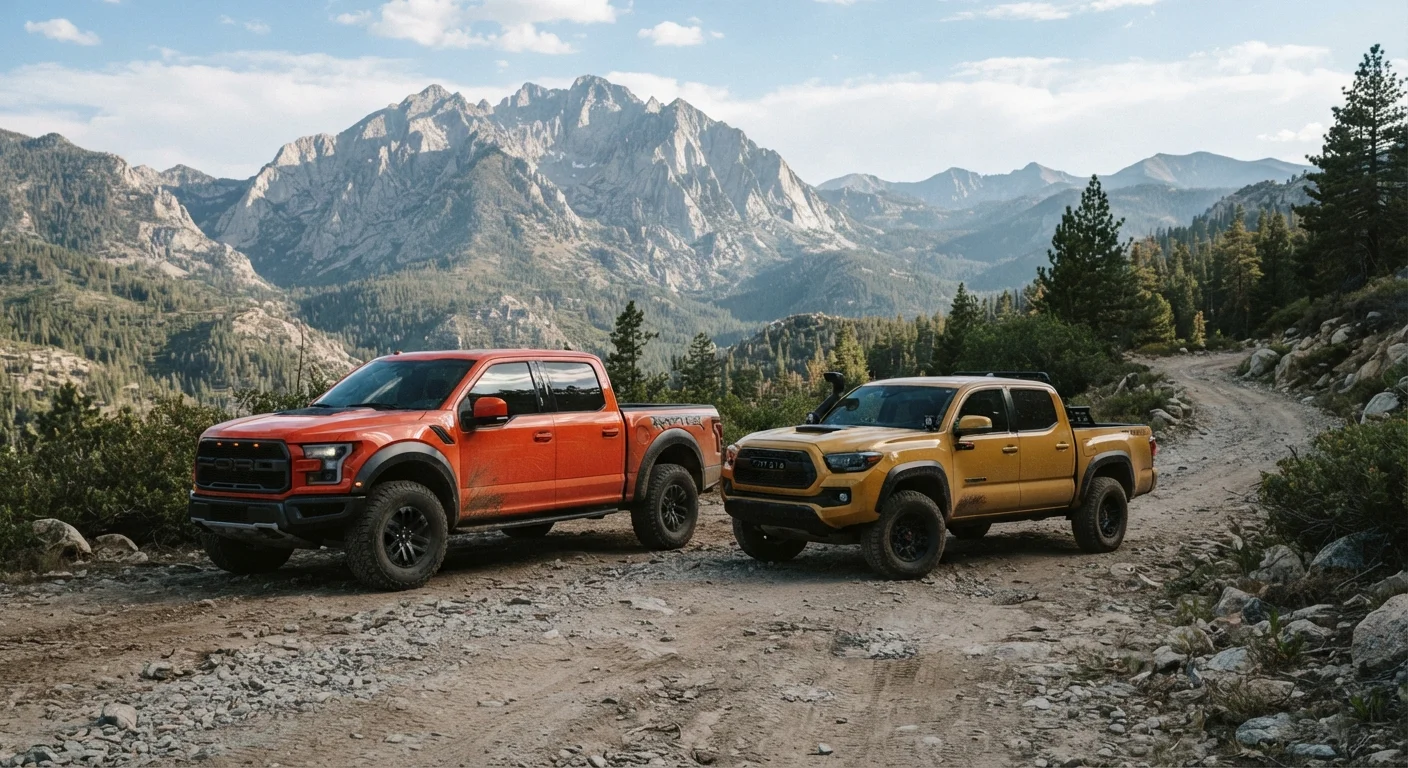
Off-road credibility has become a genuine differentiator in both segments, with dedicated trail-ready variants now available across both classes. Midsize trucks have an inherent advantage in technical terrain: shorter wheelbases reduce approach and departure angle compromises, and lighter curb weight reduces the consequences of getting stuck.
Full-size trucks fitted with off-road packages close the gap with upgraded suspension, locking differentials, and terrain management systems, but their longer footprint remains a physical constraint on tighter trails. Buyers planning RV or large camper towing alongside off-road use should weigh these constraints carefully - the RV living and setup considerations that apply to full-time campers often push toward full-size capability.
It's also worth understanding how vehicle construction affects both capability and durability. Body-on-frame versus unibody construction explains why virtually all pickup trucks in both classes share that platform architecture - and what it means for long-term durability and towing geometry.
Making the Match: A Framework for the Decision
The most useful framing is honest task frequency. If heavy towing or maximum payload occurs regularly - weekly hauls, seasonal work demands, consistent trailer use - a full-size truck's capability ceiling provides genuine operational margin. Running a half-ton or three-quarter-ton truck near its rated limits regularly accelerates wear on brakes, transmission, and suspension; understanding where those thresholds sit is explored in half-ton vs. three-quarter-ton capability gaps.
If the heaviest task is occasional - a once-a-month trailer run, seasonal equipment moves, weekend recreation - a midsize truck covers that use case without carrying the size, fuel, and cost penalties of a full-size rig every other day of the year.
A broader decision framework for mapping use cases to actual capability - including SUV alternatives for buyers uncertain whether a truck is right at all - is laid out in truck and SUV ownership utility framework.
~2,000 lbs
Maximum payload gap between classes
Top-configured full-size half-tons can exceed midsize peak payload ratings by up to 2,000 lbs, per published manufacturer towing guides.
2-4 mpg
Combined fuel economy advantage for midsize
EPA combined ratings consistently show midsize trucks returning 2-4 mpg more than comparable full-size configurations in standard gasoline powertrains.
This article provides general vehicle information for educational purposes only. Towing and payload specifications vary significantly by trim, drivetrain, and factory options - always verify figures against the manufacturer's published towing guide for a specific configuration before making a purchase or towing decision.