
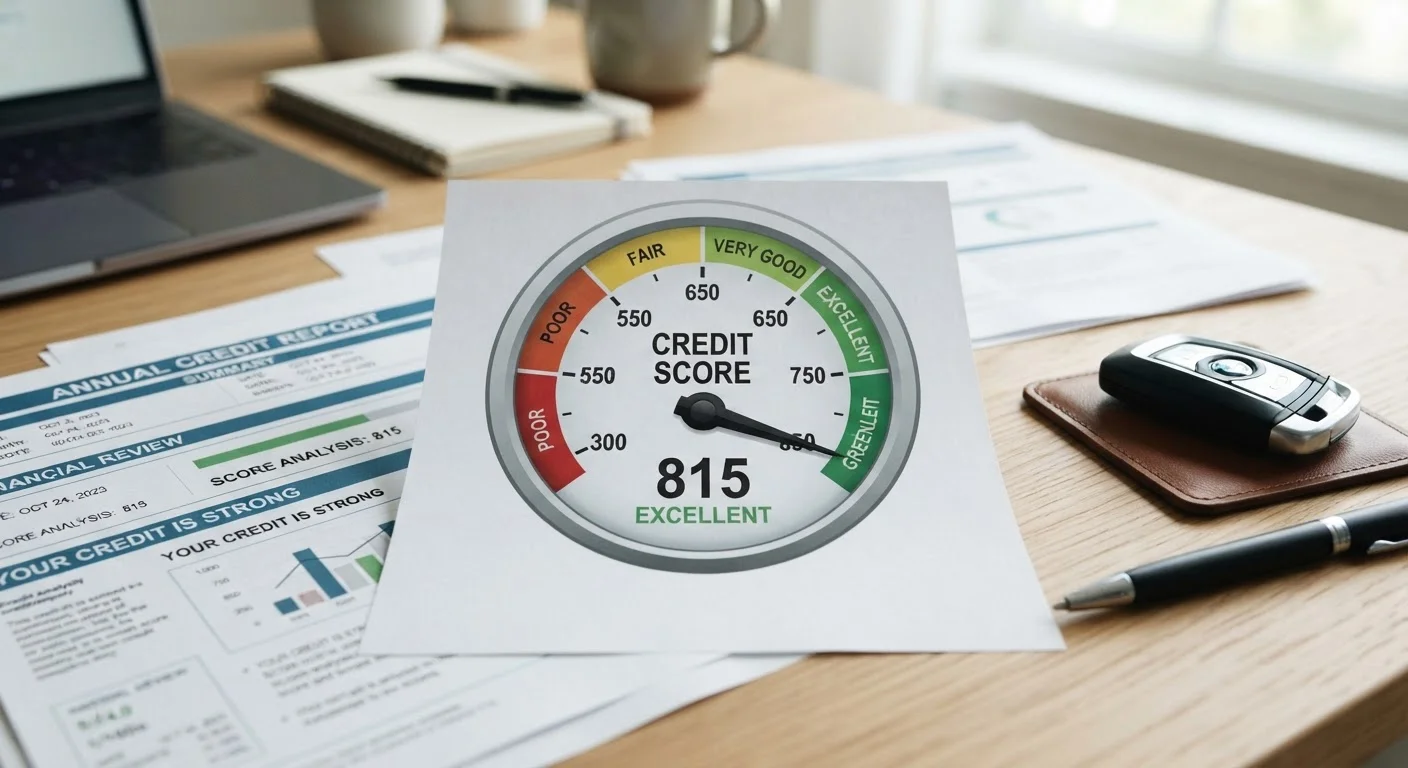
How Lenders Categorize Credit Scores
Auto lenders don't evaluate credit scores as a single continuous spectrum - they assign borrowers to credit tiers, each carrying a corresponding rate range. While exact tier cutoffs vary by lender, the FICO score framework (300-850) is the most widely used benchmark in U.S. auto lending. Understanding where your score falls - and what lenders typically infer from that - is the foundation for negotiating from a position of knowledge.
| FICO Score Range | 300-850 (Fair Isaac Corporation (FICO)) |
| Super Prime Threshold | 781 and above (Consumer Financial Protection Bureau tier guidance) |
| Prime Range | 661-780 (Consumer Financial Protection Bureau tier guidance) |
| Near Prime Range | 601-660 (Consumer Financial Protection Bureau tier guidance) |
| Subprime Range | 501-600 (Consumer Financial Protection Bureau tier guidance) |
| Deep Subprime Range | 300-500 (Consumer Financial Protection Bureau tier guidance) |
The five commonly referenced tiers in auto financing are: Super Prime, Prime, Near Prime, Subprime, and Deep Subprime. Lenders use these groupings to standardize risk assessment across thousands of loan applications. Your tier determines not just your interest rate, but also the loan structures you're likely to be offered. For a deeper look at how these bands translate into specific payment differences, see how credit score tiers translate into rate ranges on auto loans.
Score Ranges and Their Practical Meaning
Here is how the five tiers generally map to FICO score ranges, and what each typically signals to a lender:
FICO Score
A credit scoring model ranging from 300 to 850, developed by the Fair Isaac Corporation and widely used by auto lenders in the United States to assess borrower risk.
Credit Tier
A grouping of credit score ranges that lenders use to standardize risk categories. Each tier typically corresponds to a band of interest rates offered to borrowers.
Credit Utilization
The percentage of your available revolving credit currently in use. Lower utilization generally signals lower risk to lenders and positively affects your credit score.
Hard Inquiry
A credit check initiated by a lender when you formally apply for a loan. Hard inquiries are visible to other lenders and can marginally lower your credit score temporarily.
Subprime
A credit tier - generally FICO scores between 501 and 600 - associated with elevated lending risk. Borrowers in this range typically face higher interest rates and stricter loan conditions.
Annual Percentage Rate (APR)
The annualized cost of borrowing expressed as a percentage, including the interest rate and certain lender fees. APR is the most consistent figure for comparing loan offers.
- Super Prime (781-850): Borrowers in this range receive the most competitive rates lenders publish. A long, clean credit history with low utilization drives scores into this band.
- Prime (661-780): Still favorable territory. Rates are moderately higher than Super Prime but remain well below the midpoint of the market. Minor delinquencies or higher utilization may place a borrower here.
- Near Prime (601-660): Approval is generally attainable but rates rise noticeably. Lenders may impose stricter loan-to-value requirements or shorter terms. See how loan-to-value ratio affects approval odds and rate at this tier.
- Subprime (501-600): Higher rates, often accompanied by requirements for a larger down payment or a co-signer. Total interest cost over a loan term can be substantially higher than Prime borrowers pay.
- Deep Subprime (300-500): Approval at mainstream lenders is uncommon. Specialized subprime lenders may extend credit at significantly elevated rates. Borrowers should carefully model total loan cost before accepting terms.
Credit score alone doesn't determine your outcome. Lenders also weigh your debt-to-income ratio, employment history, and the vehicle's loan-to-value ratio. Learn what else lenders examine in our guide on how auto lenders read your credit report.
Moving Tiers: What Actually Changes Your Score
Because tiers have meaningful rate consequences, even a modest score improvement - crossing from Near Prime into Prime, for example - can reduce your monthly payment and total interest paid over a 48- or 60-month loan. The five core factors that determine your FICO score are payment history, credit utilization, length of credit history, credit mix, and new inquiries. Our reference article on the five factors that shape your credit score explains exactly how each one is weighted.
Rate Shopping Doesn't Hurt Your Score the Way You Think
When multiple auto lenders pull your credit within a short window - typically 14 to 45 days depending on the scoring model - FICO treats those as a single inquiry for rate-shopping purposes. This means you can compare loan offers from several lenders without compounding the impact on your score. Spread your applications within that window to take full advantage of this provision.
It's also worth clearing up common misunderstandings before you apply. Checking your own score, for instance, does not lower it - only hard inquiries initiated by lenders do. For a full breakdown of what's fact and fiction, see common misconceptions about credit scores and car loan approval.
For a comprehensive overview of how credit intersects with every stage of auto financing, the guide on understanding auto financing from start to finish is the recommended next step.
This article is for general informational purposes only and does not constitute personalized financial or lending advice. Consult a qualified financial professional before making decisions based on your individual circumstances.