What Collectors Mean by Patina
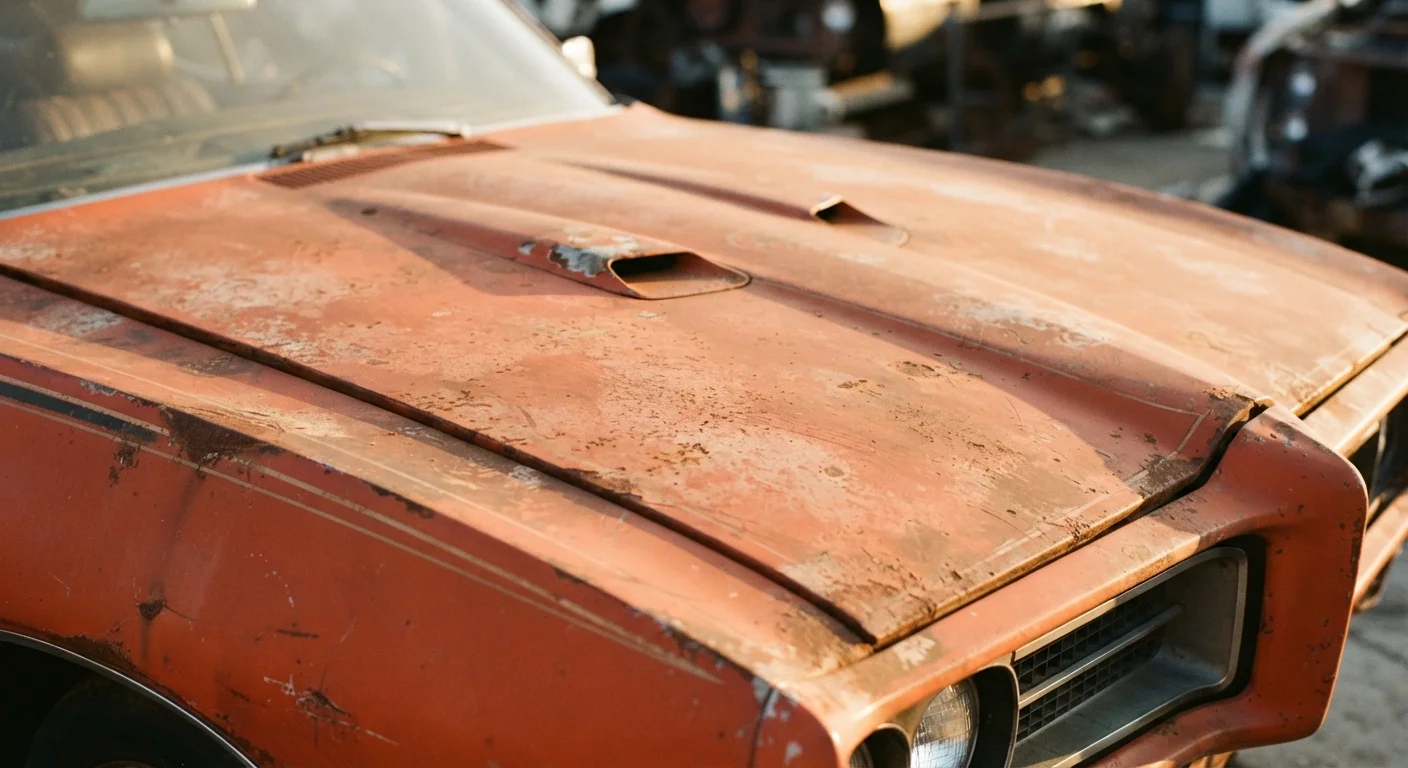
In collector-car terminology, patina refers to the cumulative visual character that develops on original factory paint over decades - faded gloss, minor surface checking, oxidized topcoat, and the subtle variation in sheen that no spray booth can convincingly reproduce. It is distinct from damage: patina is stable and cosmetic, while rust perforation, delaminating primer, or structural corrosion are condition problems regardless of how they are framed.
The appeal of genuine patina is fundamentally about authenticity. When the original finish is intact, a vehicle carries physical evidence that it has not been disassembled, stripped, or chemically altered. For collectors focused on unbroken history, that surface is nearly as important as a matching numbers drivetrain. The survivor car philosophy formalizes this view, arguing that original wear is irreplaceable once it is polished or sprayed away.
Patina vs. Neglect: A Critical Distinction
Stable surface oxidation and color fade are cosmetic; active rust, bubbling paint, or bare metal exposure are structural concerns. Before attributing a premium to 'patina,' a qualified inspector should assess whether the underlying metal is sound. Surface character that looks charming in photographs can conceal panel rot that dramatically affects value and safety.
The Case for Fresh Bodywork
A properly executed respray is not the red flag it once was - provided it meets the standards of the marque and era. Collectors and judges have grown more sophisticated, and a show-quality restoration using correct factory color codes, period-accurate paint technology, and documented processes can stand alongside preserved originals in many markets. Period accuracy in restoration finishing carries real weight: an incorrect color or modern urethane applied to a vehicle that left the factory in lacquer tells an experienced eye that shortcuts were taken.
Fresh bodywork also offers practical advantages. It seals bare metal against moisture, allows hidden rust to be addressed before application, and restores structural integrity to areas that patina alone cannot protect. For high-use drivers or vehicles with compromised original surfaces, a quality respray may extend service life significantly.
| Criterion | Original Patina | Fresh Bodywork |
|---|---|---|
| Authenticity signal | Maximum - surface is unaltered | Depends on accuracy and documentation |
| Corrosion protection | Limited - aged paint can thin or crack | Strong when properly applied over treated metal |
| Concours eligibility | Class-specific (survivor categories) | Broad eligibility if period-correct |
| Auction premium potential | High for rare, documented survivors | High for correctly executed show restorations |
| Reversibility | Irreversible - patina cannot be restored once painted | Can be redone; earlier work is lost |
| Buyer scrutiny required | Distinguish cosmetic patina from active damage | Verify color accuracy and prep quality |
How the Market Actually Values Each
Auction results and private sales tell a nuanced story. At major collector auctions, well-documented survivor vehicles with honest original paint regularly achieve strong premiums - particularly in segments where surviving unrestored examples are scarce. The logic is straightforward: authenticity cannot be recreated, so rarity compounds value. Compounding value variables in classic cars - marque prestige, production rarity, documentation depth, and condition - interact differently depending on whether originality or restoration quality leads the narrative.
However, the collector market is not monolithic. Muscle car communities may prize survivors, while European sports car circles often expect a higher cosmetic standard and reward careful restorations more generously. Understanding the specific community and marque context is essential before assuming patina equals premium.
15-30%
Typical survivor premium over comparable restored examples
Industry observers and auction analysts have noted that well-documented survivor vehicles in certain muscle car segments can command premiums in this range, though results vary significantly by marque and condition.
~60%
Collector value attributed to originality factors
Collector surveys conducted by marque registries frequently cite originality - including unaltered paint - as the single largest contributor to perceived value among serious hobbyists.
Documentation: The Bridge Between Both Worlds
Whether a vehicle retains original paint or carries a documented respray, paperwork significantly shapes buyer confidence. Provenance documents - factory build sheets, dealer invoices, early photographs, and restoration receipts - give any claim of originality or quality workmanship something concrete to stand on. A survivor presented with photographic evidence of its surface history across decades is far more persuasive than one relying on the seller's verbal account alone.
For repainted vehicles, shop invoices specifying color codes used, preparation methods, and materials applied transform a respray from a liability into a traceable chapter in the car's story. Factory originality versus restored-to-spec remains a genuine tension in collector valuation, and documentation is the clearest way to resolve doubt in either direction.