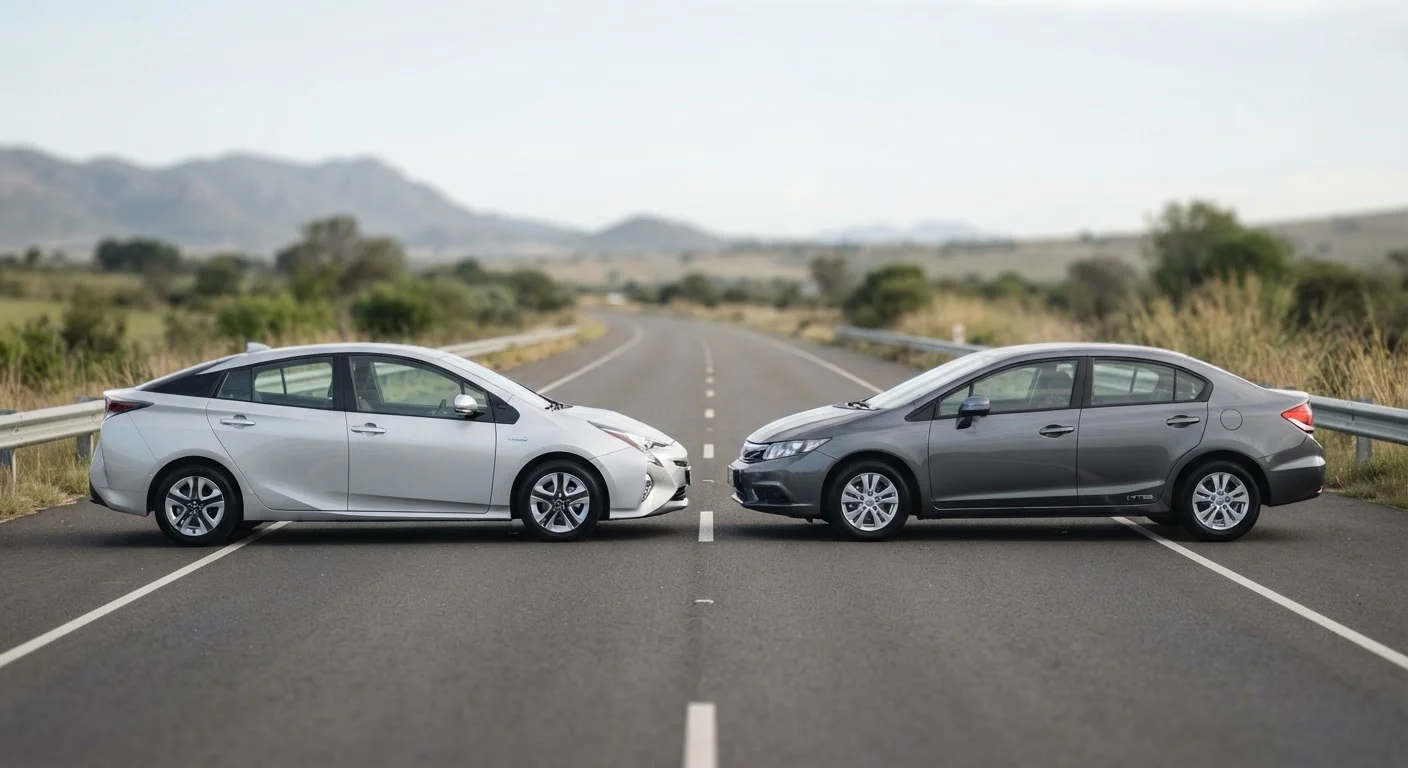
Range and Refuelling: The Core Trade-Off
Range is where the BEV vs hybrid debate sharpens fastest. Modern battery-electric vehicles commonly offer EPA-rated ranges between 200 and 350 miles, with some premium configurations exceeding that. But as real-world range figures often differ from official ratings, cold weather, highway speeds, and HVAC use can clip usable range by 15-30%.
Hybrids - whether conventional (HEV) or plug-in (PHEV) - sidestep this concern almost entirely. A conventional HEV uses its electric motor to supplement the gas engine rather than replace it, so the tank is always your range ceiling, typically 500-600 miles. PHEVs add a larger battery for 25-50 miles of all-electric operation before transitioning to hybrid mode.
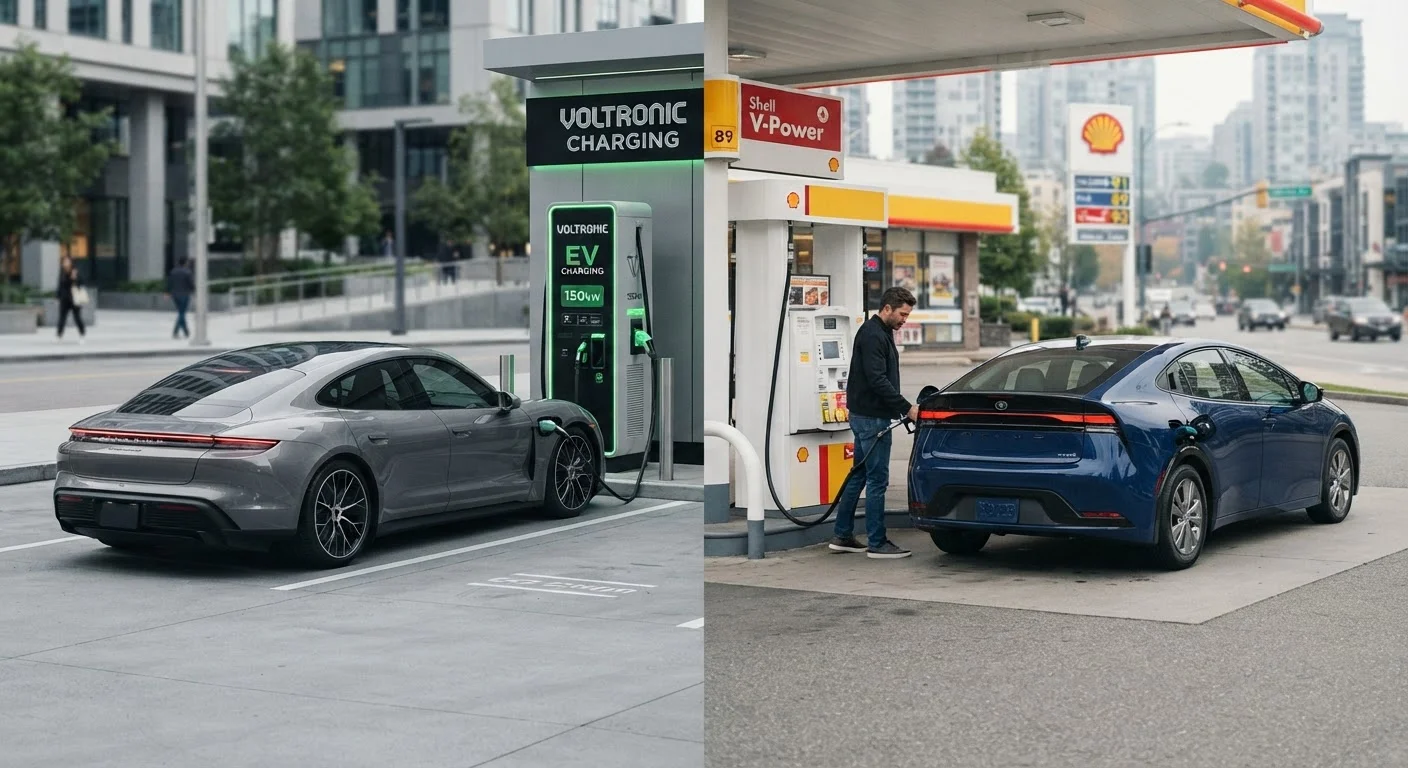
Refuelling speed tells a similar story. Adding 200 miles of range to a BEV via DC fast charging takes roughly 20-40 minutes depending on the vehicle and charger output. A gas station stop takes under five minutes. For daily commuters who charge overnight, BEV refuelling is entirely frictionless. For road-trippers or drivers in areas with thin charging networks, it requires planning that hybrids simply don't.
| Criterion | Battery-Electric Vehicle (BEV) | Hybrid (HEV/PHEV) |
|---|---|---|
| Typical range | 200-350+ miles (EPA-rated) | 500-600 miles (HEV); 25-50 mi EV + gas (PHEV) |
| Refuelling time | 20-40 min (DC fast charge) | Under 5 minutes (gas) |
| Infrastructure dependency | High - charging network critical | Low - standard gas stations |
| Fuel cost per mile | Generally lower (electricity) | Moderate; PHEVs lower on short trips |
| Scheduled maintenance | Lower - no oil changes, fewer brake services | Higher - full engine servicing required |
| Typical upfront cost | Generally higher MSRP | Generally lower MSRP |
| Cold-weather performance | Range reduction of 15-30% | Modest efficiency drop; gas backup available |
| Emissions (tailpipe) | Zero direct tailpipe emissions | Lower than gas; not zero (HEV) |
Running Costs and Total Ownership Economics
Electricity is cheaper per mile than gasoline in most U.S. regions, which gives BEVs a structural fuel-cost advantage. The U.S. Department of Energy has historically found that eGallon costs - the electricity equivalent of a gallon of gas - run lower than pump prices in most states, though local utility rates vary significantly.
Maintenance economics also tilt toward BEVs. Without oil changes, fewer brake replacements thanks to regenerative braking, and no transmission fluid or timing belts, the scheduled maintenance burden is lower. Hybrids still require all conventional engine servicing, though regenerative braking does reduce brake wear compared to a standard gas vehicle.
~$700
Average annual BEV fuel savings vs gas
The U.S. Department of Energy estimates BEV drivers save roughly $700 or more per year on fuel compared to average gasoline vehicle owners, though savings vary by local electricity and gas prices.
3¢-5¢
Typical BEV cost per mile (electricity)
Based on U.S. average residential electricity rates, battery-electric vehicles generally cost between 3 and 5 cents per mile to fuel, compared to 8-12 cents per mile for gasoline at typical pump prices.
25-50 mi
Typical PHEV all-electric range
Most plug-in hybrid models on the U.S. market offer between 25 and 50 miles of EPA-rated all-electric range before transitioning to hybrid operation.
Upfront cost remains a genuine BEV headwind. Even with available federal tax credits under the Inflation Reduction Act - subject to income caps, vehicle price limits, and assembly requirements - comparable BEVs tend to carry higher MSRPs than hybrid equivalents. Federal incentives aren't guaranteed to apply to every buyer or vehicle; consult a tax professional to understand your specific eligibility. For a structured look at long-term ownership math, see our framework for comparing EV and hybrid costs.
Charging Infrastructure and Daily Practicality
Home charging is the variable that can make or break a BEV ownership experience. Drivers with a garage and a Level 2 charger (240V) wake up every morning with a full battery - effectively turning range anxiety into a non-issue for routine driving. Apartment dwellers or those relying on public charging face a different calculus: public Level 2 and DC fast chargers are expanding but remain unevenly distributed across urban, suburban, and rural areas.
Hybrids require no charging infrastructure at all for HEVs, and only opportunistic charging for PHEVs to maximise electric-only miles. This infrastructure-independence is a practical advantage in areas where charger density is low - or where renters have no control over home electrical setup.
Your specific driving pattern matters enormously here. City commuters and long-distance drivers extract very different value from each powertrain. A BEV that brilliantly serves a 30-mile urban commute may frustrate a driver who regularly makes 300-mile round trips across states with sparse fast-charger coverage.
PHEVs: A Distinct Middle Category
Plug-in hybrids (PHEVs) are often grouped with conventional hybrids but operate quite differently. They carry a larger battery that can be charged externally, enabling meaningful all-electric driving for typical short-range trips - without the infrastructure dependency of a full BEV. If your daily mileage falls within PHEV electric range but you take occasional long trips, a PHEV can meaningfully reduce fuel costs without requiring a charging network commitment. The trade-off is added complexity and a higher price than a conventional hybrid.
Which Powertrain Fits Your Driving Life?
The honest answer isn't universal. BEVs deliver the lowest per-mile running costs and the simplest refuelling experience for drivers whose charging access and route patterns align with the technology. If you're in that category, going fully electric has genuine advantages worth understanding - alongside real constraints that deserve equal weight.
Hybrids remain the more broadly versatile option today, requiring no behavioural change around refuelling and no infrastructure dependency. PHEVs in particular offer a compelling middle path - electric efficiency for predictable short-range driving, combustion reliability for everything else. For a deeper look at how PHEVs and conventional hybrids differ under the hood, see our comparison of plug-in and conventional hybrid architectures.
Before committing to either direction, run through the practical checklist in our structured buying evaluation - it covers charging access, warranty terms, and the less-obvious factors that shape ownership satisfaction over time.
This article provides general informational comparisons and does not constitute personalised financial, tax, or purchasing advice. Vehicle pricing, incentive eligibility, and infrastructure conditions vary and are subject to change. Consult a qualified tax professional regarding federal or state incentive applicability to your situation.