Understanding the Powertrain Spectrum
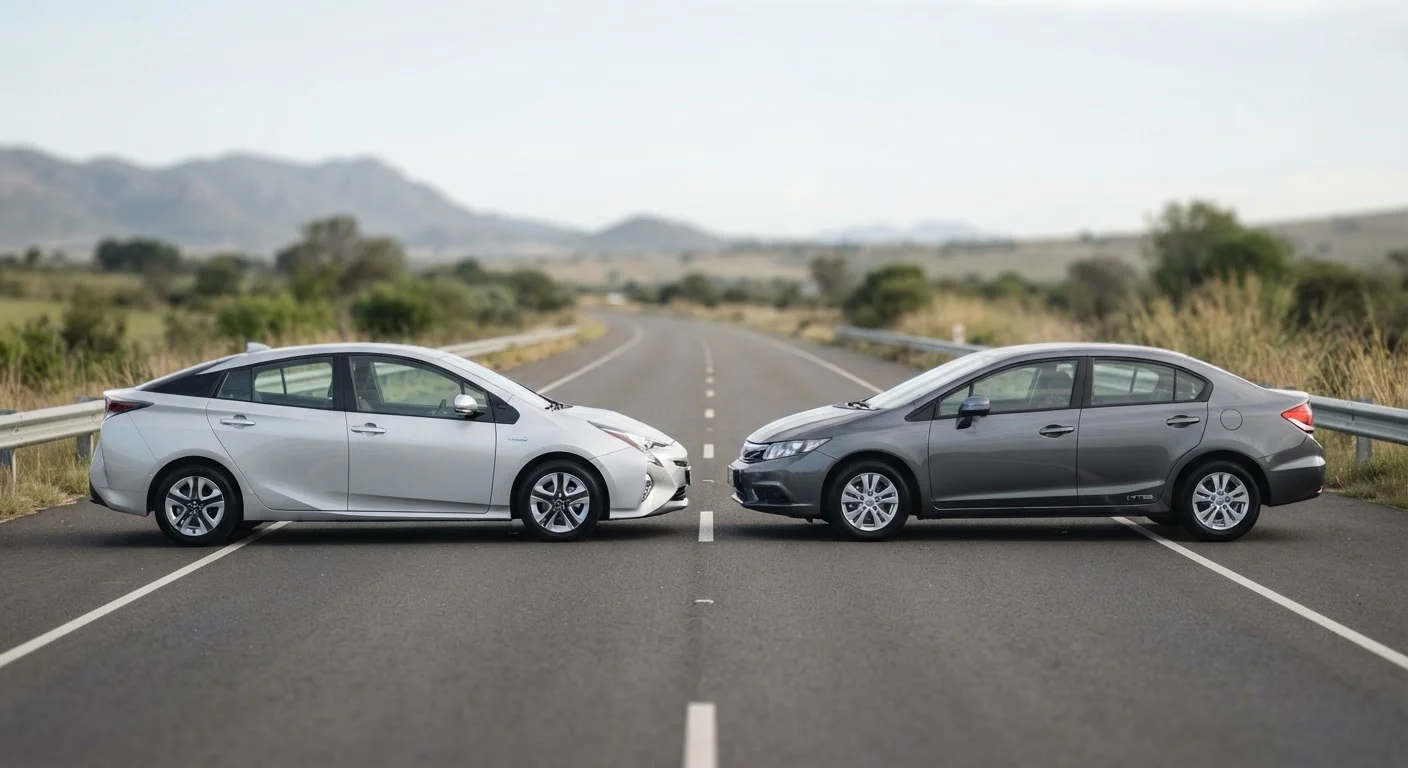
The term "electrified vehicle" covers more ground than most new shoppers expect. At one end sits the mild hybrid - a conventional engine fitted with a small electric assist that marginally improves fuel economy but cannot drive on electricity alone. At the other end is the battery-electric vehicle (BEV), which carries no combustion engine at all. In between are full hybrids (HEVs), which can cover short low-speed distances on electricity but charge exclusively through regenerative braking, and plug-in hybrids (PHEVs), which offer a meaningful all-electric range - typically 20-50 miles - before transitioning to hybrid operation.
Battery-Electric Vehicle (BEV)
A vehicle powered entirely by electricity stored in an onboard battery pack, with no combustion engine. It must be recharged from an external electrical source.
Plug-in Hybrid (PHEV)
A vehicle with both an electric motor and a combustion engine. Its battery can be recharged externally, providing a limited electric-only driving range before the combustion engine takes over.
Regenerative Braking
A system that captures kinetic energy during deceleration and converts it back into electrical energy to partially recharge the battery, improving overall efficiency.
MPGe
Miles per gallon equivalent - the EPA's way of expressing an electric vehicle's energy efficiency using the same scale as conventional fuel economy ratings.
Level 2 Charging
A 240-volt charging setup, typically installed at home or available at workplaces and public stations, that charges an EV significantly faster than a standard household outlet.
Total Cost of Ownership (TCO)
The full financial cost of owning a vehicle over time, including purchase price, fuel or energy, maintenance, insurance, and depreciation - not just the upfront sticker price.
Each category involves genuine engineering trade-offs. BEVs eliminate tailpipe emissions and combustion complexity but demand a charging infrastructure commitment. PHEVs offer flexibility but carry the weight and cost of two powertrains. HEVs require no behavioral change from the driver but deliver only incremental fuel savings. For a detailed breakdown of every label, see our plain-language powertrain glossary.
Range and Efficiency: What the Numbers Mean
Two metrics dominate EV and hybrid comparisons: range (how far the vehicle travels on a full charge or tank) and efficiency (how much energy it uses per mile). The EPA publishes standardized estimates for both, expressed in miles for BEV range and in MPGe for electric efficiency.
These figures are useful for apples-to-apples comparison across models, but they are laboratory benchmarks. Real-world range varies meaningfully with highway speeds (aerodynamic drag rises sharply above 65 mph), ambient temperature (lithium-ion batteries perform less efficiently in cold weather), and accessory use such as climate control. A vehicle rated at 300 miles of range may deliver 240-260 miles under typical mixed driving in moderate climates.
Build a Real-World Range Estimate
Rather than trusting EPA range figures alone, look for owner-reported data from forums or third-party test sites that reflect your climate region and driving pattern. Subtract 15% from the EPA estimate as a conservative baseline for highway-heavy driving. This gives you a more grounded number to plan charging stops around.
For hybrids and PHEVs, pay attention to the combined mpg figure for ICE operation and the electric-only range separately - neither metric alone tells the full story of how the vehicle will perform across your actual driving mix. Our framework for comparing EV and hybrid options walks through exactly how to weight these figures.
Total Cost of Ownership at a Glance
Sticker price is a poor standalone measure for electrified vehicles. A meaningful comparison requires accounting for fuel or energy costs, scheduled maintenance, insurance, depreciation, and any applicable incentives over a multi-year ownership horizon.
- Energy cost: Electricity is generally cheaper per mile than gasoline, though rates vary significantly by region and time-of-use tariff. Calculate using your local utility rate and your estimated annual mileage.
- Maintenance: BEVs avoid oil changes and have reduced brake wear through regenerative braking. PHEVs and HEVs retain combustion service intervals.
- Incentives: Federal tax credits and state rebates can reduce net acquisition cost, but eligibility is vehicle- and buyer-specific. Verify current rules at a government source before budgeting.
- Depreciation: Battery-electric models have historically shown steeper initial depreciation than comparable ICE vehicles, though this trend is evolving as the segment matures.
For broader context on ownership expenses, the ownership costs hub provides a structured framework applicable across vehicle types.
Incentive Eligibility Is Highly Specific
Federal EV tax credits under current US law carry income caps, vehicle price limits, and manufacturing sourcing requirements that disqualify a significant portion of available models. The credit is also non-refundable in most cases, meaning it can only offset tax liability you already owe. Always verify current eligibility using the IRS website or fueleconomy.gov before incorporating any credit into your purchase math.
Charging Basics Every New Shopper Should Know
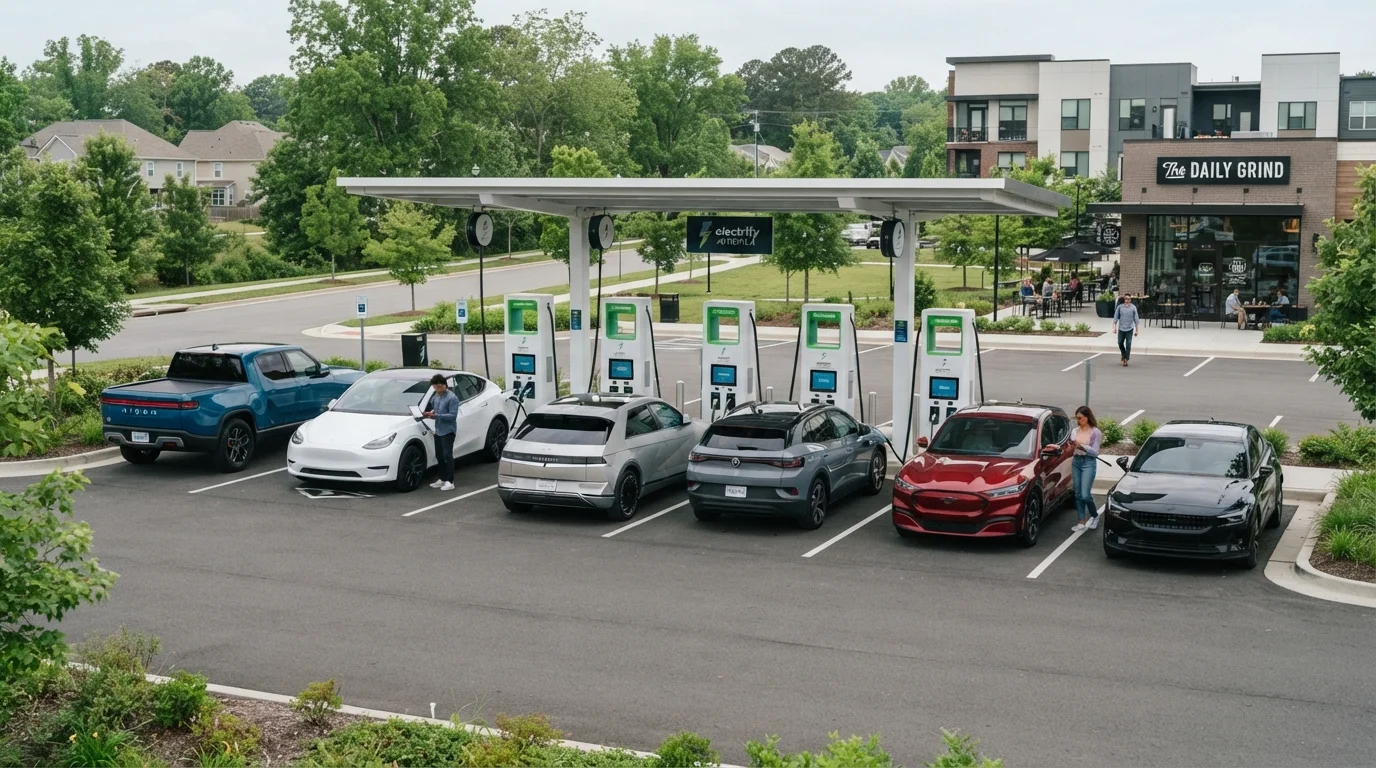
For BEV and PHEV buyers, charging infrastructure is as fundamental a purchase consideration as cargo space or horsepower. Three charging levels exist in the US market:
- Level 1 (120V household outlet): Adds roughly 3-5 miles of range per hour. Practical only for PHEVs or drivers with modest daily mileage and overnight dwell time.
- Level 2 (240V dedicated circuit): Adds 15-30+ miles per hour depending on the vehicle's onboard charger capacity. The standard home and workplace solution for BEV owners.
- DC Fast Charging (DCFC): Public infrastructure capable of adding 100-200+ miles in 20-40 minutes on compatible vehicles. Not all BEVs support the same charging standard or maximum rate.
Home charging involves electrical panel assessment and potentially significant installation work. Our home charging guide covers the infrastructure and cost details in full. Also confirm that your prospective vehicle's charging port is compatible with the public networks most prevalent in your area - connector standards have not yet fully converged across the US market.
How to Frame Your Evaluation
Approaching the electrified market without a structured framework risks getting lost in spec sheets. Before comparing specific vehicles, anchor your evaluation in three personal parameters: daily mileage, charging access, and total budget horizon.
A driver covering 25 miles a day with a garage and a 240V circuit available is a strong candidate for a PHEV or BEV. A driver with 80-mile daily commutes, no home charging option, and frequent long-distance travel faces a more constrained set of viable options. Neither scenario is inherently better - the goal is matching powertrain type to actual use pattern rather than purchasing on aspiration alone.
For a deeper look at the genuine advantages and real constraints of going fully electric, see our balanced assessment of full EV ownership. When you're ready to move from orientation to active vehicle evaluation, the pre-purchase checklist for EV and hybrid buyers provides a structured decision framework. And if persistent concerns about EVs are shaping your thinking, a review of common EV myths may help separate evidence from assumption.
fueleconomy.gov
The US government's official resource for EPA fuel economy ratings, EV range estimates, MPGe figures, and federal tax credit eligibility lookup. The most reliable starting point for any electrified vehicle comparison.
PlugShare
A community-driven map of public charging stations across the US. Useful for assessing charging network density along your common routes before committing to a BEV or PHEV.
Plain-Language Powertrain Glossary
A companion reference that defines every major electrified vehicle label - mild hybrid, full hybrid, PHEV, BEV - in straightforward, comparable terms for new shoppers.
This article provides general educational information about electrified vehicle types and is not personalized financial or purchasing advice. Incentive rules, pricing, and specifications change frequently - verify current details with official government sources and qualified professionals before making any purchase decision.